
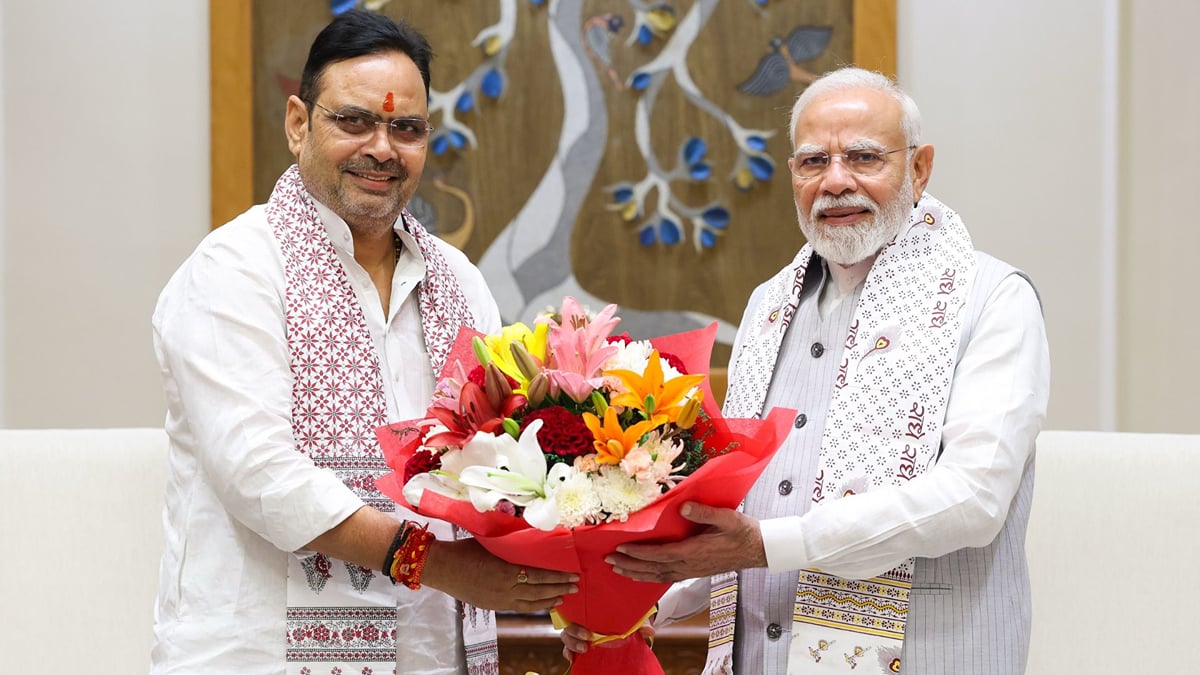
In a significant political development, Rajasthan Chief Minister Bhajanlal Sharma met with Prime Minister Narendra Modi in New Delhi, sparking intense discussions across the state. This high-profile interaction between the state's chief executive and the nation's leader has immediately drawn the attention of political pundits and party cadres alike. The meeting serves as a critical juncture in the ongoing political narrative of Rajasthan, setting the tone for future administrative alignments.
The historical context of such high-level meetings in New Delhi often points towards crucial administrative recalibrations and governance reviews. Since assuming office, the state leadership has been navigating various policy frameworks and administrative priorities. Meetings of this stature are traditionally utilized to deliberate upon comprehensive developmental agendas, governance progress, and strategic policy implementations across the region.
While specific logistical details and quantitative metrics of the meeting remain within the purview of official channels, the overarching discussions inherently encompass the state's administrative framework. Observers note that leadership interactions at this level frequently precede structural adjustments within the executive branch. The meticulous assessment of departmental performances forms an integral component of such high-level deliberations.
Various political stakeholders and observers have expressed diverse viewpoints regarding the implications of this meeting in New Delhi. Party insiders suggest that routine administrative reviews are essential for maintaining governance efficiency. Meanwhile, opposition circles and independent analysts interpret the timing of this discussion as a precursor to impending organizational or governmental realignments within Rajasthan.
At the regional level, particularly concerning districts like Kotputli-Behror, any major political or administrative shift at the state capital carries substantial implications. Local administrative bodies, civic representatives, and citizens keenly observe these developments, anticipating potential impacts on regional development projects, resource allocations, and administrative execution. Local governance structures remain aligned with broad state-level policy directives emanating from such leadership meetings.
Administrative responses and official channels emphasize that governance remains uninterrupted while high-level consultations take place. Statutory oversight mechanisms continue to function across various departments in Rajasthan, ensuring that public service delivery is maintained. State functionaries reiterate that ongoing developmental works and administrative procedures proceed in accordance with established state policies.
Looking ahead, the political and administrative landscape of Rajasthan anticipates further clarity following the discussions held in New Delhi. Public expectations remain focused on governance delivery, infrastructural progress, and administrative efficiency. As the state administration processes the outcomes of this meeting, citizens and stakeholders await formal announcements regarding any subsequent administrative measures or cabinet-level decisions.
