
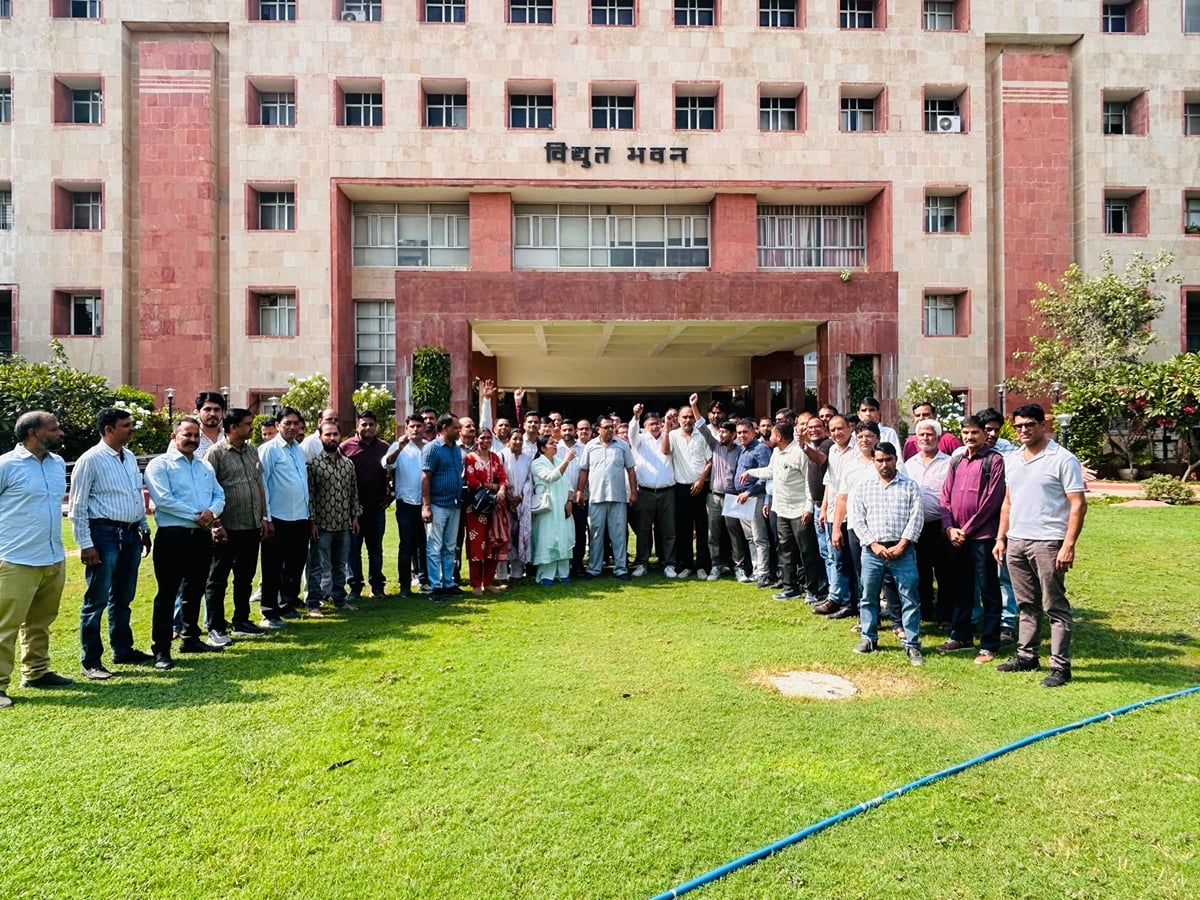
In a significant administrative development reflecting growing discontent within the state electricity infrastructure, employees from across Rajasthan have escalated their demands for comprehensive structural reforms. A strong contingent of approximately 200 employees gathered at Vidyut Bhawan located in Jaipur to officially submit a detailed memorandum demanding the immediate restructuring of the ministerial cadre and the creation of essential posts, including establishment officers, across all five power companies operating within Rajasthan.
The administrative framework governing the state power sector has faced longstanding structural challenges regarding promotional avenues and cadre definitions. Historically, the ministerial cadre within Rajasthan's power distribution and generation companies has operated under rigid guidelines that limit upward mobility and professional advancement. The recent mobilization represents a cumulative outburst of workforce aspirations that have sought systematic recognition of their administrative roles within the state's sprawling energy apparatus.
Ground reports indicate that the gathering at Vidyut Bhawan brought together around 200 dedicated personnel representing various units and regional offices across Rajasthan. These employees highlighted operational bottlenecks arising directly from staff shortages and inadequate provisioning for supervisory positions such as establishment officers. The financial and logistical stakes of these demands are substantial, as a streamlined administrative machinery directly correlates with efficient revenue collection, grievance redressal, and overall power distribution management.
During the demonstration, prominent employee representatives articulated deep concerns over the stagnation plaguing the ministerial workforce. They argued that despite shouldering critical administrative responsibilities essential for the daily operations of the five power companies, their career trajectories remain heavily constrained. The memorandum handed over to the competent authorities details specific structural anomalies that require urgent legislative and administrative corrections to restore parity and motivation among the workforce.
The resonance of this administrative agitation extends deeply into regional administrative centers, including the newly formed Kotputli-Behror district and surrounding commercial hubs. Local offices of the power companies operating in these areas heavily rely on an efficient ministerial cadre for consumer billing oversight, industrial connection approvals, and local grievance resolution. Any systemic disruption or administrative dissatisfaction at the apex level invariably trickles down, affecting local economic stakeholders, agricultural consumers, and urban residents alike.
In response to the mounting pressure from the roughly 200 protesting employees, senior administrative officials at Vidyut Bhawan accepted the memorandum and assured the delegation of a thorough review. Statutory oversight bodies and departmental committees are expected to evaluate the financial and administrative feasibility of restructuring the ministerial cadre and creating the demanded posts. The dialogue between the employee leadership and management remains crucial in averting any potential escalation of protests.
Looking ahead, the timeline for the resolution of these administrative demands depends heavily on the internal committee evaluations initiated by the management of the five power companies. Public expectations and employee morale hinge on tangible policy changes that recognize the vital role of ministerial staff. As the administrative machinery in Jaipur processes the formal memorandum, the workforce maintains a vigilant stance, awaiting concrete notifications regarding the restructuring process and the creation of establishment officer positions.
