
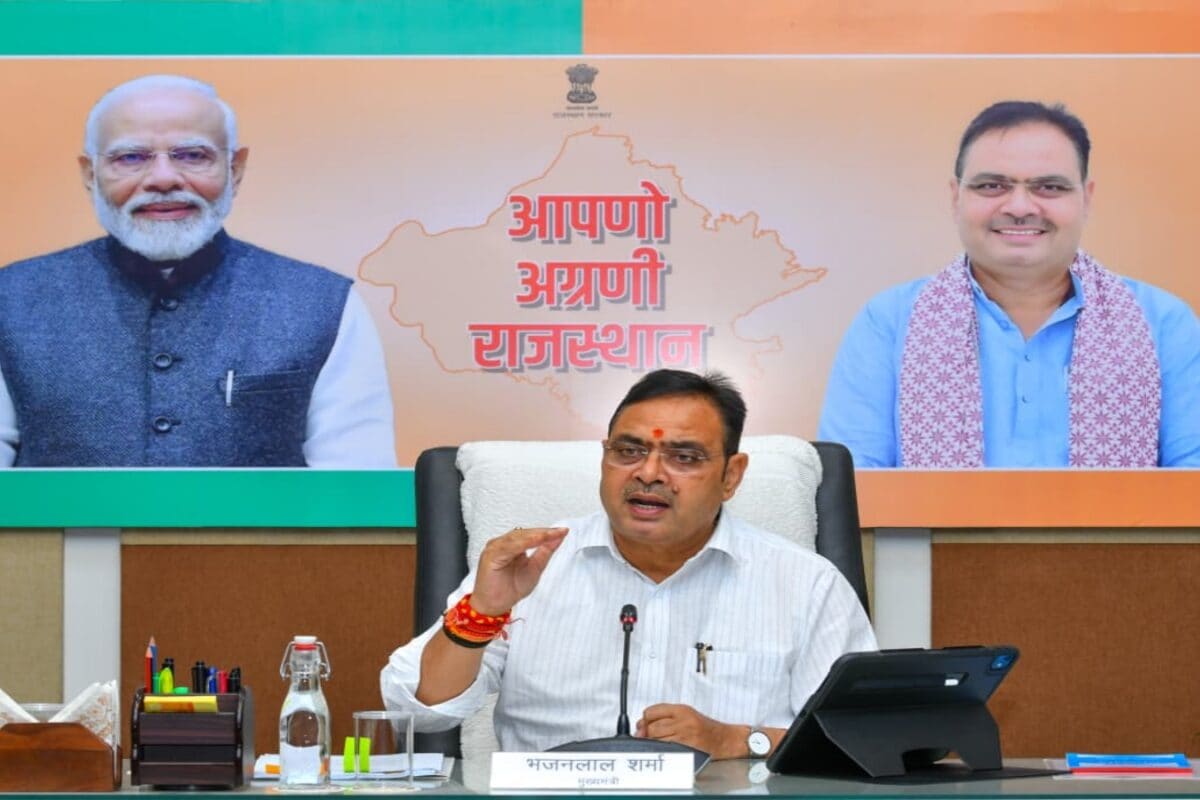
In a significant political and administrative development, the Rajasthan cabinet convened in Jaipur under the chairmanship of Chief Minister Bhajanlal Sharma to formally introduce and pass a congratulatory resolution marking twenty-five years of governance under Prime Minister Narendra Modi. The high-level meeting served as a comprehensive platform for the state leadership to deliberate upon national administrative milestones, visionary policy execution, and the profound transformation witnessed in public service delivery over the past quarter-century. Senior cabinet ministers, administrative heads, and policy advisors gathered at the state capital to evaluate the extensive socio-economic impact of policies spearheaded by the central leadership, acknowledging the unprecedented trajectory of governance, structural reforms, and institutional strengthening that have redefined the nation's political and developmental landscape.
Providing historical context to the commemorative resolution, government spokespersons and senior leadership elaborated on the arduous journey and visionary administrative reforms that commenced twenty-five years ago. The deliberation highlighted how foundational governance frameworks, systemic transparency initiatives, and citizen-centric policy formulations evolved from regional governance models into a globally recognized blueprint for effective leadership. The cabinet noted that traversing a quarter-century at the helm of public administration reflects enduring public trust, unwavering commitment to national integration, and a relentless focus on grassroots empowerment, which has consistently elevated India's global stature and economic resilience through turbulent international financial cycles.
A critical highlight of the cabinet proceedings involved a detailed review of the international recognition and diplomatic milestones achieved under the stewardship of Prime Minister Narendra Modi. The session officially noted that Prime Minister Modi has been bestowed with prestigious highest civilian honors by thirty-six foreign nations, reflecting India's surging geopolitical influence, cultural diplomacy, and robust international partnerships. Beyond diplomatic achievements, the cabinet meticulously analyzed domestic infrastructural and developmental milestones, specifically noting the strategic progress on the Pachpadra refinery project, which promises to revolutionize industrial growth, employment generation, and economic output in the western region of the state.
Deliberating further on cooperative federalism and developmental welfare, the cabinet emphasized the successful resolution of long-standing inter-state water agreements that have historically plagued regional irrigation and drinking water security. Ministers and administrative experts evaluated the logistical frameworks and socio-economic ramifications of these water pacts, which are poised to transform agricultural productivity and alleviate drought vulnerabilities across parched terrains. Furthermore, the deliberations underscored the meticulous implementation of the Kisan Samman Nidhi scheme, ensuring direct financial fortification for millions of agrarian households, thereby reinforcing the state government's dedication to rural prosperity and agricultural sustainability.
Focusing on ecological preservation and sustainable development, the cabinet thoroughly reviewed the massive plantation campaigns initiated across districts, including the developing administrative machinery in the Kotputli-Behror region. Environmental ministers stressed that aggressive afforestation initiatives and community-driven greening programs are vital for combating environmental degradation, improving local air quality indices, and securing ecological balance for future generations. Local civic bodies and district administrations have been directed to align regional development master plans with state-level environmental targets, ensuring that rapid industrialization does not compromise ecological sustainability or local community welfare.
Looking toward administrative execution and statutory oversight, the state government outlined a structured roadmap to accelerate pending infrastructure projects and ensure absolute transparency in the utilization of public funds. Officials confirmed that rigorous monitoring mechanisms, digital tracking systems, and periodic departmental audits have been instituted to eliminate bureaucratic delays and curb financial leakages across all welfare verticals. The administrative machinery has been galvanized to translate policy announcements into tangible grassroots outcomes, ensuring that every citizen across rural and urban centers reaps the dividends of effective governance and targeted developmental interventions.
Concluding the comprehensive session, the state cabinet projected an optimistic forward outlook anchored in inclusive growth, infrastructural modernization, and administrative accountability. The administration reaffirmed its unwavering commitment to aligning regional developmental priorities with national strategic goals, setting a rigorous timeline for the completion of ongoing industrial, agricultural, and environmental initiatives. As the state moves forward with renewed administrative vigor, public expectations remain high regarding the successful realization of these ambitious policy frameworks, promising a prosperous and resilient future for the entire community.
