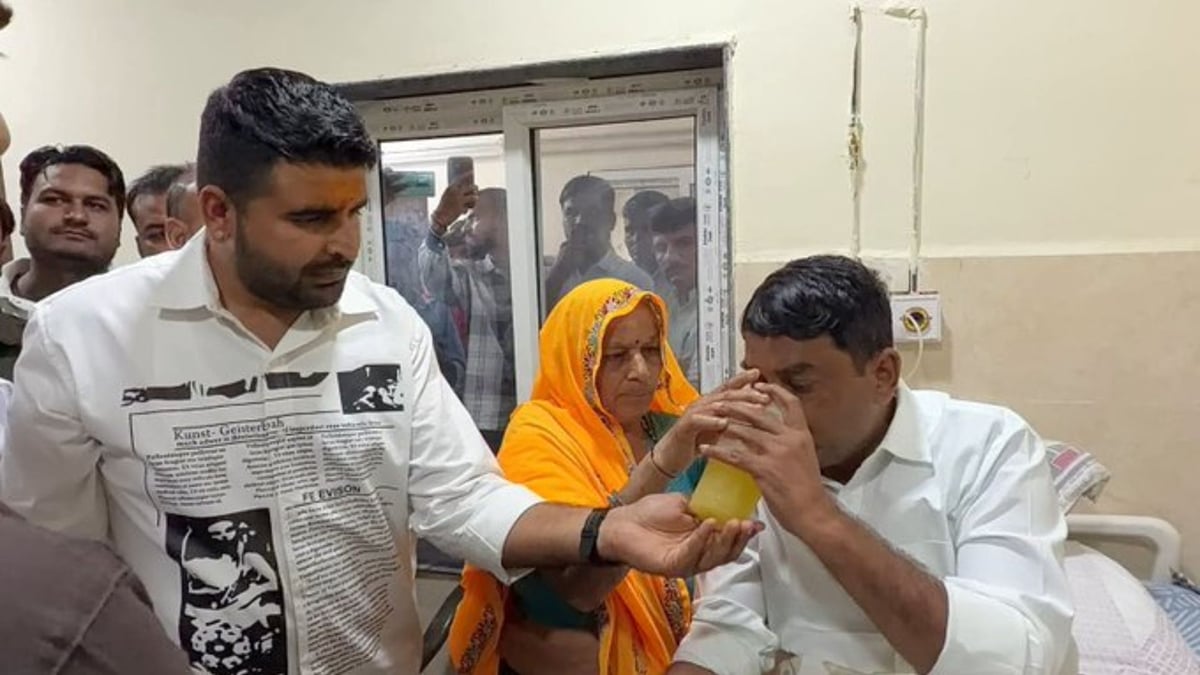
In a significant political and social development in Baran district on Sunday, farmer leader Naresh Meena officially brought his extensive ten-day hunger strike to an end. The conclusion of the fast marked the culmination of a tense period that had kept local authorities, supporters, and observers on high alert. The breakthrough occurred inside the premises of the district hospital, where the prolonged protest officially culminated under watchful eyes.
The contextual origins of this high-profile hunger strike trace back to localized agrarian grievances and demands spearheaded by Naresh Meena within the region. Over the course of the ten-day period, the protest gained considerable momentum, drawing the attention of various political figures, community leaders, and agricultural advocates from across the state who closely monitored the health and demands of the prominent farmer leader.
Throughout the duration of the ten-day fast, the logistical and emotional stakes remained consistently high at the district hospital and surrounding areas. Medical teams maintained continuous vigil over Naresh Meena's declining health metrics, while supporters gathered persistently outside the health facility. The sheer duration of the protest underscored the deep-seated nature of the issues being raised by the leadership representing the farming community.
A critical turning point in the resolution occurred when Shiva MLA Ravindra Singh Bhati arrived personally at the Baran district hospital. His intervention served as a crucial bridge in mediating and bringing a peaceful closure to the prolonged ordeal. The presence of key figures underscored the solidarity within regional political circles regarding the welfare of prominent agrarian voices during critical health crises.
The ripples of this ten-day protest and its ultimate resolution extended far beyond the immediate confines of the Baran district hospital, resonating deeply across neighboring administrative zones including Kotputli-Behror. Local communities, agricultural traders, and regional stakeholders engaged in discussions regarding the broader implications of such prolonged public fasts on local stability, administrative responsiveness, and community harmony.
In response to the escalating situation, administrative machinery and medical oversight operated under rigorous protocols throughout the ten-day period. Hospital authorities coordinated closely with law enforcement and district administration to maintain public order, regulate visitor access, and ensure that medical interventions met necessary standards without compromising the dignity or health safety of the protesting leader.
Looking ahead, the successful conclusion of the hunger strike through the symbolic offering of juice by MLA Ravindra Singh Bhati in the presence of Prem Bai opens a new chapter for dialogue and administrative engagement. Public expectations now center on constructive follow-up meetings between representatives and authorities to address the core grievances that originally triggered the ten-day protest, ensuring long-term regional stability.