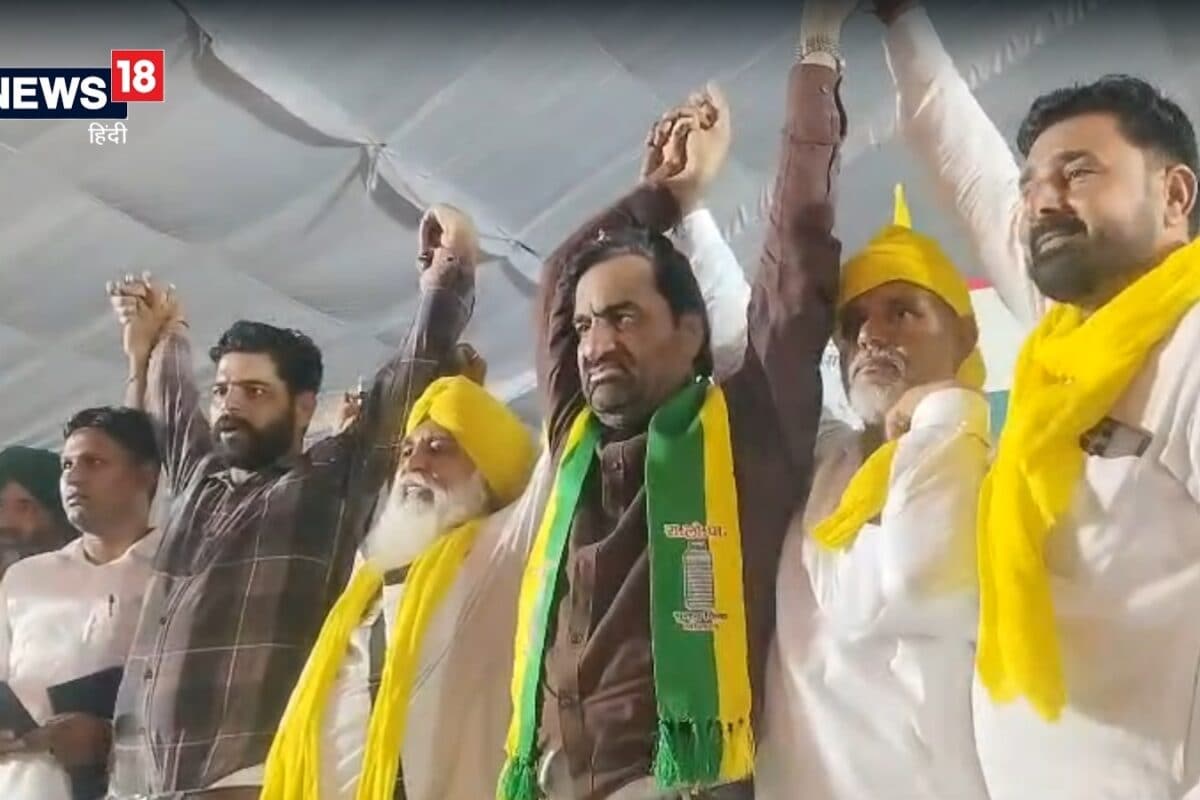
The agrarian crisis in northwestern Rajasthan has intensified dramatically as Rashtriya Loktantrik Party supremo Hanuman Beniwal officially entered the ongoing farmers' agitation in Gharsana within the Sri Ganganagar district. Addressing a charged gathering of cultivators and agricultural laborers at the protest site, Beniwal threw his full political weight behind the farming community, which has been demonstrating persistently for thirty-one days. The core demand of the protesting masses centers around adequate and reliable irrigation water supply to sustain their winter crops and livelihood, an issue that has pitted local farmers directly against administrative authorities for over a month.
Historically, the Sri Ganganagar region has remained heavily dependent on canal-based irrigation networks originating from various river systems to maintain its agricultural productivity. Over successive crop cycles, fluctuations in water allocation, regulatory bottlenecks, and systemic distribution failures have triggered frequent friction points between farming communities and state agencies. The current agitation represents a boiling point of these long-standing grievances, where local agrarian unions and affected families felt compelled to take to the streets and sustain a continuous round-the-clock sit-in demonstration across multiple administrative zones.
As the peaceful sit-in crossed the critical milestone of thirty-one days, the logistical and financial strain on the local agrarian economy has become profoundly severe. Farmers have reported mounting debts, delayed sowing schedules, and massive potential losses to their harvest yield due to the ongoing water scarcity. The prolonged agitation has also impacted local trade, transportation networks, and daily commerce throughout Gharsana and surrounding rural corridors, creating widespread economic stagnation that affects not only the cultivators but also local merchants and service providers.
Addressing the massive public gathering, RLP chief Hanuman Beniwal delivered a stern warning to the state administration, criticizing what he termed as systemic apathy toward the genuine struggles of the cultivators. He noted that despite thirty-one days of continuous protests, government functionaries have failed to table a concrete and sustainable blueprint for resolving the irrigation water crisis. Farmer representatives who spoke during the assembly reiterated their resolve to fight for their rights, pointing out that water is a matter of survival rather than a political luxury for their arid lands.
The ripple effects of this prolonged agitation extend far beyond the immediate boundaries of Sri Ganganagar, resonating across neighboring administrative zones including Kotputli-Behror, where agrarian communities closely monitor developments regarding water distribution policies. The interconnected nature of canal water management across the state means that any policy shift or precedent established in the northern canal command areas carries significant implications for farming populations in other districts, heightening solidarity networks among agrarian groups statewide.
In response to the escalating pressure from farmer unions and the high-profile intervention of political leaders like Hanuman Beniwal, local administrative and police officials have intensified their monitoring of the protest sites. Intelligence units and civil administration teams are maintaining a constant vigil to prevent any escalation of law and order issues, while behind-the-scenes consultations are reportedly underway among senior bureaucrats to evaluate the feasibility of emergency water release schedules and confidence-building measures.
Looking ahead, the situation hangs in a delicate balance as the ultimatum delivered by the RLP chief nears its expiration. Beniwal explicitly announced that if the government fails to address the legitimate demands of the farming community within the agreed timeframe, thousands of cultivators will march collectively toward Sri Ganganagar, culminating in a complete chakka-jam or highway blockade. This imminent escalation poses a formidable challenge for state authorities, who must urgently negotiate a peaceful breakthrough to avert widespread disruption of public transport and civil unrest.