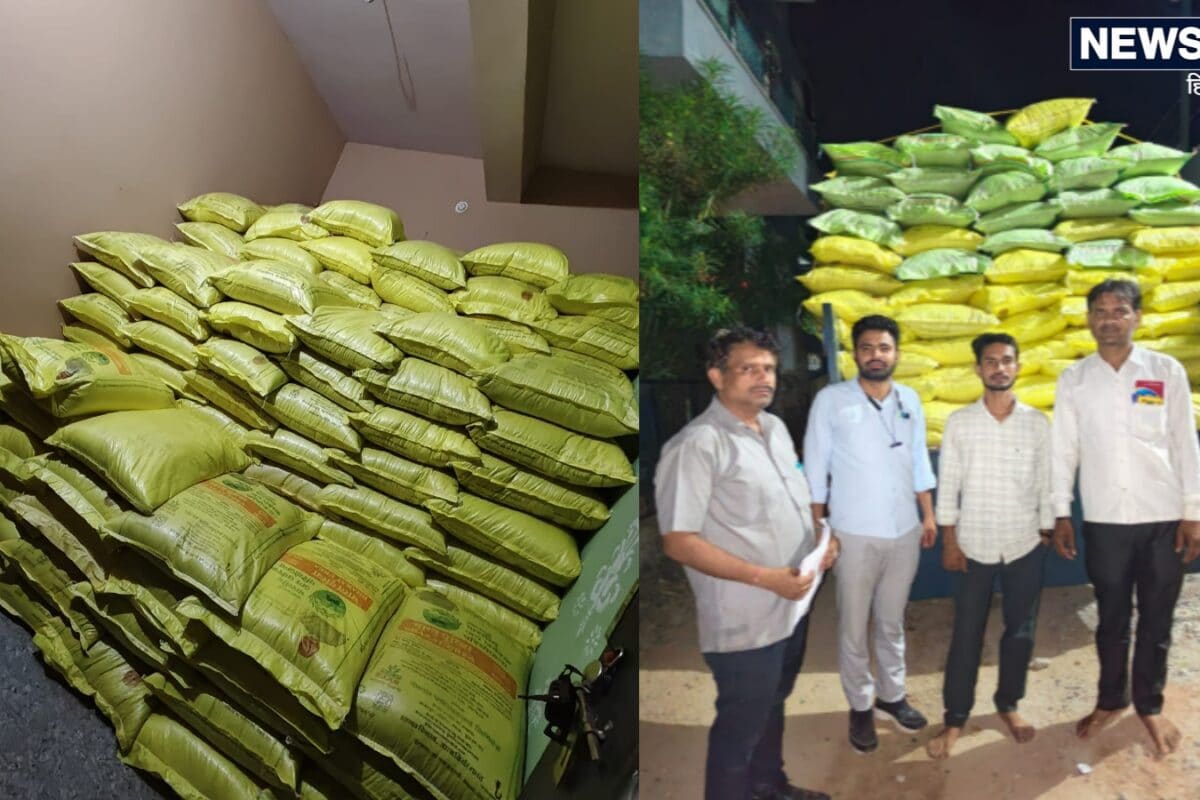
In a major administrative crackdown highlighting irregularities in agricultural input distribution, the Agriculture Department executed a successful raid at a residential building located in Khedli, within the Alwar district. The operation aimed to unearth black-marketing and illegal hoarding of critical farming materials that are essential for the ongoing agricultural season. Such targeted interventions form the core of local governance efforts to safeguard the rights and livelihood of regional farming communities who depend heavily on subsidized and timely supplies.
The issue of fertilizer availability has historically been a matter of intense socio-economic concern throughout Rajasthan, particularly during peak sowing and crop nourishment periods. Farming communities routinely face severe artificial shortages driven by unscrupulous elements who hoard essential commodities like urea and DAP to manipulate market prices and exploit vulnerable growers. Understanding this vulnerability, regional authorities maintain strict vigilance over distribution channels, retail networks, and private storage facilities to prevent diversion and ensure fair access.
During the meticulous search operation conducted at the Khedli premises, enforcement teams uncovered a massive undisclosed inventory of farm nutrients improperly stashed away inside a domestic dwelling. Upon complete physical verification and stock tallying, officials seized a combined total of 289 bags of fertilizer. This specific seizure comprised 270 bags of urea and 19 bags of DAP, both of which are fundamentally indispensable for maximizing crop yield, enhancing soil nutrition, and securing food production stability in the region.
Local governance experts and agricultural representatives have repeatedly voiced concerns regarding the clandestine storage of vital farming inputs away from registered retail shops. When questioned about the presence of these massive fertilizer stocks inside a residential home, occupants failed to present valid statutory licenses, purchase invoices, or commercial distribution permits. The absence of authorized documentation immediately raised suspicions of illegal commercial profiteering, prompting the enforcement wing to initiate rigorous penal and investigative protocols.
The ripples of this enforcement action extend far beyond the immediate boundaries of Khedli, resonating deeply across the broader Alwar and Kotputli-Behror agricultural belt. Local agrarian economies rely heavily on an uninterrupted supply chain where every single bag of urea and DAP directly contributes to the rural economy's stability. Incidents of unauthorized hoarding disrupt this delicate balance, creating widespread panic, long queues at cooperative societies, and immense financial distress for ordinary cultivators striving to feed their families.
Responding swiftly to the ground realities, the Agriculture Department has ramped up its administrative monitoring mechanisms across all municipal and rural sub-divisions. Statutory oversight now includes surprise inspections of private warehouses, transport vehicles, and suspected residential godowns used by unauthorized traders. By enforcing stringent compliance with the Fertilizer Control Order and related agricultural statutes, the administration aims to deter potential violators and restore absolute transparency to the local marketplace.
As the investigation progresses, enforcement officials have formally collected representative samples from the seized fertilizer stock for comprehensive laboratory testing to verify chemical composition and quality standards. Concurrently, rigorous legal scrutiny of all recovered commercial documents is underway to trace the original supply chain and identify all individuals involved in the illegal hoarding network. Public expectations remain high that exemplary administrative penalties will be levied to deter future misconduct and safeguard the interests of hardworking farmers.