
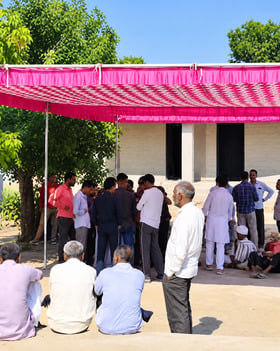
Electoral fervor has gripped the rural landscape of Rajasthan as polling for the crucial first phase of the panchayati raj elections commenced in Udaipur district. Voters across the region are casting their ballots to determine the political and developmental trajectory of their local grassroots governance institutions. The democratic exercise covers a vast administrative footprint, engaging thousands of citizens in a robust display of civic participation and local democracy.
The foundational framework of rural self-governance in Rajasthan traces its historical roots to the vision of decentralized administration, empowering rural communities to steer their own socio-economic development. Panchayati raj institutions serve as the primary vehicle for implementing welfare schemes, infrastructure development, and resource distribution at the village level. These periodic elections are not merely administrative rituals but vital democratic exercises that reinforce the foundational pillars of India's republic from the bottom up.
On the ground, the logistical scale of the ongoing electoral process in Udaipur district is immense, encompassing a total of 283 gram panchayats distributed systematically across 10 panchayat samitis. In addition to the high-stakes contests for the position of sarpanch, the democratic machinery is simultaneously facilitating voting across 2459 contested wards for the position of ward panch. Polling booths have been meticulously established, equipped with necessary electoral materials, security personnel, and logistical support to accommodate the massive voter turnout expected throughout the day.
Community stakeholders, village elders, and local merchants have expressed profound enthusiasm regarding the ongoing elections, viewing the polling booths as vital arenas for grassroots empowerment. Citizens lined up early in the morning, demonstrating exemplary civic duty and eagerness to elect credible leadership capable of addressing local infrastructure, water scarcity, and sanitation challenges. Local administrative observers note that community engagement in these rural polls has consistently remained high, reflecting deep-rooted democratic aspirations among villagers.
While the immediate epicentre of these elections is Udaipur district, the broader regional impact resonates significantly across Rajasthan, including administrative divisions like Kotputli-Behror. Strong rural governance models established in one district frequently serve as benchmarks for administrative efficiency and transparency across the state's expanding district network. The outcomes of these localized elections invariably influence regional political alignments and rural economic policies for years to come.
District election authorities and police departments have deployed comprehensive security measures and administrative oversight protocols to maintain absolute law and order throughout the polling hours. Senior officials are continuously monitoring polling stations via static teams and flying squads to preempt any procedural discrepancies or local tensions. The strict enforcement of the model code of conduct underlines the state's unwavering commitment to upholding democratic integrity.
According to the official schedule announced by the election commission, voting will continue uninterrupted until 6 PM across all designated booths, allowing every eligible registered voter ample opportunity to cast their ballot. Following the culmination of polling, sealed electronic voting machines and ballot boxes will be securely transported to designated counting centres under heavy armed guard. Authorities have confirmed that the tabulation process will commence promptly, with official election results expected to be declared sequentially after 9 PM tonight.
