
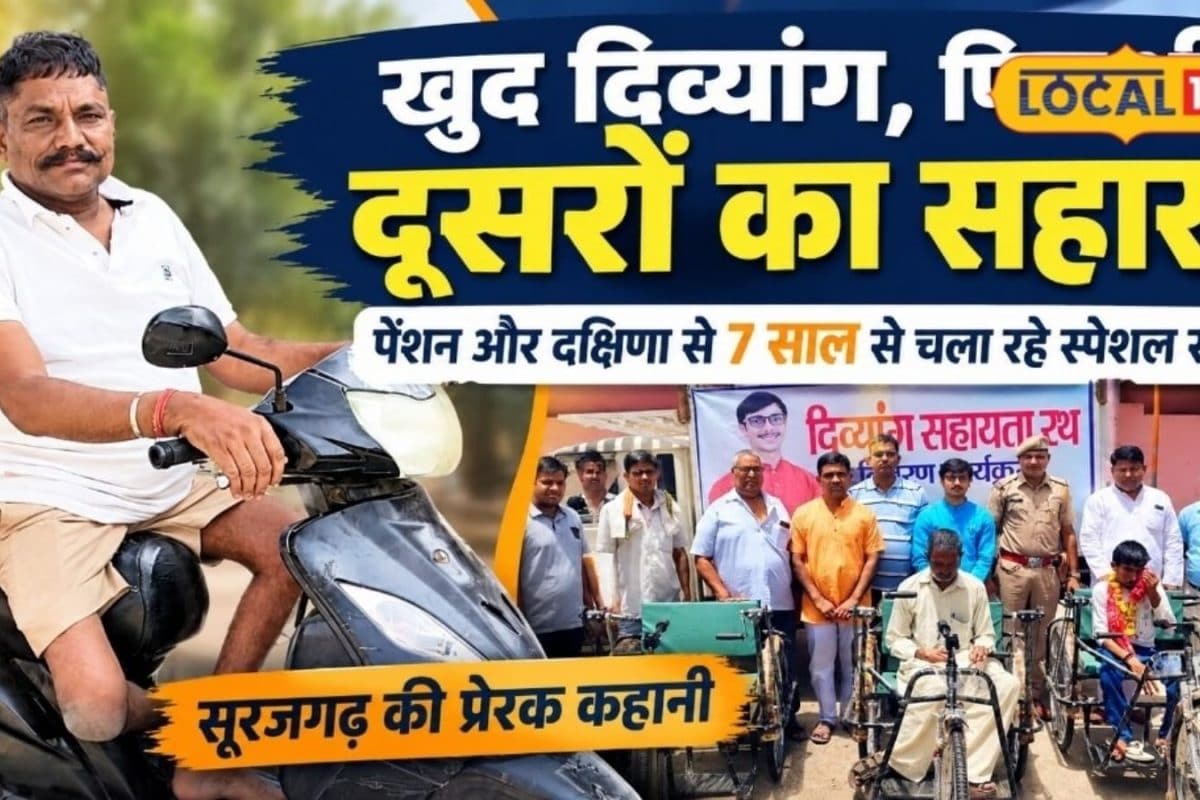
In the quiet town of Surajgarh within the Jhunjhunu district, an extraordinary narrative of human resilience and selfless social service is quietly reshaping the destinies of marginalized communities. Two determined friends, Ashok Sain and Jitendra Mahamiya, have embarked on a profound mission to alter the life trajectories of underprivileged disabled persons and elderly citizens. Despite navigating their own substantial financial constraints and daily hardships, this duo has consistently demonstrated that genuine intent and unwavering perseverance can surpass institutional limitations in fostering grassroots societal development.
The genesis of this remarkable social initiative stems from the personal lived experiences of Ashok Sain, who is himself physically challenged, alongside Jitendra Mahamiya, whose primary livelihood depends on conducting traditional religious rituals and receiving voluntary ceremonial offerings. Rather than succumbing to the limitations imposed by their respective economic realities, both individuals chose a path of active altruism. They recognized an urgent systemic void regarding accessible support structures for vulnerable disabled children and elderly residents within the region, prompting them to organize a sustained community outreach effort.
Operating without any large corporate funding or institutional backing, the foundation established by these two friends relies entirely on micro-level personal sacrifices and resource pooling. Ashok Sain channels his personal government disability pension and councilor allowances directly into funding these humanitarian interventions. Simultaneously, Jitendra Mahamiya dedicates twenty percent of his religious ceremonial earnings to support the operational expenses of their charitable endeavors, ensuring a steady, albeit modest, stream of resources for community welfare.
Through meticulous ground-level coordination, the organization spearheaded by Ashok Sain and Jitendra Mahamiya has successfully extended critical assistance to more than one hundred needy individuals across the district. Their multifaceted intervention framework addresses vital logistical hurdles, including the official acquisition of legal disability certificates, the distribution of customized tricycles for enhanced mobility, and direct financial cooperation for essential medical treatments and healthcare emergencies.
Beyond immediate material aid, the duo has addressed long-term educational deficiencies by establishing a free special school dedicated to imparting foundational education and vocational skills to disabled children. This educational institution serves as a crucial safe haven, fostering holistic development and intellectual growth for children who were previously excluded from mainstream academic opportunities due to systemic economic neglect and societal barriers.
While local administrative structures frequently encounter bureaucratic delays in executing comprehensive social welfare policies, grassroots initiatives of this nature highlight the indispensable role of proactive citizen participation. The relentless efforts of Ashok Sain and Jitendra Mahamiya act as an informal yet highly effective safety net, bridging critical gaps in public service delivery and bringing institutional welfare schemes directly to the doorsteps of deserving marginalized citizens.
Looking toward the future, both friends harbor an ambitious yet deeply compassionate vision to construct a dedicated residential ashram specifically tailored for disabled elderly citizens who lack familial support systems. Despite the ongoing hurdles posed by sparse financial resources, Ashok Sain and Jitendra Mahamiya remain resolute in expanding their service campaign, driven by the fundamental belief that dignity and care are absolute rights rather than privileges.
