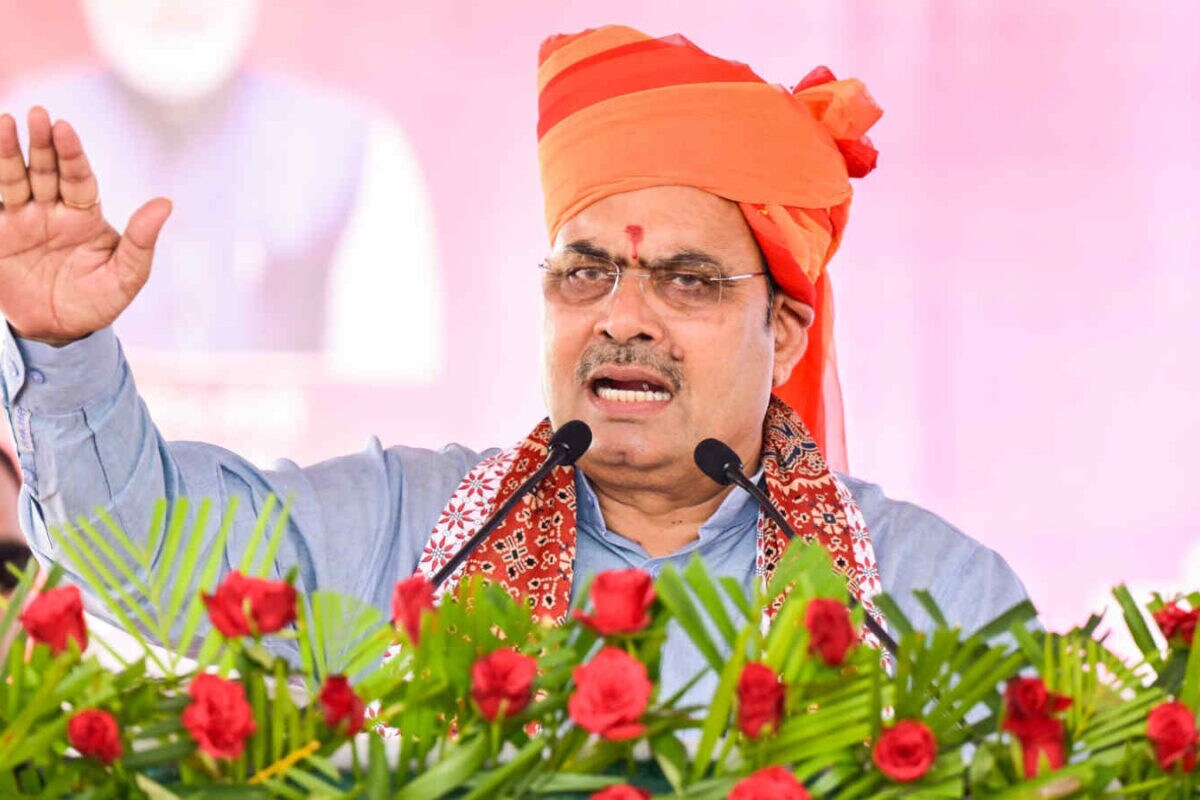
Ahead of the upcoming Rajasthan Panchayat elections in 2026, the Bharatiya Janata Party has officially released its comprehensive rural development manifesto, marking a major strategic development in the state's political landscape. Under the leadership of Chief Minister Bhajanlal, the newly unveiled roadmap places agricultural growth and rural welfare at the absolute centre of governance. The administration aims to reshape the economic conditions of rural households through structured financial interventions and targeted infrastructural enhancements.
The historical context of agrarian challenges in Rajasthan reflects long-standing struggles regarding input costs, irrigation deficits, and unpredictable weather patterns. Recognizing these enduring constraints, the ruling leadership has devised a targeted policy framework designed to alleviate the financial burden on rural cultivators. This policy evolution directly addresses the systemic gaps that have historically hindered agricultural productivity and the overall standard of living among farming communities throughout the region.
At the heart of the newly released manifesto is a definitive financial commitment providing ₹12,000 annually to eligible farmers across Rajasthan. In addition to this direct monetary support, the administrative blueprint mandates the establishment of dedicated Kisan Seva Kendras at every single village panchayat level. These centers are meticulously planned to operate as single-window facilities, ensuring that cultivators can access modern agricultural implements, fertilizers, technical advisory services, and governmental schemes under one roof without bureaucratic delays.
Stakeholder responses from various agricultural unions, local cooperatives, and village councils have emphasized the urgent need for such structural reforms. Farming representatives have noted that the integration of localized service hubs will drastically reduce logistical expenditures and save valuable time for cultivators who previously had to travel to district headquarters for essential agricultural inputs. Furthermore, the explicit inclusion of structured financial support is viewed as a vital cushion against rising operational expenses.
The regional impact of this announcement on districts such as Kotputli-Behror is expected to be profound, given the heavy reliance of the local economy on agrarian productivity. Local farming communities have historically faced acute challenges regarding groundwater extraction timings and erratic power supplies. The systematic implementation of these promises within Kotputli-Behror will directly benefit local crop yields, reduce input costs, and stimulate commercial activity within rural marketplaces and cooperative networks.
To ensure transparent execution, the administrative apparatus under Chief Minister Bhajanlal has outlined rigorous monitoring protocols for the establishment of the Kisan Seva Kendras and the direct disbursement of the ₹12000 annual assistance. Institutional oversight mechanisms will involve district-level committees tasked with verifying beneficiary lists and supervising infrastructural construction at the village panchayat level. This administrative rigor aims to prevent leakages and guarantee that intended benefits reach grassroots beneficiaries effectively.
Looking toward the future, the successful rollout of the 2026 rural development manifesto holds significant implications for the political and socio-economic trajectory of Rajasthan. As the timeline for the Panchayat elections approaches, the administration remains focused on fulfilling its core pledges, particularly the critical promise to supply electricity for irrigation during daytime hours, thereby liberating farmers from the arduous task of night-time irrigation. Public expectations remain high as the state transitions into a new phase of agricultural policy implementation.