
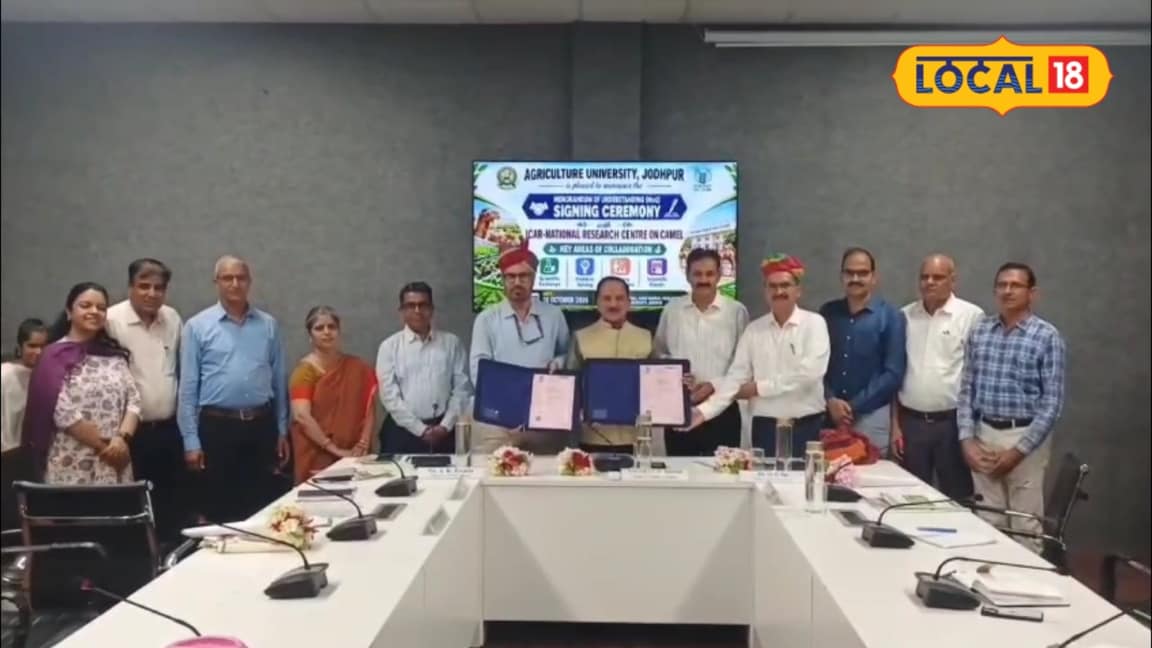
In a decisive move to revitalize rural economies and safeguard indigenous livestock, an institutional partnership has been officially established in Rajasthan. Agriculture University, Jodhpur, and the National Research Centre on Camel, Bikaner, have entered into a formal memorandum of understanding. This strategic agreement specifically targets the conservation of camels while actively commercializing camel milk production to generate sustainable livelihoods for regional livestock owners.
Historically, the majestic camel has served as an indispensable companion and logistical asset in the arid expanses of Rajasthan. However, socio-economic shifts, modern agricultural mechanization, and the rising costs of traditional pastoralism have triggered a steady decline in the camel population over recent decades. This alarming trend posed a severe threat not only to the ecological balance of the region but also to the cultural heritage tied directly to traditional camel-rearing communities.
The newly forged alliance between Agriculture University, Jodhpur, and the National Research Centre, Bikaner, addresses these financial and logistical vulnerabilities head-on. By establishing standardized frameworks for milk collection, processing, and distribution, the partnership aims to transform camel milk into a high-value commodity. This commercialization effort introduces structured market access, ensuring that herders receive fair compensation for their produce and transforming an endangered traditional practice into a lucrative contemporary enterprise.
Key stakeholders, scientific researchers, and pastoral representatives have widely welcomed this collaborative roadmap. Experts from the National Research Centre on Camel, Bikaner, along with academic leaders at Agriculture University, Jodhpur, emphasize that unlocking the therapeutic and nutritional properties of camel milk will open lucrative urban markets. This institutional backing provides herders with the necessary scientific support, veterinary guidance, and marketing networks to overcome previous logistical bottlenecks.
Although the primary institutional framework is anchored in western Rajasthan, the broader economic ripples of this initiative extend across administrative boundaries, positively influencing rural networks throughout the state. Local communities, including those in districts like Kotputli-Behror, view this agreement as a vital economic blueprint. By stabilizing the dairy economy around specialized livestock, regional farming households find renewed motivation to maintain indigenous herds rather than abandoning pastoralism entirely.
Administrative authorities and agricultural extension officers are currently drafting comprehensive implementation strategies to ensure seamless execution on the ground. Workshops and training sessions are planned to educate herders on modern hygienic milking standards, cold chain maintenance, and cooperative formation. These administrative measures are designed to bridge the gap between traditional husbandry practices and rigorous modern food safety regulations.
Looking toward the future, this collaborative initiative sets a robust benchmark for livestock conservation and rural economic development in Rajasthan. As the institutional frameworks take full effect, stakeholders anticipate a gradual recovery in camel populations alongside a thriving market for camel milk. Continued monitoring, financial incentives, and sustained institutional support will remain essential to securing long-term prosperity for the state's dedicated livestock herders.
