
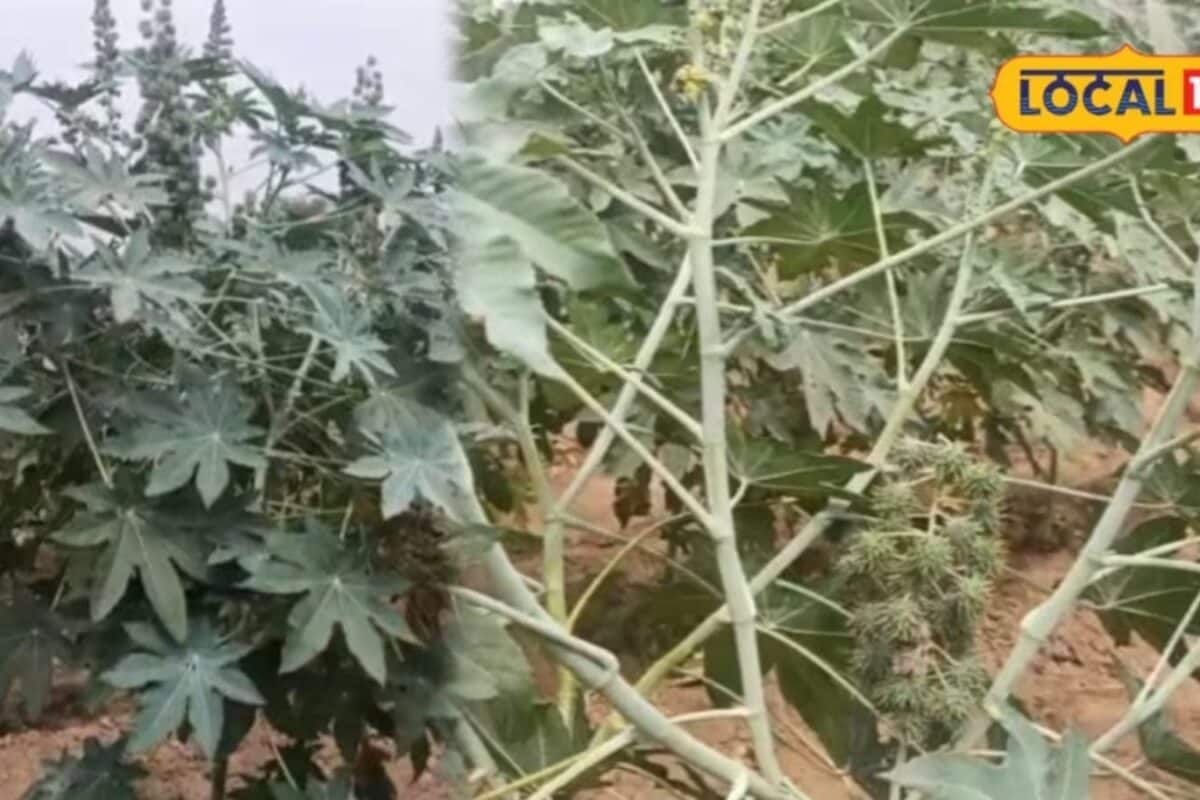
In the expansive and arid landscapes of Jalore district, deficient rainfall during the current agricultural season has cast a significant shadow over standard farming operations, yet an unexpected agricultural savior has emerged for the local peasantry in the form of castor cultivation. While conventional crops struggle significantly due to the acute scarcity of seasonal precipitation and limited irrigation facilities, farmers cultivating castor are observing promising agricultural resilience and robust plant development across the region.
Historically, agricultural patterns in Jalore have been dictated by the vagaries of the monsoon, forcing cultivators to constantly adapt to erratic weather phenomena and water scarcity. The cultivation of castor has gradually evolved as a strategic agricultural choice over decades, deeply rooted in the ecological realities of the region where subterranean water tables are distant and surface irrigation remains heavily constrained by environmental limitations.
The fundamental biological mechanism that renders castor exceptionally suited to Jalore district lies within its unique root architecture, featuring deep taproots that penetrate exceptionally far into the soil layers. This physiological adaptation allows the plant to efficiently scavenge and utilize residual moisture trapped deep beneath the surface, drastically minimizing its absolute dependence on frequent surface irrigation or heavy rainfall events.
Agricultural stakeholders, agronomists, and local farming veterans emphasize that while the deep-root system provides unparalleled drought tolerance, the overall yield and ultimate seed development remain contingent upon securing optimal moisture levels at critical phases of crop maturation. Farmers meticulously monitor soil conditions to ensure that the plants receive adequate hydration during sensitive growth windows to maximize both grain weight and oil content.
Beyond its remarkable agronomic resilience, the primary economic catalyst driving Jalore farmers toward castor is its formidable commercial footprint across national and international markets. The seeds harvested from this resilient crop are systematically processed to extract castor oil, a highly versatile commodity that serves as an indispensable raw material for the production of specialized soaps, advanced cosmetic formulations, and a wide array of sophisticated industrial products.
Given the unyielding industrial demand and favorable market pricing dynamics, castor cultivation functions as a crucial financial buffer, substantially safeguarding rural livelihoods against agricultural shocks caused by meteorological uncertainties. The consistent commercial uptake ensures that local agrarian households retain a dependable source of primary income, shielding them from the severe economic vulnerabilities typically associated with drought years.
Looking ahead toward the harvest season, the farming community across Jalore district maintains an optimistic outlook regarding both production volume and market realization. Despite the initial setbacks posed by inadequate rainfall, the resilient nature of the castor crop guarantees that diligent agricultural efforts will be duly rewarded, reinforcing the economic stability of the region and securing the livelihoods dependent on this vital cash crop.
