
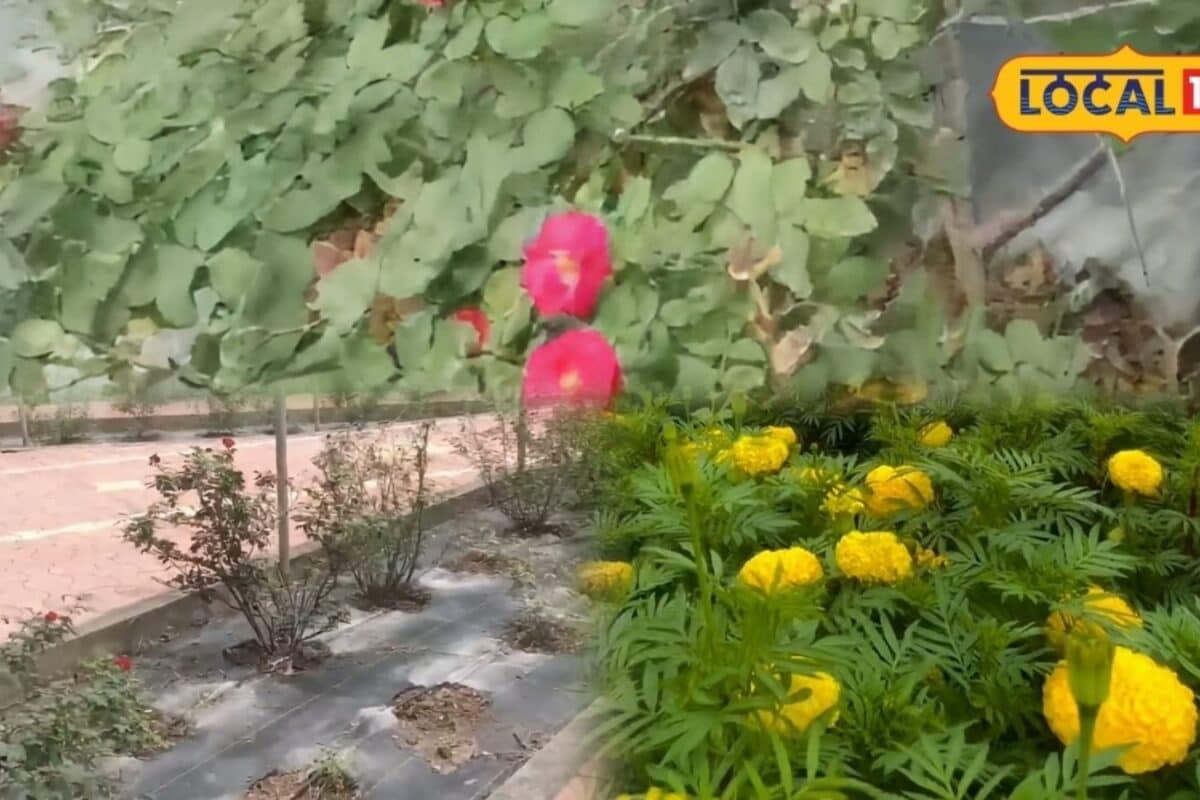
In an exemplary display of sustainable agriculture, an innovative organic floriculture initiative is currently flourishing at Tapovan, located within the premises of the Brahmakumari Institution in Amathala village, situated in the Sirohi district. This comprehensive farming model strictly relies on completely organic methodologies, entirely omitting synthetic chemical fertilizers in favor of natural organic manure alongside advanced scientific agricultural techniques. The agricultural project has drawn significant attention from regional farmers, environmentalists, and agricultural experts alike due to its outstanding productivity and adherence to ecological preservation.
The historical context of this agricultural endeavor stems from a growing regional need to promote chemical-free farming practices that safeguard soil health while ensuring economic viability for cultivators. Over recent years, agricultural authorities and spiritual institutions have increasingly emphasized the importance of returning to organic roots. The establishment of this specialized floriculture unit at Tapovan represents a concerted effort to demonstrate how traditional wisdom, when combined with modern scientific understanding, can yield exceptional agricultural outcomes without degrading the surrounding environment.
Examining the ground reality and the specific logistical stakes involved, the scale of production at the Tapovan farm is exceptionally noteworthy. Cultivation is presently distributed across specific land segments, where approximately two Bighas of land are dedicated exclusively to marigold cultivation, while roughly one and a half Bighas are utilized for growing thirteen different varieties of both domestic and exotic roses. The quantitative output from these modest land parcels is remarkable, with a single harvest cycle yielding up to three tons of marigold flowers from the designated two Bighas. Concurrently, the rose cultivation segment exhibits a consistent, robust daily harvest ranging between 800 to 1000 flowers.
Financial valuations and market dynamics surrounding these organic blooms further underscore the success of this agricultural model. In current commercial markets, marigold flowers are commanding prices between 3000 to 3500 rupees per quintal, reflecting steady demand for ritualistic and decorative purposes. Meanwhile, the high-grade domestic and exotic roses produced at the institution are fetching premium market rates ranging from 12000 to 14000 rupees per quintal. These lucrative pricing tiers validate the economic sustainability of organic floriculture, proving that high-quality, chemical-free produce can successfully compete and thrive within commercial marketplaces.
The regional impact of this successful agricultural model extends far beyond the immediate boundaries of Sirohi and Amathala village, resonating across neighboring districts including the broader Kotputli-Behror region. Local farmers and agrarian communities are increasingly observing these practices, recognizing that shifting toward diversified organic floriculture can significantly enhance farm incomes per bigha compared to traditional staple crops. The presence of such a successful benchmark initiative encourages regional agricultural cooperatives to explore similar ventures, thereby strengthening the local rural economy and fostering greater agricultural resilience.
Administrative response and institutional oversight continue to support such innovative agricultural frameworks. Agricultural extension officers and district horticulture departments are closely monitoring the methodologies employed at the Brahmakumari Institution's Tapovan. Authorities are evaluating these scientific organic practices to potentially integrate similar training modules into state-run agricultural workshops. Such institutional endorsement aims to provide local farmers with technical guidance, financial literacy regarding market pricing, and logistical support for organic certification processes.
Looking toward the forward outlook, the management and agricultural staff at the Tapovan facility anticipate expanding their outreach and refining their cultivation techniques even further in the upcoming harvest cycles. Public expectations remain high as local agricultural enthusiasts look forward to educational demonstrations and workshops hosted at the institution. As timelines progress, this organic floriculture model stands as a pioneering beacon for sustainable farming, promising long-term ecological balance and sustained financial returns for the regional agricultural community.
