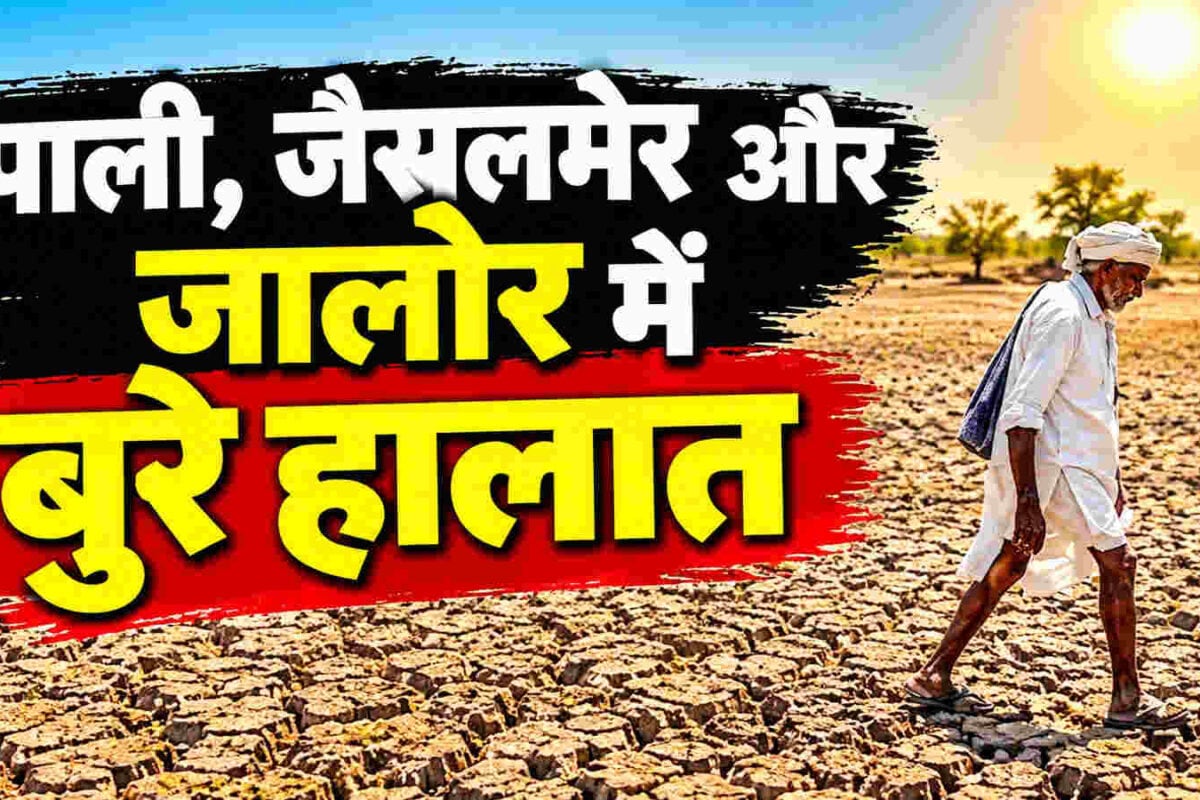
Rajasthan has plunged into the grip of its most severe and alarming drought in the past ten years, following an abrupt and catastrophic failure of the monsoon rains across the state. This dramatic climatic reversal stands in stark contrast to the previous year, during which the region experienced heavy downpours, widespread excess rainfall, and subsequent inundation in various pockets. The sudden transition from extreme wet conditions to absolute dryness has severely disrupted rural livelihoods, agricultural cycles, and the overall socio-economic fabric of the state, plunging millions of residents into profound distress.
Meteorological patterns and official assessments indicate that the current monsoon season has completely deserted large parts of the state, causing severe emotional and financial distress to communities. While the preceding year brought abundant moisture, the current year has witnessed a complete dry spell that has effectively paralyzed agricultural operations. Farmers who had prepared their lands with high expectations found themselves helpless as the skies remained perpetually overcast yet stubbornly dry, withholding the critical precipitation necessary for sowing and crop maturation.
A rigorous examination of meteorological data reveals that at least 11 districts, with Western Rajasthan bearing the brunt of the calamity, have recorded an alarming deficit ranging between 25 to 58 percent below normal rainfall levels. This statistical shortfall is not merely a weather anomaly but a monumental rural catastrophe that has brought agricultural activities to a grinding halt. Thousands of villages across the affected administrative zones have been officially declared or locally recognized as reeling under severe drought conditions, with agricultural fields turning into arid expanses of cracked earth.
The cascading economic repercussions of this prolonged dry spell are already taking a heavy toll on rural households, livestock owners, and local traders. With standing crops utterly destroyed across vast acreages, farming families have lost their primary source of annual income and sustenance. Furthermore, the acute scarcity of seasonal vegetation and water reservoirs has severely impacted cattle rearing, leading to a dramatic surge in fodder prices. Fodder rates have skyrocketed to unprecedented heights, placing an unbearable financial burden on dairy farmers and livestock keepers who are struggling to keep their animals alive.
In the regional context of Kotputli-Behror and surrounding areas, the wider socio-economic shockwaves of the statewide drought are deeply felt by local agrarian communities and agricultural marketplaces. Grain merchants, transport operators, and rural laborers are experiencing a sharp contraction in daily economic activity due to diminished purchasing power in the hinterlands. The shrinking availability of groundwater reserves for both irrigation and daily consumption has compounded the hardship, creating an atmosphere of palpable anxiety among local residents who depend entirely on seasonal precipitation.
Administrative authorities, agricultural extension officers, and district administration units are currently under intense pressure to formulate comprehensive relief strategies to mitigate the ongoing crisis. Emergency evaluations are underway to assess the exact extent of crop damage, identify the worst-hit households, and prepare contingency plans for drinking water and fodder supply. District officials are coordinating with state-level departments to ensure that relief funds, advisory services, and resource allocations reach the deepest pockets of the drought-affected territory without unnecessary bureaucratic delays.
Looking toward the months ahead, the state government and local administrations face a formidable challenge in steering the region through this protracted dry season until the next monsoon cycle arrives. Public expectations remain focused on swift administrative interventions, including financial compensation packages for ruined harvests, subsidized fodder distribution centers, and employment generation schemes under rural employment guarantees. As Kotputli News continues to monitor the unfolding situation, the resilience of Rajasthan's rural population remains the strongest bulwark against a decade-defining natural calamity.