
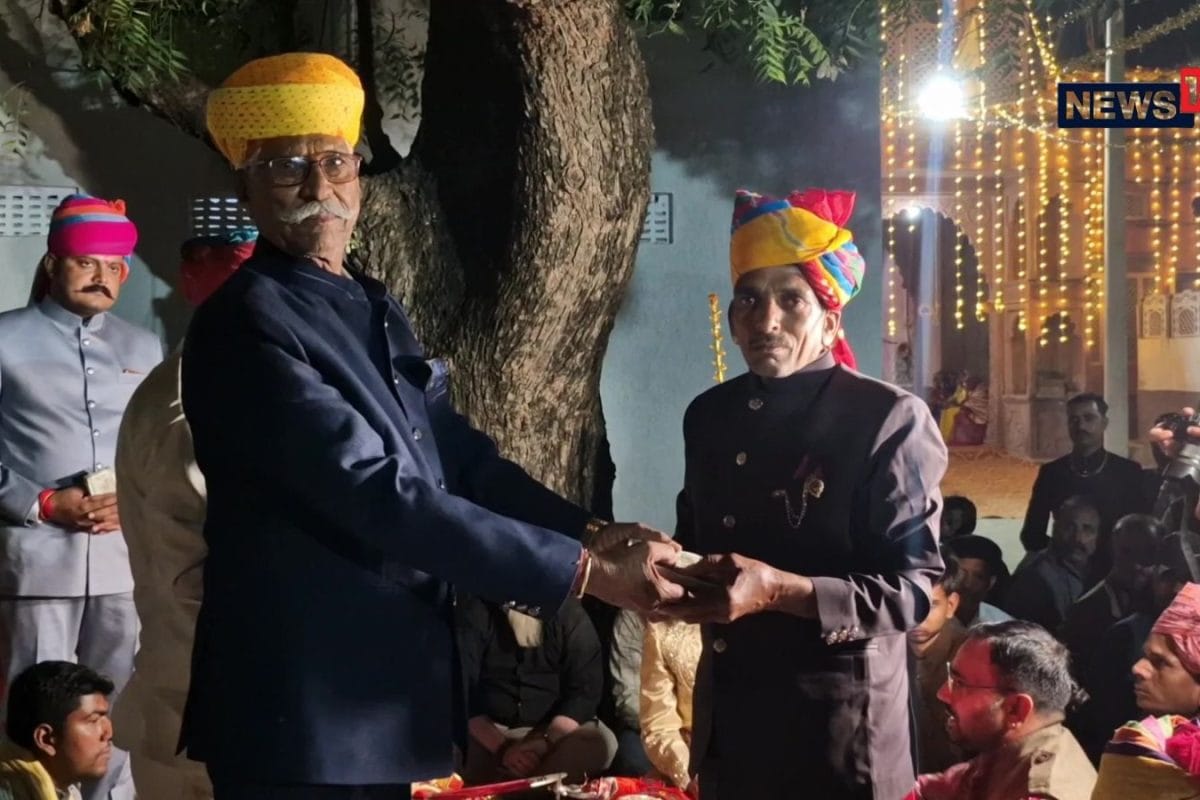
In an era where lavish weddings and deep-seated regressive customs frequently burden families, a remarkable incident of social reform has emerged from Bundi. Dhanraj Singh Hada, a resident of Chhavaniya in Bundi, has set a monumental precedent against the age-old menace of the dowry system. During the wedding ceremony of his son, Kaushal Singh, with Reena Kanwar—daughter of Kedar Singh Rathore from Piperouli, Ajmer—Dhanraj Singh took a resolute stand that has captured the attention and admiration of the entire community.
The roots of this progressive decision lie in a deliberate ideological rejection of materialism during sacred matrimonial alliances. For generations, traditional rituals such as 'tilak' have often evolved into financial tests or subtle pressure points for the bride's family. Recognizing this systemic flaw, Dhanraj Singh Hada, along with his brother Mangraj Singh Hada, determined well in advance that their family would not partake in accepting monetary manifestations of dowry, thereby choosing human dignity over financial transactions.
The focal point of this commendable event materialized when the bride's father, Kedar Singh Rathore, presented the customary tilak amount of 51 thousand rupees as per prevailing societal customs. Rather than accepting the tender, Dhanraj Singh Hada and Mangraj Singh Hada politely but firmly declined the cash envelope. In full view of the assembled relatives and wedding guests, they handed the exact sum back to the bride's family, declaring unequivocally that sons and daughters deserve absolute equality without financial valuation.
The immediate atmosphere at the venue transformed into one of profound appreciation and emotional resonance. Witnesses and distinguished guests present at the ceremony responded with thunderous applause, visibly moved by the integrity displayed by the groom's family. Community elders and intellectuals noted that such public displays of resistance against regressive social norms are essential catalysts for driving long-overdue cultural transformation across Rajasthan and neighboring districts.
While this particular ceremony took place within the specific confines of Chhavaniya and Piperouli, the ripple effects of this action extend far beyond individual family units. In districts like Kotputli-Behror and surrounding administrative divisions, civil society organizations and local communities have continuously campaigned against exorbitant wedding expenditures. The principled stance taken by Dhanraj Singh Hada provides concrete validation to these grassroots campaigns, proving that change begins when individuals refuse to compromise on ethical grounds.
Administrative observers and social activists frequently emphasize that statutory laws alone cannot eradicate deeply entrenched social practices unless influential citizens actively champion reform from within. By dismantling the acceptance of even modest dowry tokens like the 51 thousand rupees tilak, the Hada family has demonstrated that true honor stems from mutual respect and egalitarian values rather than material exchanges. Such actions fortify the ongoing legislative and social frameworks aimed at protecting families from financial distress.
Looking forward, community leaders and local stakeholders anticipate that this exemplary gesture will inspire upcoming matrimonial alliances in Bundi, Ajmer, and beyond. As families increasingly witness the social respect and peace of mind earned through such principled decisions, the cultural narrative surrounding weddings is poised for a constructive shift. The courageous initiative by Dhanraj Singh Hada and Mangraj Singh Hada remains a shining beacon of progressive thought for contemporary society.
