
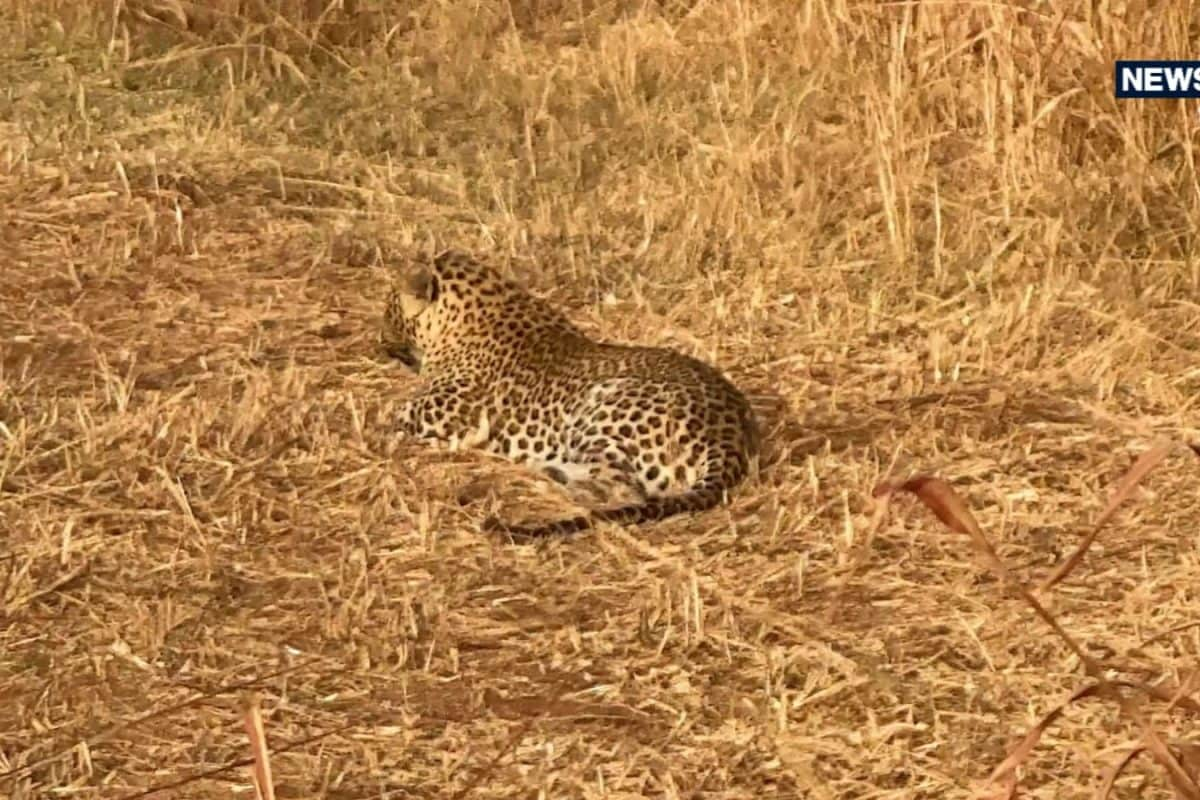
A sudden wave of panic and apprehension swept through Dudaliya village located in the Amet region of Rajsamand district on Sunday morning. A local farmer, upon reaching his agricultural field early in the day, made an alarming discovery of a fully-grown panther resting comfortably. The wild feline had chosen the open farmland as a spot for basking in the gentle morning sunlight, remaining completely oblivious to the human settlement nearby.
The incident quickly drew the attention of agricultural workers and nearby residents who gathered at a safe distance to observe the unusual sight. Encounters with wild carnivores in agricultural zones have historically triggered intense debates regarding human-wildlife coexistence and the shrinking natural habitats of indigenous fauna across the region. The presence of a predatory animal in close proximity to daily farming activities naturally heightened local anxieties concerning safety.
According to eyewitness accounts from the ground, what made this particular sighting exceptionally unusual was the complete lack of movement from the animal. The panther reportedly stayed anchored in the exact same spot for an extended duration without showing any signs of aggression, alertness, or standard territorial flight responses. This unnatural docility immediately raised serious concerns among the gathered villagers regarding its physical condition, with many speculating that the creature might be severely ill, injured, or critically weakened.
Local farmers and community elders held immediate informal deliberations regarding the potential threat the immobilized predator posed to agricultural laborers who frequent the fields daily. While no direct confrontations or casualties have been reported thus far, the prevailing sentiment among the residents is one of profound vulnerability. Community members stressed that working in the fields has temporarily come to a standstill as safety concerns take precedence until professional intervention is successfully executed.
The ecological implications of such wildlife movements extend broadly across the rural landscape, impacting agricultural routines and traditional livelihoods. Farmers whose primary source of sustenance depends on uninterrupted access to their lands find themselves constrained by the looming presence of a potentially distressed apex predator. The local rural economy and daily labor patterns experience immediate disruptions whenever wildlife strays into cultivated territories, necessitating heightened vigilance and cautious resource management.
Promptly recognizing the severity of the situation and the inherent risks to both the villagers and the wild animal, local community representatives escalated the matter to the authorities. Formal information regarding the panther's precise location and immobile state was dispatched without delay to the local division of the Van Vibhag (Forest Department). Administrative protocols mandate systematic assessment and safe tranquilization or rescue operations under such circumstances to prevent any unfortunate escalations.
As the daylight progresses, the entire village remains in a state of watchful waiting, casting anxious glances toward the fields while anticipating the arrival of the specialized rescue teams. The primary objective shared by both the local populace and administrative authorities is the safe extraction and subsequent medical evaluation of the panther. The community continues to cooperate fully with the local forest officials, hoping for a swift and peaceful resolution to an incident that has underscored the delicate balance between rural expansion and natural wildlife corridors.
