
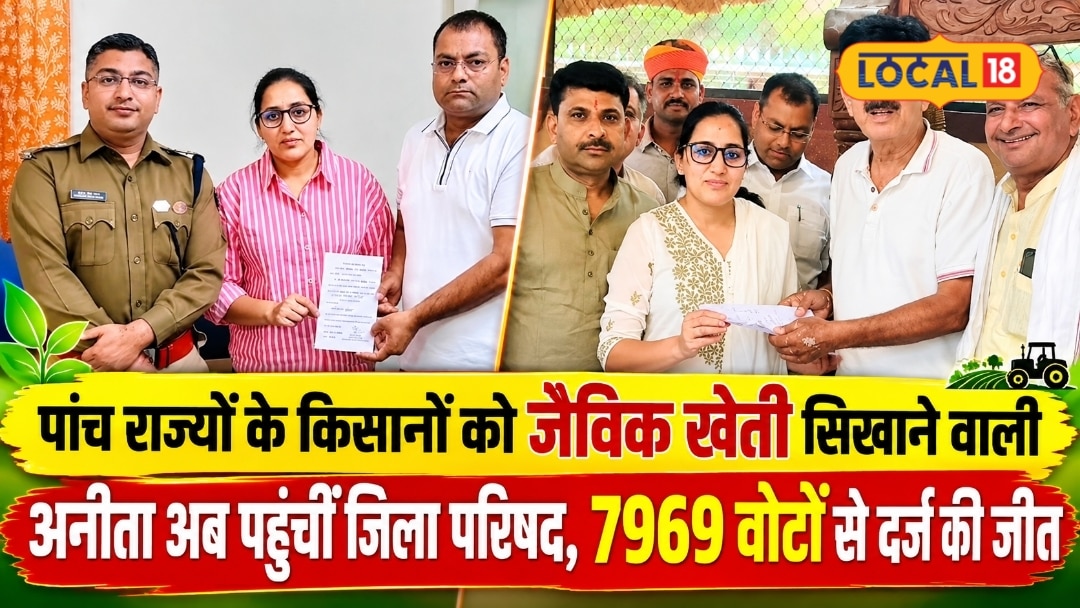
In a significant political development from Jhunjhunu, Anita Singh, a renowned agricultural influencer commanding millions of followers, has successfully transitioned from digital advocacy to formal governance by winning a district council seat. Contesting the elections on a Congress ticket from ward number 32, she established a formidable political presence by defeating her opponents with an impressive margin of 7,969 votes. This victory marks a new chapter for a leader who has long utilized digital platforms to champion the cause of sustainable agriculture and rural empowerment.
The foundational journey of Anita Singh began long before her electoral debut, rooted deeply in her relentless advocacy for sustainable farming practices through her widely recognized initiative, India Organic. Over the years, she built a massive digital footprint, leveraging social media networks to reach millions of followers across the country. Her mission has consistently centered on eliminating chemical dependency in farming, reviving traditional agricultural wisdom, and introducing modern, eco-friendly organic farming techniques to the agrarian community.
Her electoral campaign in ward number 32 was characterized by intense grassroots engagement, logistical mobilization, and direct appeals to rural constituents. The statistical mandate was decisive, with the official tally confirming her victory by precisely 7,969 votes. This substantial margin reflects not only the organizational strength of her political affiliation under the Congress banner but also the profound personal trust and goodwill she has earned through her years of dedicated fieldwork and agricultural activism.
Stakeholders, local residents, and farming communities have expressed immense enthusiasm over her electoral success, viewing her transition into formal legislative politics as a much-needed bridge between policy formulation and grassroots realities. Supporters and agricultural experts note that her deep understanding of rural distress, market challenges, and ecological degradation equips her uniquely to articulate the genuine grievances of the farming community within administrative corridors.
The resonance of this victory extends far beyond the immediate boundaries of Jhunjhunu, holding significant implications for the broader regional economy and rural development frameworks. As Kotputli News continuously monitors regional socio-political dynamics, analysts observe that the integration of expert agricultural advocates into local governance bodies can drastically improve the implementation of rural development schemes, irrigation initiatives, and agricultural subsidies.
Administrative authorities and local governance institutions are expected to collaborate closely with newly elected representatives to address persistent infrastructural and agricultural challenges. The formal induction of leaders with proven expertise in sustainable development is anticipated to streamline policy execution, ensuring that developmental funds and welfare programs reach the most marginalized farming households without administrative bottlenecks.
Looking forward, Anita Singh faces a demanding yet promising tenure as a district council member, with public expectations set exceptionally high regarding rural transformation and agricultural reforms. Her stated objective remains clear: utilizing her political platform to amplify the voices of farmers and rural populations. As she assumes her official responsibilities, the rural constituents of Jhunjhunu and neighboring regions anticipate a proactive governance model anchored in transparency, sustainability, and grassroots empowerment.
