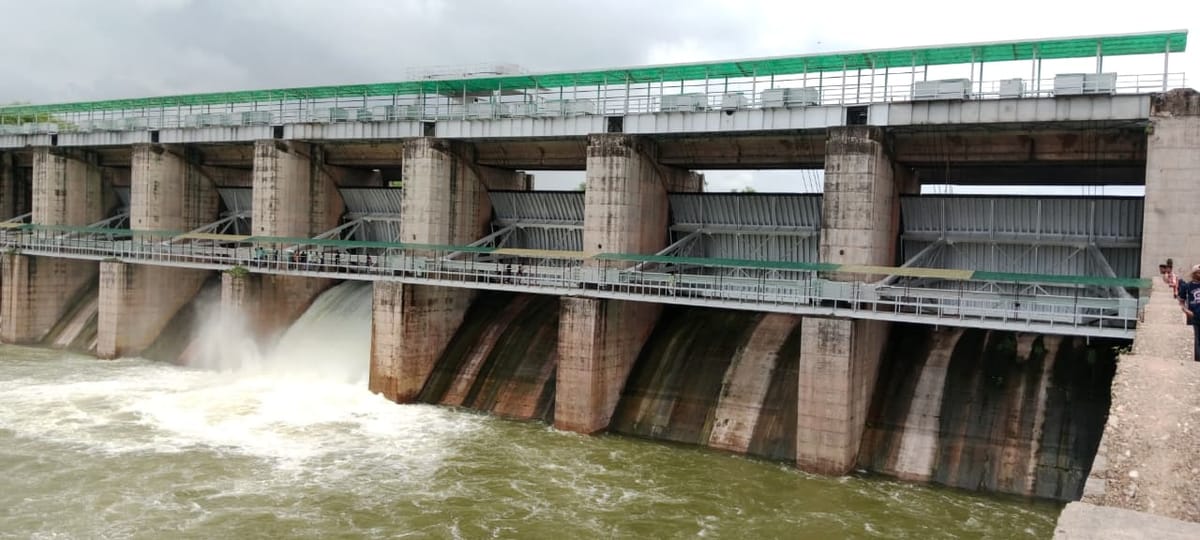
In a significant meteorological and hydrological development within the region, the Naunera Dam in Rajasthan has reached its capacity limits following relentless water inflow originating from Etawah. The continuous accumulation of water has necessitated immediate operational interventions by dam safety engineers and irrigation department authorities, who have orchestrated the opening of five primary sluice gates to safely regulate the burgeoning reservoir capacity.
The engineering background of the Naunera Dam project highlights its critical role in regional water resource management, irrigation supply, and flood mitigation. Historically designed to harness seasonal water currents and stabilize agricultural yields across neighboring districts, the reservoir serves as a vital hydrological anchor. The sudden and intense surge from upstream Etawah has once again tested the structural resilience and management protocols established for the facility.
Current ground assessments confirm that the water level within the massive reservoir has surged to a critical mark of 217 meters. To alleviate mounting hydrostatic pressure and manage the continuous volume entering the basin, precisely 50,000 cusecs of water are being steadily discharged downstream. Technical monitoring teams are closely tracking inflow ratios to ensure that structural integrity remains uncompromised during this heavy release phase.
Local stakeholders, including agricultural communities, local merchants, and regional residents, have expressed mixed reactions of cautious concern and relief regarding the massive water release. While farmers dependent on canal networks recognize the replenishment value of abundant water supplies, downstream settlements remain vigilant regarding potential riverbank overflows and localized inundation risks that typically accompany such massive volumetric displacements.
The broader regional impact extends toward the surrounding districts and rural economies, where local authorities have initiated preemptive advisories to safeguard livestock and agricultural equipment near low-lying floodplains. The local administration is coordinating closely with disaster management units to ensure that economic disruption is minimized while public safety protocols are rigorously enforced across all vulnerable corridors.
Administrative response from the district headquarters has been swift, characterized by round-the-clock monitoring rooms and active communication channels linking dam operators with civil defense teams. Officials are continuously reviewing meteorological forecasts and upstream flow data to coordinate synchronized responses, thereby mitigating any sudden downstream emergencies before they materialize into hazardous situations.
Looking toward the immediate operational outlook, irrigation authorities have announced proactive preparations to further escalate the water discharge rate up to 75,000 cusecs if the upstream inflow from Etawah persists at its current high intensity. Public safety warnings remain firmly in effect, and downstream communities are strongly advised to steer clear of river channels until the hydrological situation stabilizes completely.