
In an era marked by escalating environmental challenges and continuously plummeting groundwater levels, agricultural innovation has emerged as the ultimate savior for farming communities across the region. A remarkable testament to this resilience comes from Jhunjhunu, where a dedicated local farmer has transformed agricultural adversity into an opportunity through sheer ingenuity. This comprehensive report examines the groundbreaking irrigation method adopted locally, which is rapidly gaining attention as a beacon of hope for drought-prone farming tracts.
The agrarian landscape of the region has historically grappled with severe water scarcity, leaving traditional farming methods inadequate and putting enormous pressure on depleting underground water reservoirs. Successive seasons of deficient rainfall and excessive extraction through tube wells have pushed the local rural economy to a critical crossroads. Against this gloomy backdrop, sustainable water conservation practices are no longer merely optional but represent an absolute existential necessity for the survival of local agriculture.
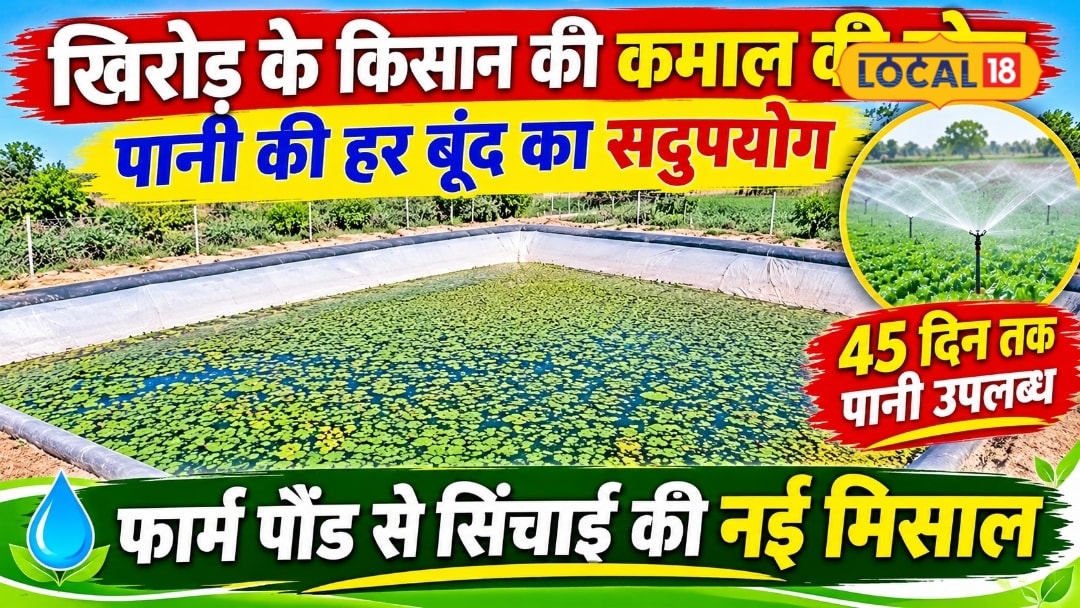
Addressing this formidable challenge head-on, local farmer Madanlal Gurjar constructed a dedicated farm pond to harvest and store precious water resources efficiently. Moving away from outdated and wasteful irrigation practices, he engineered a sophisticated pipeline system that powers twenty nozzles simultaneously through sprinkler irrigation. This technical intervention ensures that every single drop of water is utilized with maximum efficiency, preventing the massive evaporation and seepage losses typically associated with traditional open-channel flooding methods.
Agricultural experts, local community members, and fellow cultivators have closely observed the remarkable logistical viability of this system. According to practical field assessments, the logistical utility of the farm pond is exceptionally high. Once the pond is completely filled, operating twenty nozzles continuously for six hours every day can sustain systematic crop irrigation for approximately forty-five days without placing an unsustainable burden on local groundwater tables.
The broader regional impact of this innovative approach extends far beyond a single agricultural holding, offering a viable economic roadmap for surrounding districts including Kotputli-Behror. Local agrarian economies heavily rely on stable crop yields, and mitigating water scarcity directly translates into secured rural livelihoods, enhanced food security, and financial stability for farming households. By maximizing the utility of low-pressure tube well water, cultivators can maintain lush crops even during peak summer months.
Administrative bodies and regional agricultural extension departments have consistently emphasized the urgent need for structural water harvesting mechanisms to combat ecological degradation. The success observed in Jhunjhunu serves as a practical blueprint that government agencies can promote through subsidized farm pond schemes and technical training workshops. Bureaucratic encouragement combined with grassroots adoption is vital for scaling such water-saving models across wider geographical zones.
Looking toward the future, the integration of micro-irrigation technologies with community-level water storage infrastructure holds immense promise for the long-term sustainability of regional agriculture. As climate patterns become increasingly unpredictable, the adoption of efficient methodologies pioneered by forward-thinking individuals will dictate the resilience of the rural economy. Public expectations now rest on wider administrative outreach to replicate these successful practices universally.
