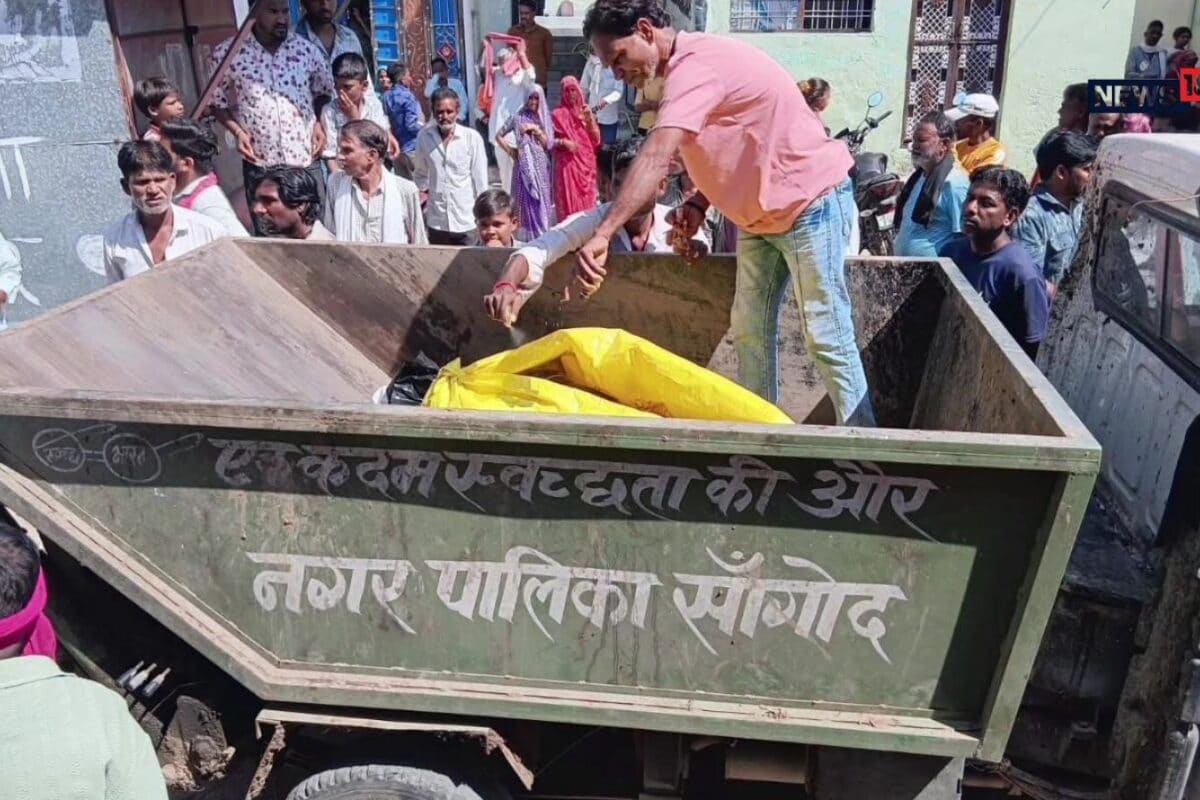
In an incident that has sent shockwaves across the region and shaken the collective conscience of society, profound apathy has been exposed in Sangod town of Kota district. The mortal remains of a municipal sanitation worker were transported not in a dignified mortuary van or an ambulance, but rather in a municipal garbage vehicle. This distressing reality has triggered widespread outrage and brought critical administrative failures under intense public scrutiny regarding emergency services and basic human dignity.
The tragic sequence of events began when Rakesh Valmiki, who served as a dedicated sanitation worker for the municipality, mysteriously went missing starting from October 7. Families, colleagues, and local residents endured days of agonizing uncertainty, searching for any trace of his whereabouts while filing missing person reports and mobilizing community efforts to locate him safely across the jurisdiction.
The agonizing search ultimately met a tragic end on Friday, when the lifeless body of Rakesh Valmiki was discovered inside a drain located in Khanpur. According to initial reports from the ground, the corpse had already undergone severe decomposition and was emitting an intense, overpowering foul odor due to being submerged and exposed to the elements for several days.
When the grim task of transporting the remains back to Sangod arose, grief-stricken family members faced an insurmountable humanitarian barrier. Because of the extreme state of decomposition and the resulting foul stench, every single private vehicle driver approached by the family flatly refused to carry the body in their vehicle, leaving the grieving relatives completely helpless and isolated in their moment of profound despair.
Faced with this heart-wrenching refusal from commercial and private transport operators and an apparent total absence of prompt official assistance, the family was left with no viable alternative. In an act of sheer desperation that laid bare the systemic inadequacies of local public health and municipal logistics, the mortal remains of the municipal employee had to be loaded into and hauled back in a garbage collection vehicle.
This deplorable oversight has cast a harsh spotlight on the functioning of the local municipal administration and emergency health apparatus in the district. Questions are being forcefully raised by civil society members, labor unions, and local residents as to why a dedicated sanitation worker, who spent his life keeping public spaces clean, was denied basic dignity in his death and why no official ambulance or mortuary van was promptly dispatched to handle the sensitive situation.
As community leaders and local representatives demand a thorough, transparent inquiry into the gross administrative negligence, public pressure continues to mount on district authorities. The incident serves as an alarming reminder of the urgent need for structural reforms, accountability mechanisms, and humane standard operating procedures for emergency corpse transportation across all administrative tiers.