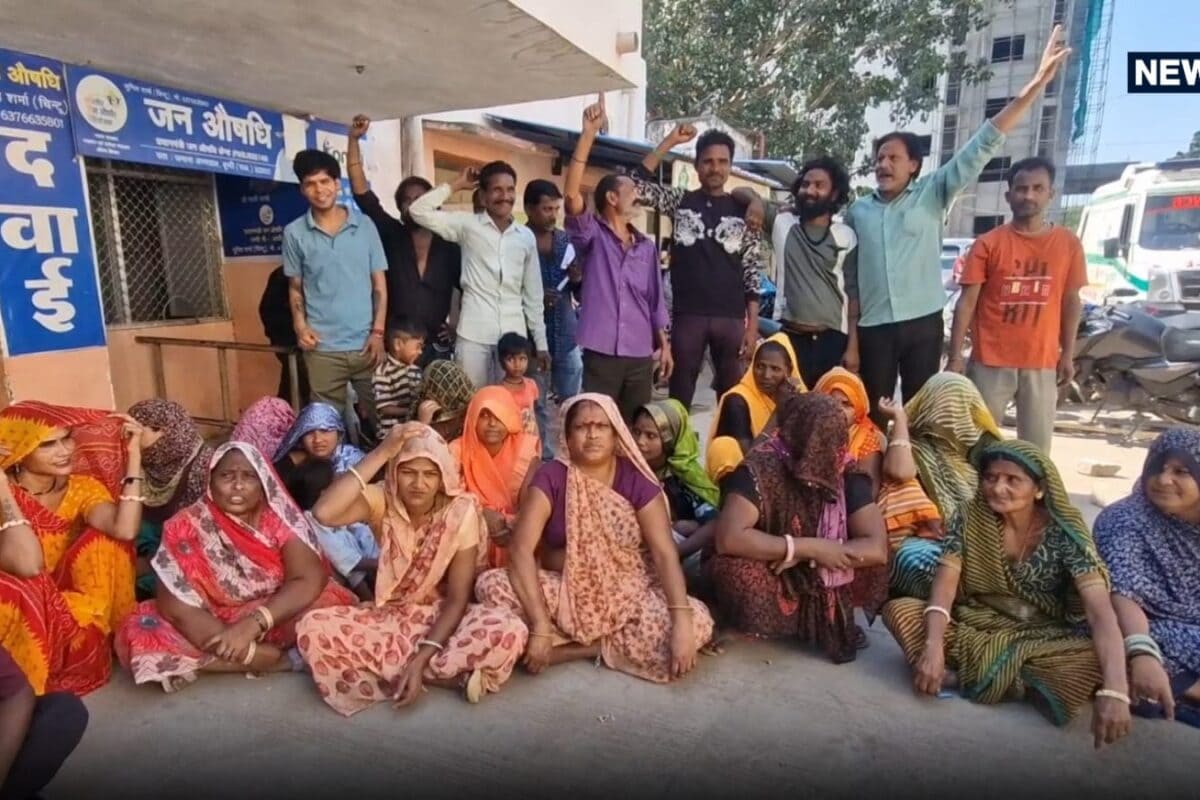
A severe administrative crisis has unfolded at the Bundi district hospital as sanitation services ground to a halt following an indefinite strike launched by the support staff. Approximately 36 sanitation workers, who perform critical daily upkeep duties at the medical facility, have completely withdrawn their services to protest against prolonged wage deprivation. The striking personnel, comprising both female and male workers deployed through a contracting agency, report that they have not received any compensation for the past 4 to 5 months, forcing them into immense destitution and forcing a paralysis of routine hospital sanitation management.
The roots of this severe labor dispute trace back to persistent financial mismanagement and administrative negligence by the external contracting company entrusted with the management of housekeeping personnel. According to the affected workers, the contractual arrangement provides for a paltry monthly payment of 6400 rupees, which itself is subjected to arbitrary and unjustified deductions by the agency. For months, these economically vulnerable individuals have absorbed the financial shock without any institutional support, relying entirely on accumulating debt and borrowing money from local lenders merely to sustain their households and feed their families.
The ground reality at the hospital reflects a total breakdown of hygiene maintenance, directly impacting patients, visitors, and medical practitioners alike. The strike action intensified when frustrated workers abandoned their brooms and mops, gathering at the hospital's primary entrance to stage a vociferous demonstration. Banners were displayed and anti-management slogans were raised against the contractor, highlighting the exploitation of low-income workers who form the backbone of the public healthcare infrastructure. The absence of sanitation services threatens public health standards inside wards, corridors, and critical care units across the entire medical institution.
As community anxiety mounts regarding the deteriorating sanitation standards, local stakeholders and citizen groups have voiced profound concern over the exploitation of marginalized labor within government facilities. The failure of the contracting agency to disburse regular monthly stipends has transformed a routine administrative duty into a major socio-economic flashpoint. Observers note that while the medical staff continues to attend to patients, the compounding filth threatens to spark secondary infections, raising immediate public safety concerns that demand urgent systemic intervention from health authorities.
Although the epicenter of the crisis is restricted to the Bundi district hospital, the broader regional administrative ecosystem, including neighboring districts across the division, faces mounting scrutiny regarding the oversight of third-party vendors. The rampant delays in processing minimum wage disbursements highlight systemic vulnerabilities in how outsourced contracts are monitored and enforced by public sector administrators. The local community and civil society organizations have demanded a comprehensive review of all third-party staffing arrangements to prevent such severe disruptions in essential public services.
Looking forward, the resolution of this immediate crisis depends entirely on whether the contracting agency fulfills the explicit commitments made by the Principal Medical Officer. While the assurance of payment within a day or two has provided temporary relief to the agitating workers, labor representatives emphasize the necessity for long-term structural reforms. This includes direct oversight of wage distributions, stringent penalties for contractor defaults, and foolproof mechanisms to guarantee that low-wage support personnel receive their legal entitlements punctually without facing arbitrary deductions.