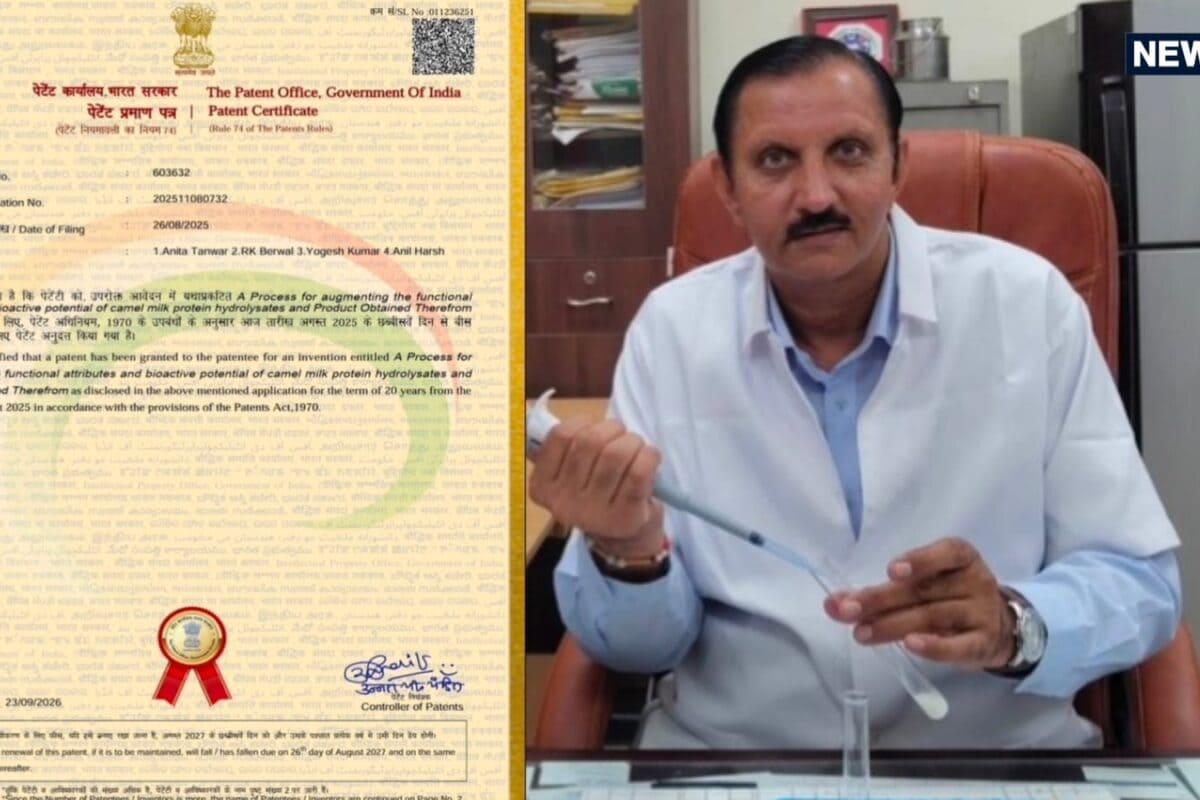
In a significant development for the agricultural and dairy sectors, scientists in Rajasthan have achieved a monumental research breakthrough concerning the utilization of camel milk. The Government of India has officially granted a patent for the pioneering research conducted under the indigenous milk product project of the Rajasthan University of Veterinary and Animal Sciences, located in Bikaner. This landmark recognition marks a major milestone in dairy research, paving the way for enhanced commercial viability and nutritional utilization of camel milk across the region and beyond.
The historical context of this research is rooted in the continuous quest to discover and enhance the economic and nutritional value of indigenous livestock resources in arid and semi-arid zones. Camel rearing has traditionally been a cornerstone of the desert economy in Rajasthan, yet the commercial exploitation of camel milk has historically faced significant hurdles due to rapid spoilage and limited processing technologies. Recognizing these challenges, researchers at the Rajasthan University of Veterinary and Animal Sciences initiated specialized studies under their dedicated indigenous milk product project to unlock the full potential of this unique dairy resource.
According to Dr. Rajkumar Berwal, the breakthrough involved a sophisticated scientific process during the research phase. Specifically, the casein protein powder derived from camel milk was subjected to an advanced hydrolysis process using ultrasonic rays and specialized enzymes. The implementation of this innovative technique led to a marked improvement in the nutritional quality of the prepared dairy products, alongside a substantial increase in their overall yield. These quantitative enhancements provide a robust scientific foundation for future commercial applications in the dairy industry.
Stakeholders and agricultural experts have observed that the most critical finding of this research is the doubling of the shelf life of these camel milk products. In the dairy sector, product longevity is a primary determinant of market reach and commercial success. By significantly extending the period during which the milk products remain safe and viable, this research effectively mitigates the historical constraints associated with the rapid degradation of fresh camel milk, thereby transforming storage and distribution dynamics.
The regional impact of this official patent is expected to be profound for pastoral communities and camel rearers. Regions traditionally dependent on camel herding stand to gain significantly from the enhanced utility of camel milk and the prospective expansion of commercial markets. With improved storage and transport capabilities, camel rearers can now look forward to reaching distant consumer bases, thereby securing better financial returns and breathing new life into local rural economies.
From an administrative and regulatory perspective, the granting of the patent by the central government provides formal, statutory recognition to the years of rigorous scientific investigation conducted by the university team. This official validation protects the intellectual property rights associated with the enzymatic and ultrasonic hydrolysis technique and establishes a regulatory framework that encourages further innovation within the state's agricultural research institutions.
Looking toward the future, this technological breakthrough sets a positive trajectory for the development of an array of new value-added dairy products derived from camel milk. As these methodologies transition from laboratory research to commercial manufacturing, public expectations remain high for sustained improvements in the livelihood of livestock owners. The successful implementation of this patented process promises a transformative era for dairy science and pastoral economics throughout Rajasthan.