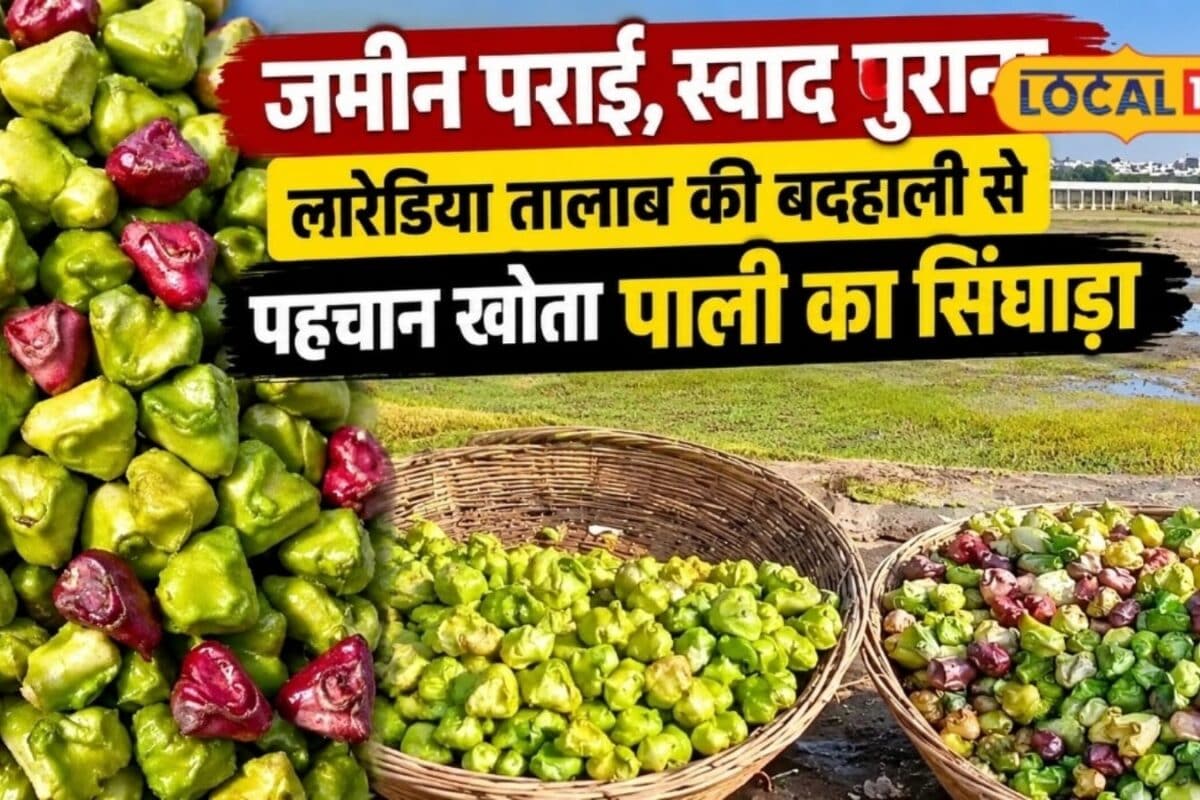
The agricultural landscape of Pali district in Rajasthan is currently confronting a profound environmental and cultural crisis as its most cherished seasonal delicacy, the sweet and crispy water chestnut, faces imminent extinction from its native habitat. For generations, the local economy and agricultural identity of Pali have been inextricably linked to the cultivation of high-quality water chestnuts in the region's historic water bodies. However, severe ecological neglect has transformed these once-pristine aquatic ecosystems into severely polluted drainage basins, stripping the local farming community of a vital seasonal livelihood and depriving regional markets of their most famous local harvest.
Historically, the epicenter of this agricultural tradition was the renowned Lordiya Pond, an expansive historical water body that historically supported large-scale, thriving water chestnut farming across its fertile expanse. The favorable climatic conditions and nutrient-rich waters of the pond traditionally produced water chestnuts renowned far and wide for their exceptional sweetness, crisp texture, and superior quality. Generations of local farming families relied upon this seasonal crop as a dependable source of supplementary income, mastering specialized indigenous cultivation techniques passed down through centuries to nurture the aquatic plants through the winter season.
In recent years, however, the ecological integrity of the Lordiya Pond has deteriorated precipitously due to unchecked urban encroachment, inadequate municipal waste management, and the continuous discharge of untreated sewage into the basin. The cumulative deposition of domestic garbage, toxic runoff, and thick layers of accumulated silt has fundamentally altered the chemical composition and biological health of the water body. This severe water contamination has rendered the aquatic environment entirely hostile to water chestnut cultivation, leading to widespread crop failures, declining yields, and mounting financial losses for the dedicated cultivators who once depended on these traditional farming practices.
Faced with persistent financial ruin and insurmountable agricultural obstacles, local farmers have made the agonizing decision to completely abandon the traditional cultivation of water chestnuts in Pali district. The combination of poisoned waters, prohibitive cleaning costs, and the absence of viable administrative support has broken the resilience of the farming community. Consequently, during the ongoing winter season, consumers and traders will experience a complete absence of locally harvested water chestnuts from Pali's own ponds, marking a historic break in a centuries-old agricultural tradition that defined the region's culinary and economic landscape.
Despite the cessation of local production, consumer demand for the legendary sweet and crispy produce remains remarkably robust throughout regional markets, forcing local merchants to adapt to the shortage. To satisfy persistent commercial demand, traders are now actively importing water chestnuts from alternative supply centers, primarily sourcing shipments from Beawar and surrounding agricultural zones. While this commercial workaround temporarily sustains market availability, it underscores the profound economic loss suffered by local producers who have been entirely sidelined from the supply chain of their native crop.
Community leaders, agricultural experts, and concerned residents have expressed deep alarm regarding the deteriorating situation, warning that urgent and decisive action is imperative to save the region's agricultural heritage. Local stakeholders emphasize that without comprehensive governmental intervention focused on the complete restoration, desiltting, and ecological rejuvenation of the Lordiya Pond, this defining regional specialty will be relegated entirely to the history books. Public appeals are growing louder for immediate municipal and state-level oversight to rehabilitate contaminated water bodies and protect traditional agro-ecosystems from further degradation.
Looking toward the future, the revival of water chestnut cultivation in Pali district depends entirely upon the prompt implementation of structured administrative rehabilitation programs and stringent environmental safeguards. Citizens and farming advocates continue to urge district authorities to prioritize the structural restoration of historic water reserves, ensuring that pollution sources are permanently cut off and natural drainage systems are restored. Only through sustained political will, community engagement, and rigorous ecological management can Pali hope to reclaim its lost agricultural legacy and ensure that future generations can once again cultivate the sweet water chestnuts of their native soil.