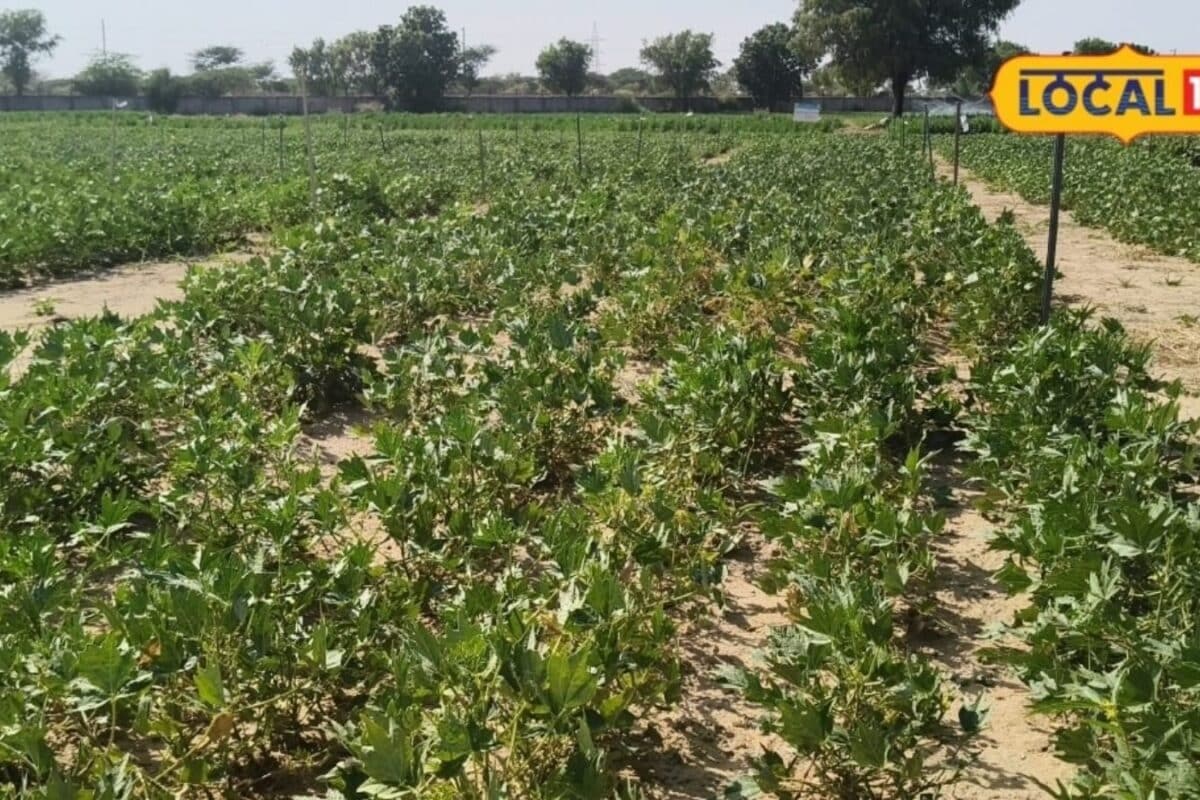
Recent findings from agricultural research conducted in Sri Ganganagar, Rajasthan, have brought forward critical insights regarding the production capacity of desi cotton. According to a comprehensive research study carried out at the Agricultural Research Center, affiliated with Swami Keshwanand Rajasthan Agricultural University, the yield potential of desi cotton has been found to be approximately 26 percent higher than that of American cotton varieties.
Tracing the historical context of agricultural research in the region, Dr. N.K. Sharma, a distinguished research officer at the center, noted that systematic scientific investigation into various cotton cultivars has been actively underway since the year 1967. Over the decades, this premier institution has continuously evaluated and monitored numerous agronomic traits to support the regional farming community and enhance overall agricultural productivity in Rajasthan.
At the present juncture, the research facility is engaged in evaluating a diverse array of genetic materials, encompassing 14 distinct varieties of both desi and American cotton alongside advanced hybrid variants. Despite these rigorous scientific evaluations establishing the superior productivity of indigenous cultivars, a significant operational gap persists in practical farming adoption across the broader rural landscape.
The primary dilemma driving farmers away from desi cotton cultivation stems from distinct agronomic challenges and logistical constraints. Specifically, issues related to the alignment of canal irrigation schedules during the crucial sowing window, combined with the labor-intensive requirement of executing two to three separate pickings of the crop, have deterred many agricultural producers from embracing these higher-yielding indigenous varieties.
Examining the broader economic and regional implications, agricultural economists and extension workers emphasize that overcoming these logistical bottlenecks is vital for the agrarian economy of Rajasthan. While regions throughout the state navigate shifting climate patterns and market fluctuations, optimizing local crop selection remains a cornerstone for securing sustainable rural livelihoods and financial resilience for farming households.
In response to these persistent cultivation hurdles, administrative measures and institutional strategies are being reinforced by agricultural experts. The primary objective is to bridge the knowledge gap by actively organizing awareness campaigns that highlight the intrinsic strengths, drought tolerance, and economic superiority of desi cotton over introduced varieties.
Looking toward the future, the agricultural research establishment in Sri Ganganagar remains committed to refining cultivation practices and supporting farming communities through continuous scientific oversight. By addressing timing challenges and harvesting logistics, agricultural authorities anticipate a renewed interest among cultivators, ultimately fostering a more sustainable and productive cotton sector across Rajasthan.