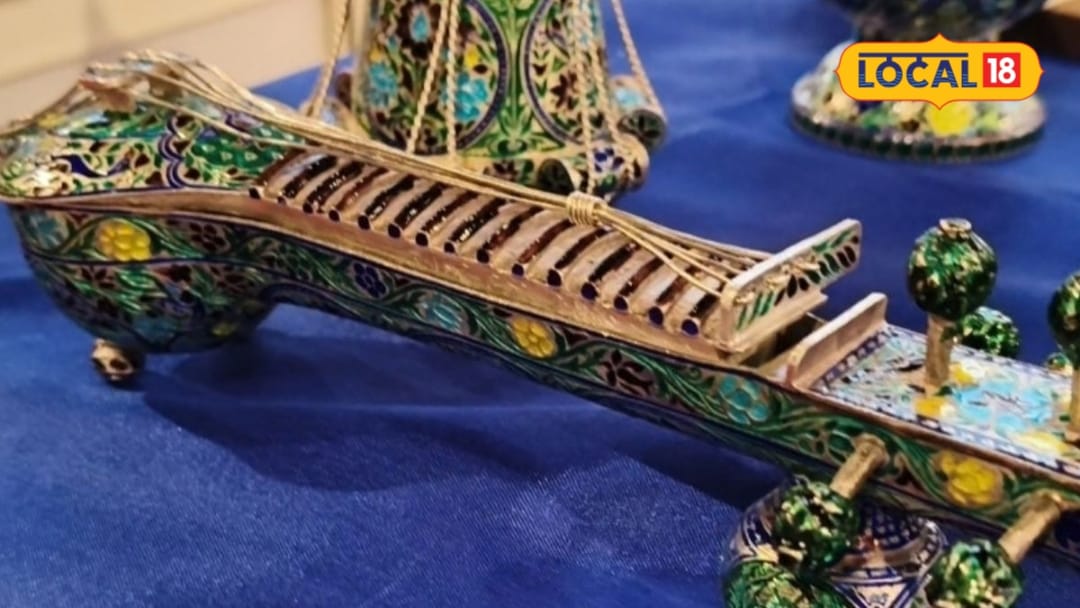
In the vibrant and culturally rich city of Jaipur, traditional Indian craftsmanship finds one of its most luminous expressions in the ancient art of Meenakari. Standing at the forefront of this timeless heritage is 78-year-old Dr. Inder Singh, whose life-long dedication to enamelwork has kept a fragile royal legacy alive through changing modern eras. At 78 years of age, his commitment to the intricate art of fusing vibrant colors onto precious metals remains utterly undiminished, serving as a beacon for traditional artisans across the region.
The historical roots of Dr. Inder Singh's mastery trace back directly to his familial lineage, as he originally learned this delicate craft from his esteemed father. Meenakari, historically patronized by the royal courts of Rajasthan, requires immense patience, steady hands, and profound knowledge of metallurgy and pigment chemistry. For decades, this specialized art form was closely guarded within select artisan families, passed down strictly through generations as an invaluable cultural inheritance that defined the aesthetic identity of Jaipur.
Maintaining the rigorous standards of this meticulous craft involves extensive hours of precision work on gold and silver substrates, where raw mineral colors are fused under intense heat. The rigorous nature of the work has yielded tangible recognition, not only for Dr. Inder Singh himself but also for his lineage. Demonstrating the successful intergenerational transfer of knowledge, his own sons have also mastered the craft and earned prestigious national honors for their exceptional contributions to Indian decorative arts.
Artisans, cultural historians, and connoisseurs frequently emphasize that the survival of such intricate heritage industries depends heavily on familial dedication and institutional encouragement. Stakeholders within the traditional crafts sector note that master practitioners like Dr. Inder Singh embody the living soul of Jaipur's artistic economy. Their unwavering adherence to authentic techniques ensures that commercial shortcuts do not dilute the historical authenticity and intrinsic value of genuine Meenakari products.
Across the broader geographical expanse encompassing Jaipur and surrounding trade centers like Kotputli-Behror, the economic resonance of traditional crafts plays a vital role in sustaining local artisan communities. The international acclaim garnered by master artisans directly supports auxiliary supply chains, from local metal smiths to specialized gemstone setters. Consequently, the global visibility of Jaipur's Meenakari bolsters the regional economic framework, creating sustainable livelihoods rooted in heritage preservation.
Institutional oversight and cultural preservation bodies continue to document and promote these traditional art forms to ensure they receive appropriate patronage and protection from modern industrial counterfeits. Cultural administrators frequently collaborate with veteran artists to organize educational workshops and exhibition showcases. These administrative measures aim to safeguard authentic methodologies while encouraging younger generations to explore artisan entrepreneurship as a viable and respected profession.
Looking forward, the enduring legacy of Dr. Inder Singh provides a resilient blueprint for the future of traditional Indian craftsmanship in an increasingly globalized marketplace. As international demand for authentic, hand-crafted luxury items grows, the foundational work done by master practitioners ensures that Jaipur's Meenakari will continue to flourish. Public expectations remain high that continued recognition and supportive policies will inspire forthcoming generations to uphold the immaculate standards set by septuagenarian artisans like Dr. Singh.