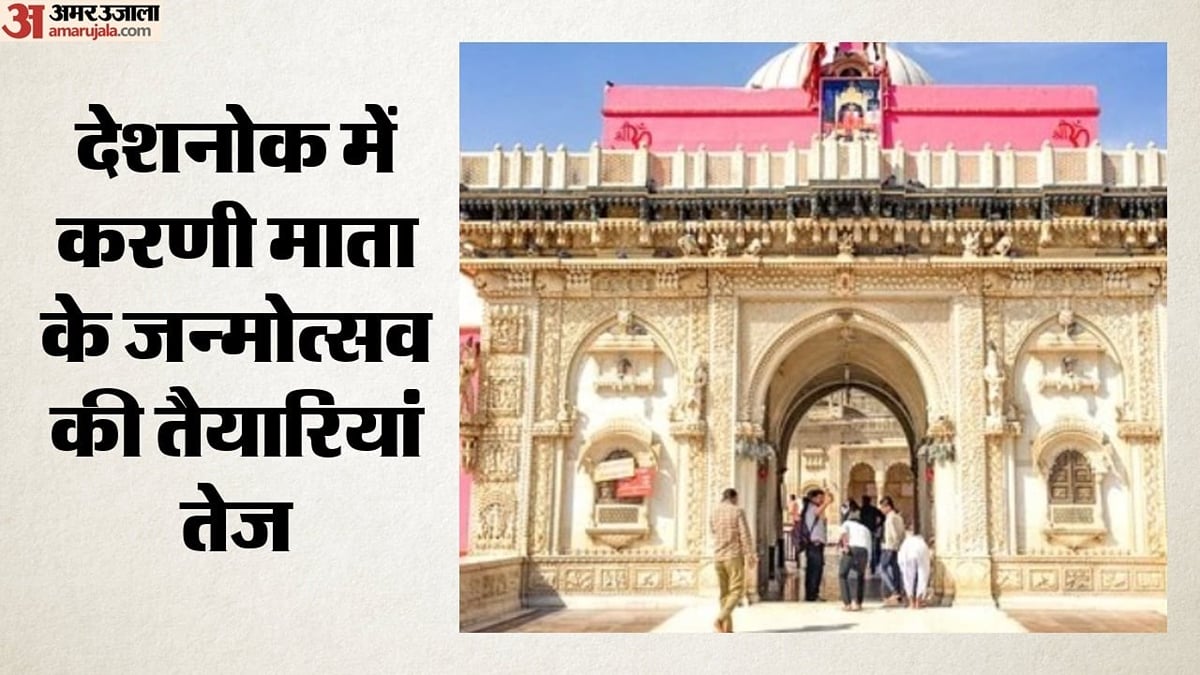
In a significant administrative and spiritual development for devotees across the country, the revered Karni Mata Temple located in Deshnoke, Rajasthan, is set to remain open for twenty-four hours continuously during the auspicious festival of Navratri. This unprecedented measure has been designed to accommodate the massive surge of pilgrims who traditionally visit the shrine during the sacred nine-day festival. Temple authorities have worked in close coordination with local administration to ensure seamless movement and safety for all arriving worshippers.
Historically, the shrine in Deshnoke has witnessed immense footfall during Navratri due to its deep religious significance and unique cultural heritage in the region of Rajasthan. Understanding the immense historical and spiritual draw of the deity, temple trustees recognized the necessity to overhaul traditional crowd-management protocols. The decision to maintain round-the-clock operations marks a departure from standard operational hours, reflecting the growing scale of religious tourism during this peak festive period.
To execute this ambitious round-the-clock schedule efficiently, the temple management has introduced a five-queue system for devotees for the very first time in the history of the shrine. This multi-lane arrangement is meticulously structured to prevent bottlenecks, reduce waiting times, and maintain steady movement inside the sacred sanctum. Security personnel and volunteers have been deployed across all five lines to guide elderly citizens, women, and children through the specialized corridors safely and respectfully.
Local stakeholders, temple priests, and community leaders have expressed immense satisfaction with the newly introduced logistical framework. Representatives of the trading community and local businesses near Deshnoke anticipate a vibrant economic uplift due to the continuous stream of visitors day and night. Pilgrims who have arrived from various parts of the state and neighboring regions have lauded the initiative, noting that the twenty-four-hour availability significantly eases the pressure during peak rush hours.
Beyond the borders of Deshnoke, the spiritual fervour has extended to other prominent shrines in Rajasthan, notably the Maa Shakambhari Temple in Sambhar. Synchronizing with the statewide celebrations, the Sambhar temple formally initiated its nine-day religious rituals with the traditional Ghatasthapana ceremony on the very first day of Navratri. Devotees gathered in large numbers at the Sambhar shrine to witness the sacred invocation and participate in the continuous chanting of hymns and devotional prayers.
Administrative oversight across both sacred sites remains exceptionally tight, with senior district officials monitoring law and order, medical emergency readiness, and sanitation facilities around the clock. District authorities have set up temporary help desks, drinking water stations, and medical aid camps to support the lakhs of devotees expected to throng the premises. Special police forces have been stationed strategically to handle traffic diversions and parking arrangements in the vicinity of both temples.
As the nine-day festival progresses, temple boards and administrative committees remain fully prepared to manage any unforeseen spikes in pilgrim numbers. The successful execution of the twenty-four-hour schedule and the five-queue system at Deshnoke is expected to serve as a benchmark for future large-scale religious gatherings in Rajasthan. Authorities urge all visiting devotees to cooperate with security personnel, adhere to designated queues, and maintain peace and order throughout the holy period.