
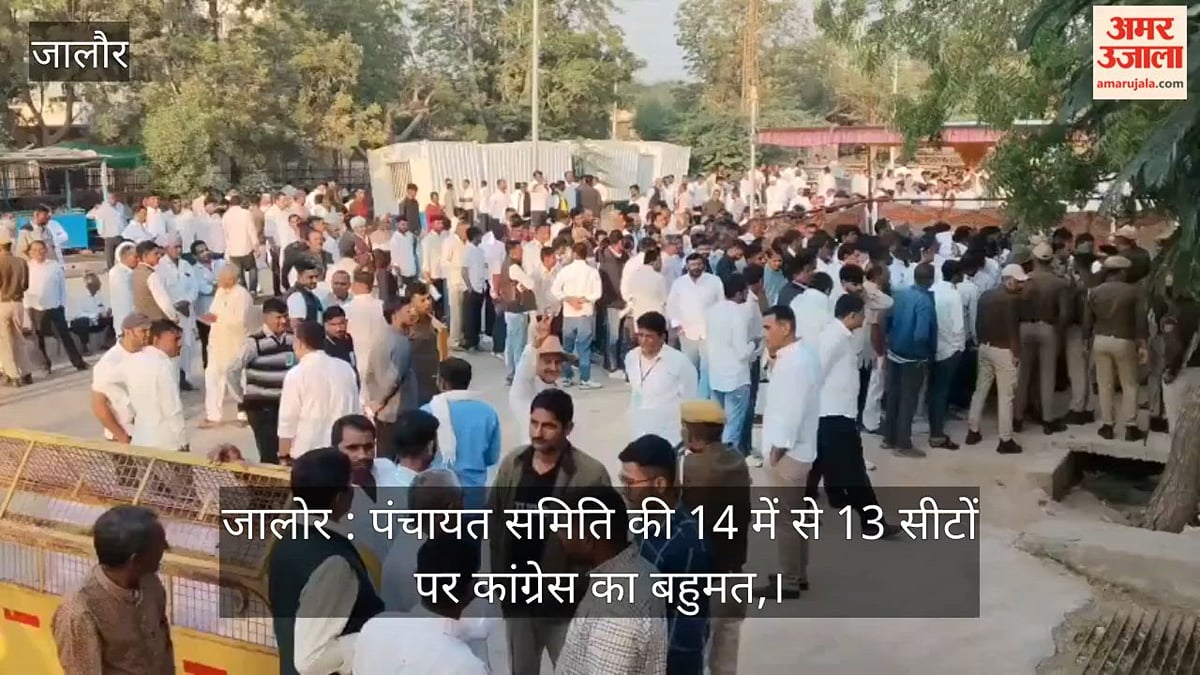
In a significant political development emerging from the desert state of Rajasthan, the Congress party has firmly established its dominance across the rural governance framework of Jalore. The comprehensive electoral assessment following the counting of votes indicates an overwhelming mandate favoring the party within the local administrative bodies, altering the regional political balance.
Historically, Jalore has remained a critical battleground for major political forces in Rajasthan, where grassroots governance structures dictate the socio-economic priorities of rural communities. The intricate web of local administration relies heavily on the Panchayat Samiti and district council tiers to execute developmental schemes, infrastructural projects, and agricultural welfare measures.
According to the certified electoral statistics released by election authorities, the Congress party has captured a remarkable 13 out of 14 Panchayat Samiti administrative blocks within the Jalore region. Furthermore, the party's electoral strength was further reinforced by securing 31 crucial seats at the district council level, underlining a robust organizational reach across the territory.
Political analysts and local community stakeholders have noted that these electoral outcomes reflect deep-seated local sentiments regarding rural representation and administrative governance. Discussions among village elders, agricultural workers, and local traders indicate that administrative accessibility and welfare implementation played a decisive role in shaping voter behavior during the electoral process.
While the broader impact of these local elections resonates deeply across Rajasthan, observers closely monitor how such grassroots mandates influence regional developmental priorities. The administrative continuity established through these elected bodies is expected to directly shape public works, irrigation projects, and educational infrastructure within the district.
Administrative officials and district election authorities have managed the conclusion of the electoral process with stringent protocol, ensuring that all statutory guidelines and verification procedures were meticulously executed. The transition of power and the subsequent formation of local governing committees are currently underway in accordance with state electoral regulations.
Looking ahead, the newly elected representatives face the immediate responsibility of fulfilling campaign pledges and addressing pressing infrastructural needs across Jalore. As the political machinery settles into its new mandate, public expectations remain high regarding transparent governance and accountable local administration in the months to come.
