
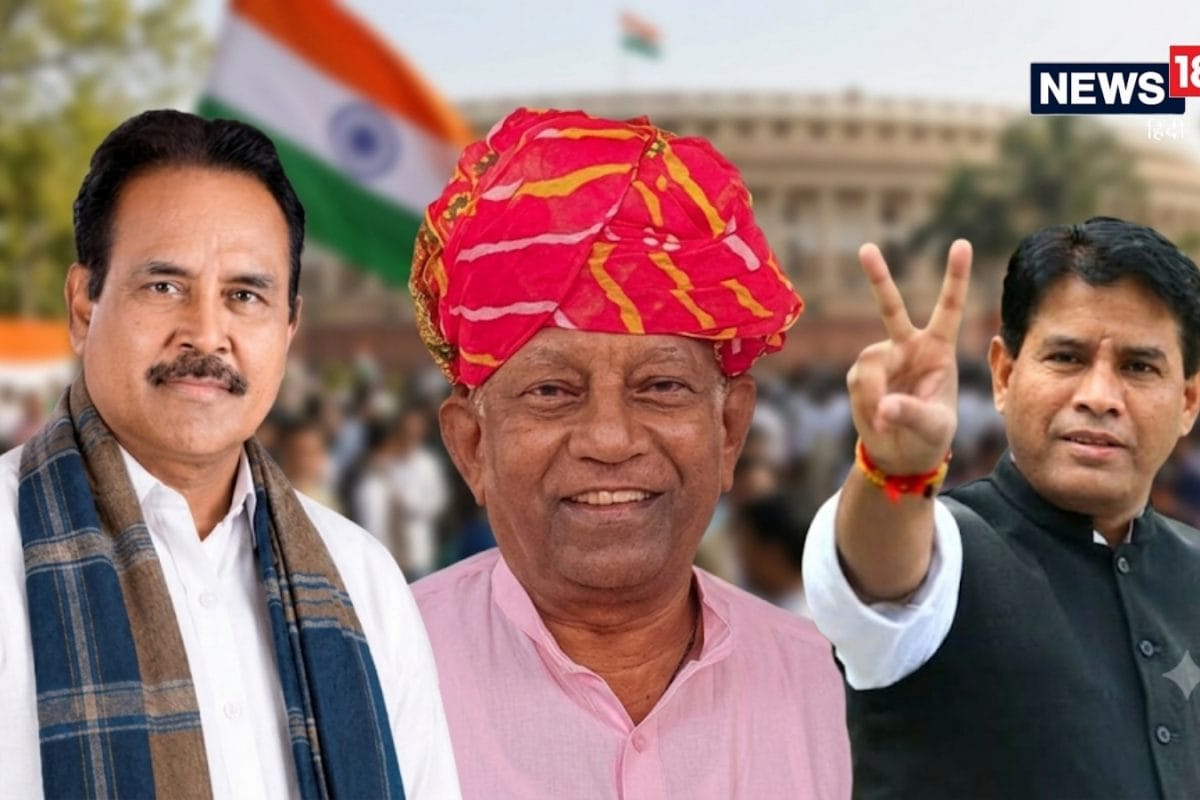
In a significant political development emerging from the Bharatpur district of Rajasthan in 2026, the ruling party and opposition dynamics have witnessed a notable shift during the ongoing local body elections. The recently concluded Panchayat elections delivered a major electoral blow to the Bharatiya Janata Party, specifically affecting three prominent former Members of the Legislative Assembly. Their respective family members, who had entered the electoral fray with high expectations, faced decisive defeats at the hands of Congress candidates across crucial territorial constituencies.
The electoral landscape of Bharatpur district has historically been a battleground for prestige between major political organizations. Local body elections, especially at the district council level, serve as a critical barometer for grassroots political influence. Political families often position their second-generation members or immediate relatives to consolidate power and maintain regional dominance. The 2026 electoral cycle in Rajasthan has intensified this competition, bringing local governance structures directly into the spotlight of state-level political discourse.
A granular analysis of the specific electoral outcomes reveals intense contests across multiple designated wards within the district council framework. In ward number 22, former Bharatiya Janata Party MLA Guthyarilal Dubesh had fielded his daughter, Puja Dubesh, hoping to secure a firm footing in the local administration. Similarly, in ward number 18, former legislator Bachchu Singh Banshiwal positioned his daughter, Kanika Banshiwal, as a key contender. Furthermore, in ward number 14, former MLA Gyarsaram Koli nominated his daughter-in-law, Rekha Rani Koli, to contest the seat. Despite rigorous campaigning and substantial political backing, all three candidates failed to secure victories against their Congress rivals.
Political analysts and local observers have closely monitored these developments, noting that voter sentiment increasingly favors grassroots connect over established familial lineages. Representatives from various community factions and local traders expressed diverse viewpoints regarding the outcomes, emphasizing that accountability and developmental promises now outweigh traditional political patronage. The competitive spirit demonstrated by the Congress party machinery proved decisive in mobilizing voter turnout and securing these strategic ward victories.
While the immediate geographical impact is concentrated within Bharatpur district, the repercussions extend to neighboring administrative divisions, including the Kotputli-Behror region. Local political stakeholders in surrounding districts are closely analyzing these results to recalibrate their own strategies for forthcoming rural and urban local body polls. The shifting dynamics underscore a growing awareness among rural electorates regarding administrative competence and transparent governance at the Panchayat level.
Following the conclusion of the polling process and the subsequent declaration of results by election authorities, administrative mechanisms have focused on ensuring a smooth transition of responsibilities for the newly constituted district council wards. Officials have maintained strict oversight to uphold electoral integrity and manage post-election protocols. Local law enforcement and district administration personnel remained deployed across sensitive zones to preserve public order and community harmony.
Looking ahead, the defeat of these high-profile dynastic candidates is expected to prompt internal soul-searching within the Bharatiya Janata Party organization in Rajasthan. Political parties are likely to reevaluate their candidate selection criteria, placing greater emphasis on grassroots outreach rather than familial associations as preparations begin for subsequent electoral cycles and long-term administrative planning across the region.
