
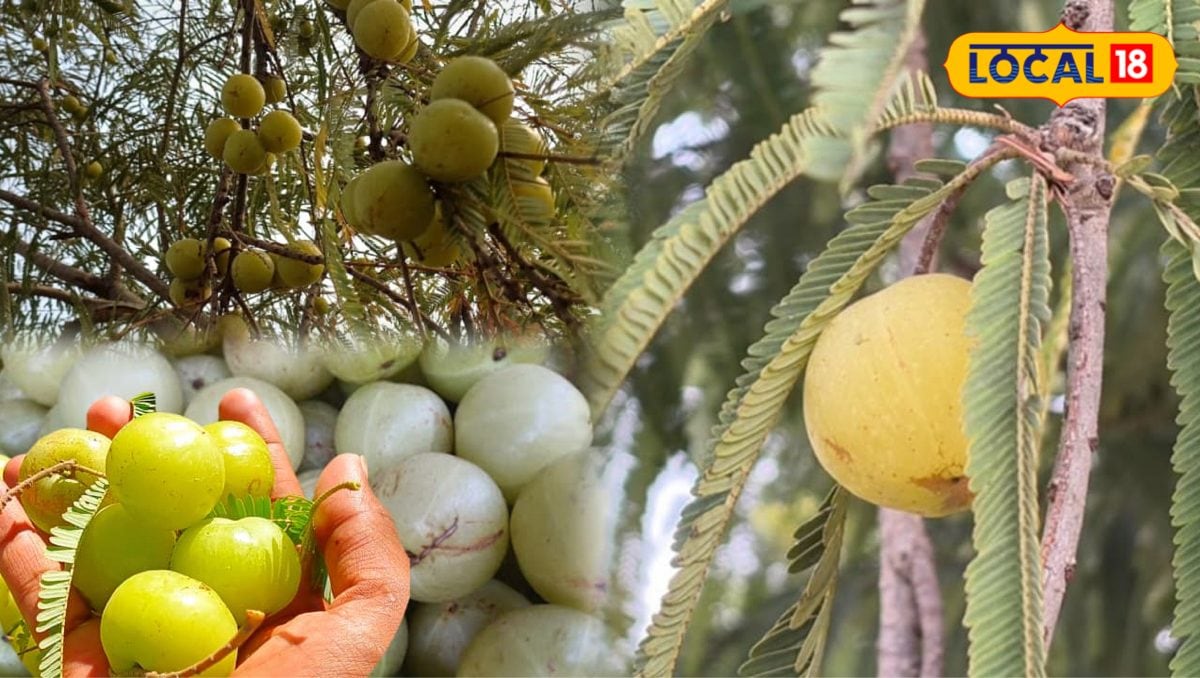
Commercial amla (Indian gooseberry) cultivation across the Weir and Bhusawar blocks of Bharatpur district has developed into a lucrative dual-yield enterprise, providing substantial financial stability to regional growers while fueling a vibrant local food processing economy. The agrarian sector in these belts is witnessing a profitable transition as farmers capitalize on the crop's resilience and strong market presence, establishing a robust commercial chain that bridges rural fields with expanding consumer markets.
A primary factor driving the adoption of amla farming in Weir and Bhusawar is the crop's exceptional adaptability to low-water environments. In an agricultural landscape where water management remains critical, amla trees offer continuous multi-year yields despite minimal irrigation requirements. This long-term productivity minimizes input costs for cultivators, ensuring sustained annual revenues once the orchards mature, while simultaneously mitigating risks associated with erratic rainfall.
The amla harvested from the Weir and Bhusawar region stands out in wholesale and retail markets due to its distinctive physical and sensory attributes. Characterized by unusually large fruit size, rich flavor profiles, and overall superior quality, the produce commands premium demand among regional traders and consumers alike. This high market preference directly translates into enhanced profit margins for local agricultural households, raising the economic stature of traditional farming communities.
Beyond fresh produce trade, the region's agricultural success is deeply interconnected with its traditional food processing industry, most notably the production of the famed Bhusawar amla pickle. Blended with age-old recipes and local spices, this specialized cottage product has earned widespread acclaim. The rising popularity of Bhusawar pickle across surrounding districts and regional hubs has turned primary agricultural yields into high-value processed goods, establishing a dependable domestic supply chain.
The expansion of amla farming and pickle manufacturing has generated significant socio-economic dividends throughout eastern Rajasthan, including commercial trade links extending toward Kotputli-Behror and adjacent market corridors. The cottage industry built around pickle production provides crucial non-farm employment opportunities, particularly for local residents and micro-entrepreneurs engaged in processing, spicing, and packaging operations. This integrated ecosystem strengthens rural livelihoods and curbs seasonal labor migration.
Agricultural observers and rural development stakeholders note that the success of amla farming in Bhusawar and Weir serves as a viable blueprint for sustainable agrarian growth in semi-arid zones. Strengthening post-harvest infrastructure, enhancing direct market access, and supporting small-scale food processing units remain key drivers to scaling these local economic gains and ensuring long-term financial resilience for rural farming families.
