
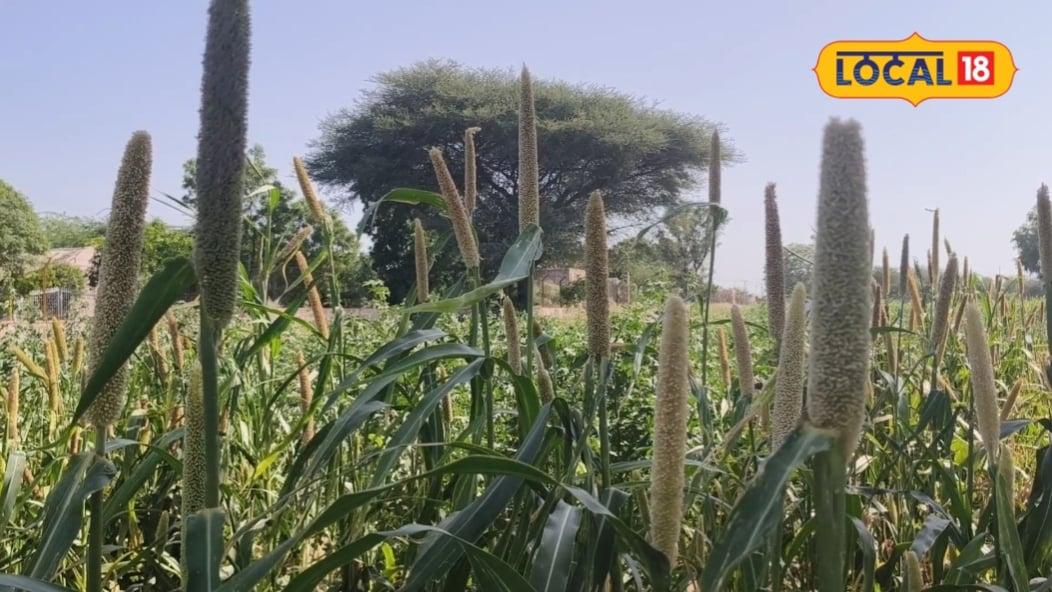
In a monumental development for the agrarian community of western Rajasthan, agricultural experts have announced that pearl millet, commonly known as bajra, can now be cultivated and harvested within a remarkably shortened timeframe of just 65 to 70 days. Traditionally, farmers across the arid and semi-arid tracts of western Rajasthan had to wait 80 to 90 days for the crop to reach maturity. This breakthrough promises to redefine regional farming practices, shielding cultivators from erratic weather patterns and erratic monsoon behaviors that frequently plague the desert state.
The historical context of bajra cultivation in western Rajasthan is deeply rooted in survival and sustenance against severe climatic odds. For generations, farming communities have depended on monsoon showers to irrigate their fields, often facing severe dry spells that stunted crop growth and reduced grain yields. The introduction of these accelerated maturation cycles directly addresses the historical vulnerabilities associated with delayed rainfall, moisture stress, and prolonged droughts, ensuring that agrarian livelihoods remain secure even under adverse environmental conditions.
Delving into the ground reality and specific operational metrics, senior agricultural scientists, including Dr. P.S. Chauhan based in Bikaner, have strongly recommended advanced crop varieties such as RHB-121, RHB-173, and HHB-67(I). According to technical guidelines issued by agricultural research stations, implementing proper sowing techniques alongside maintained row spacing is paramount. Furthermore, executing a 2 percent urea spray during moisture stress periods significantly enhances plant resilience, guaranteeing optimized grain production alongside an impressive 1.5 to 2 times increase in nutritious green fodder for livestock.
Stakeholder perspectives from across the agricultural belt indicate immense enthusiasm among local farming communities and livestock owners. Representatives of farmer producer organizations note that the dual benefit of securing substantial grain output alongside abundant, highly nutritious fodder resolves the perennial challenge of cattle feed shortages during dry spells. Agricultural extension workers and local market traders have expressed optimism that reduced crop duration will translate into faster market turnarounds, thereby boosting rural liquidity and easing financial pressures on households.
While the immediate operational theater spans across western Rajasthan, the broader implications resonate deeply within neighboring agricultural territories including Kotputli-Behror and surrounding districts. The economic interdependence between grain production and rural animal husbandry means that any localized agricultural innovation in Bikaner and western districts invariably influences regional fodder supply chains, feed pricing, and rural economic stability. Local farming councils are actively evaluating these techniques to replicate similar success across diverse soil profiles.
Administrative responses from agricultural directorates and state research institutions have focused heavily on disseminating these technical advisories through grassroots extension networks. Officials emphasize that proper agronomic management, timely seed distribution, and adherence to scientific sowing protocols are vital for maximizing the adoption rate. Extension officers are conducting awareness camps to educate cultivators on the exact execution of the 2 percent urea spray during dry spells, ensuring that government research directly translates into tangible on-field success.
Looking toward the forward outlook, agricultural authorities and farming cooperatives have laid out a structured timeline for widespread seed distribution and soil testing initiatives ahead of the upcoming sowing season. Public expectations remain high as the agricultural community prepares to embrace these resilient crop varieties. By shortening the agricultural cycle to 65 to 70 days, western Rajasthan is poised to set a benchmark in climate-smart agriculture, securing both food security and prosperous rural livelihoods for years to come.
