
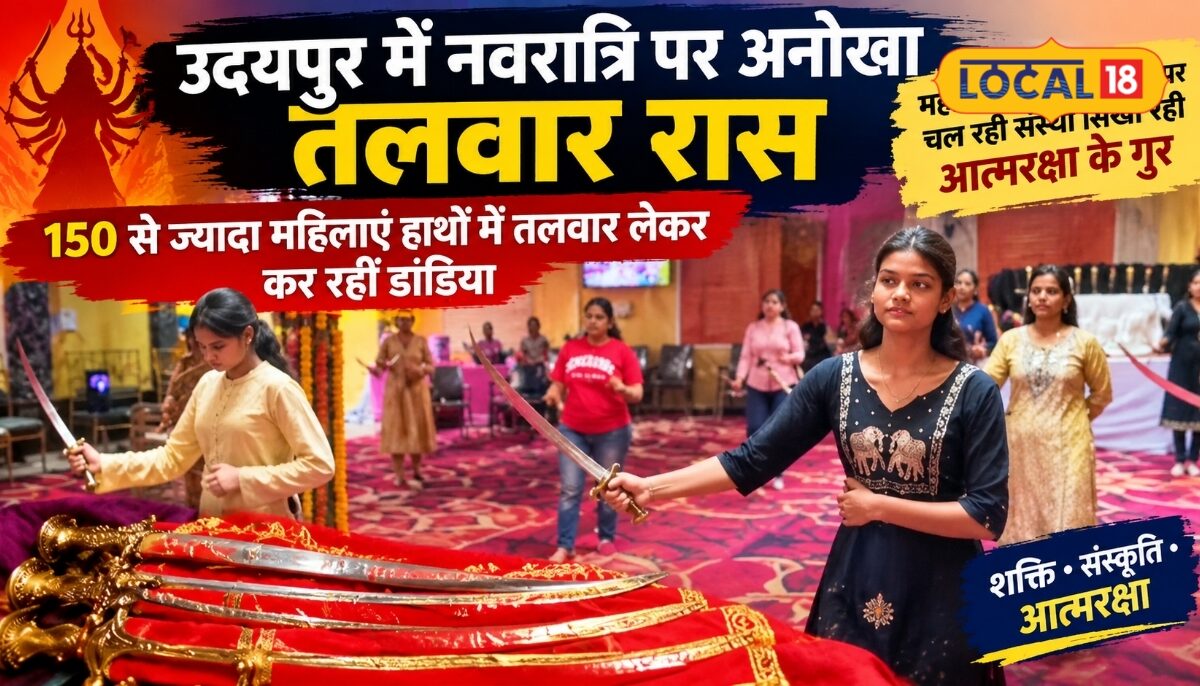
In the culturally rich city of Udaipur, a remarkable and empowering spectacle has captured public attention as local women have chosen to replace traditional dandiya sticks with steel swords. During the auspicious festival of Navratri, this distinctive initiative termed 'Talwar Raas' has been successfully introduced to the community. Rather than participating exclusively in conventional festive dances, female participants are actively engaging in rigorous physical training that combines rhythmic celebration with essential martial arts instruction.
The conceptual foundation of this extraordinary event is deeply rooted in regional history and heritage, drawing direct inspiration from the life and ideals of Maharani Ajabde. Historical narratives of valor, resilience, and leadership associated with Maharani Ajabde serve as the guiding philosophy for this training camp. Organizers believe that connecting modern women with historical figures of unmatched courage helps bridge the gap between cultural preservation and contemporary empowerment.
At the center of this ground-level execution is the dedicated organization known as Ajab Seva Sansthan, which has meticulously planned and coordinated the entire schedule. Through their sustained logistical efforts, the initiative has successfully brought together a substantial participant base. Precise ground reports confirm that more than 150 women are currently enrolled in the program, dedicating their time and energy to mastering complex sword-wielding techniques and fundamental self-defense maneuvers under expert guidance.
Voices from the organizing committee and participating citizens highlight a profound shift in community attitudes toward women's safety and independence. Stakeholders emphasize that modern societal challenges require women to be physically and mentally prepared for any unforeseen circumstances. By mastering traditional weaponry in a structured environment, participants are shedding traditional inhibitions and discovering a renewed sense of fearlessness and personal autonomy.
While the immediate focal point remains concentrated within the geographical boundaries of Udaipur, the wider socio-cultural implications resonate strongly across neighboring administrative regions, including the Kotputli-Behror district. Community leaders across Rajasthan are taking note of this innovative approach, viewing it as a replicable model that successfully merges celebratory cultural festivals with rigorous physical capacity-building for women and young girls.
Administrative observers and local civic bodies have maintained a supportive stance toward initiatives that promote physical fitness, cultural heritage, and personal safety without violating public order or safety regulations. The structured execution overseen by Ajab Seva Sansthan ensures that all training sessions are conducted with the utmost discipline, safety gear, and adherence to established protocols, thereby minimizing any potential risks associated with martial arts training.
Looking ahead, the organizers anticipate that the success of this year's 'Talwar Raas' will pave the way for expanded training modules and year-round self-defense workshops. Public expectations are notably high, with many community members expressing a strong desire to see similar empowerment programs institutionalized across other districts. As these 150 women conclude their Navratri training, they carry forward a powerful message of self-reliance that is expected to inspire future generations throughout the state.
