
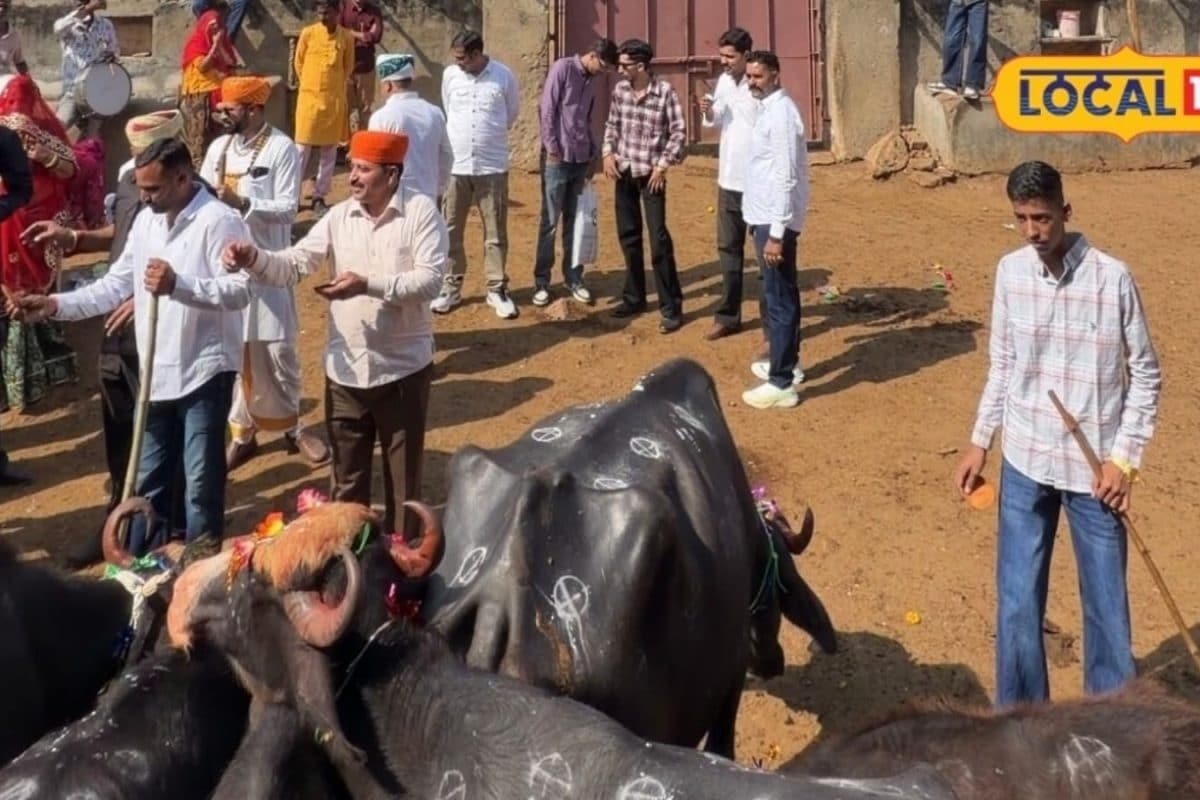
In the vibrant rural heartland of the Hadoti region in Kota, the observance of ancient cultural traditions continues to thrive through unique community practices. On the auspicious occasion of Padwa, immediately following Govardhan Puja, villagers gathered to celebrate the traditional Khekra festival, which remains a defining pillar of rural heritage in the area.
The roots of this custom trace back centuries, representing an intrinsic bond between the agrarian community and their livestock. Historically passed down through generations, the Khekra ritual serves as a cultural anchor for residents of Kota, reinforcing communal harmony and a shared reverence for cattle rearing that sustains the local economy.
Focusing on the specific ground developments in Dharmpura village, local cattle owners meticulously bathed, groomed, and decorated their cows and buffaloes as part of the celebratory rituals. The centerpiece of the event involved creating a makeshift Khekra by stuffing fodder inside the leather skin of a deceased buffalo calf, which was then pulled along the ground using sturdy ropes in front of the assembled livestock.
As the leather-filled decoy was dragged across the field, the cattle instinctively chased after it, an animated display that forms the core of the traditional proceedings. Village elders explained that this physical activity is believed to instill a protective maternal instinct among the animals toward their young while simultaneously keeping the cattle physically robust and agile.
The cultural resonance of the event extends far beyond the immediate boundaries of Dharmpura village, significantly impacting the broader Hadoti region. Urban migration often draws younger generations toward larger cities for employment, yet this deeply rooted tradition acts as a powerful magnetic force, compelling expatriates to return to their ancestral homes specifically to participate in the festivities.
While the physical nature of the ritual involves notable risks due to the agitated movement of heavy livestock, the enthusiasm of the rural population remains entirely undiminished. Community members actively manage the safety aspects of the gathering, relying on traditional wisdom and collective supervision to ensure that the event proceeds smoothly without major hazards.
Looking toward the future, the communities of Kota remain steadfast in their commitment to preserving these ancestral customs against the backdrop of modernization. Village elders and youth alike continue to chant traditional Goth songs during the proceedings, ensuring that the rich oral history and cultural identity of the Hadoti region are safely transmitted to subsequent generations.
