
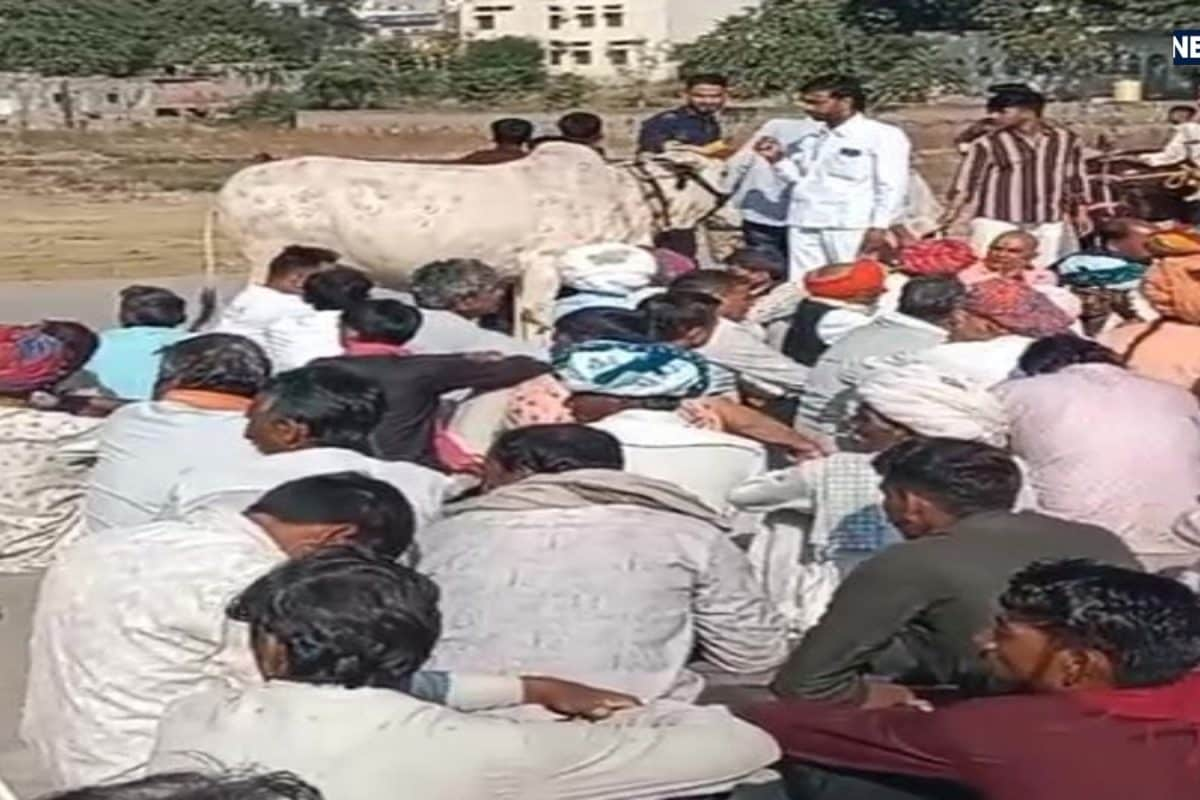
In the district of Chittorgarh, specifically within the historic boundaries of Akola town, a deeply embedded cultural tradition was observed on the second day following Govardhan Puja. Known widely as the Khekhra festival, this age-old ritual serves as a traditional barometer for the local community to foresee the trajectory of the upcoming agricultural and economic year. As local residents and community elders gathered, the atmosphere was charged with anticipation regarding which cattle would display agitation first, thereby setting the prophetic tone for the months ahead.
The ritualistic framework of the Khekhra festival rests upon centuries of localized observation and cultural transmission. Passed down through generations in Chittorgarh district, the practice involves observing different colored cattle—specifically white, black, and blue variants—to discern which one reacts and gets provoked first. Each color historically carries distinct symbolic weight concerning weather patterns, crop yields, and overall communal prosperity, making this annual gathering at Akola an event of immense sociological significance for the inhabitants.
Ground realities during the event highlighted the meticulous participation of villagers and local custodians of tradition. The assembly watched closely as the cattle were gathered, ensuring that every movement was meticulously recorded by the local observers. The central focus of the day remained entirely on determining the exact color of the animal that would exhibit the first sign of agitation, a logistical and observational detail that forms the foundational data point for the subsequent traditional forecasting by the community leaders.
Central to the interpretation of these behavioral patterns are the Panch Patels, the esteemed council of community elders whose pronouncements carry immense weight among the residents of Chittorgarh district and Akola town. Following the precise moment when the cattle reacted, these community arbiters convened to analyze the occurrence. Their traditional expertise and authoritative standing enable them to synthesize the observational outcome into a coherent, overarching forecast for the populace, ensuring that local expectations are managed through established customary frameworks.
While the observance is deeply rooted in Akola town within Chittorgarh district, its resonance extends culturally across the broader region, reflecting the rich tapestry of rural traditions found throughout the area. Communities in adjacent localities frequently monitor these traditional prognostications, which serve as an informal cultural anchor for rural planning and mutual reassurance. The event reinforces social bonds and collective identity among residents who participate in preserving these ancient community practices year after year.
The proceedings at Akola town operate entirely under the stewardship of traditional community governance structures, prominently featuring the Panch Patels rather than formal statutory bodies. This autonomous management of the Khekhra festival underscores the resilience of indigenous community protocols in maintaining social cohesion and cultural continuity. The local populace respects these traditional administrative methods, ensuring the uninterrupted observance of the ritual on the designated day following Govardhan Puja.
Looking toward the horizon, the prediction delivered by the Panch Patels following this year's festival sets the psychological and practical baseline for the community in Chittorgarh district. With a normal year forecasted based on the blue cattle being the first to provoke, residents anticipate steady conditions without extreme disruptions. As the town of Akola moves forward into the subsequent months, the community continues its daily routines comforted by the time-honored outcome of this distinctive annual tradition.
