
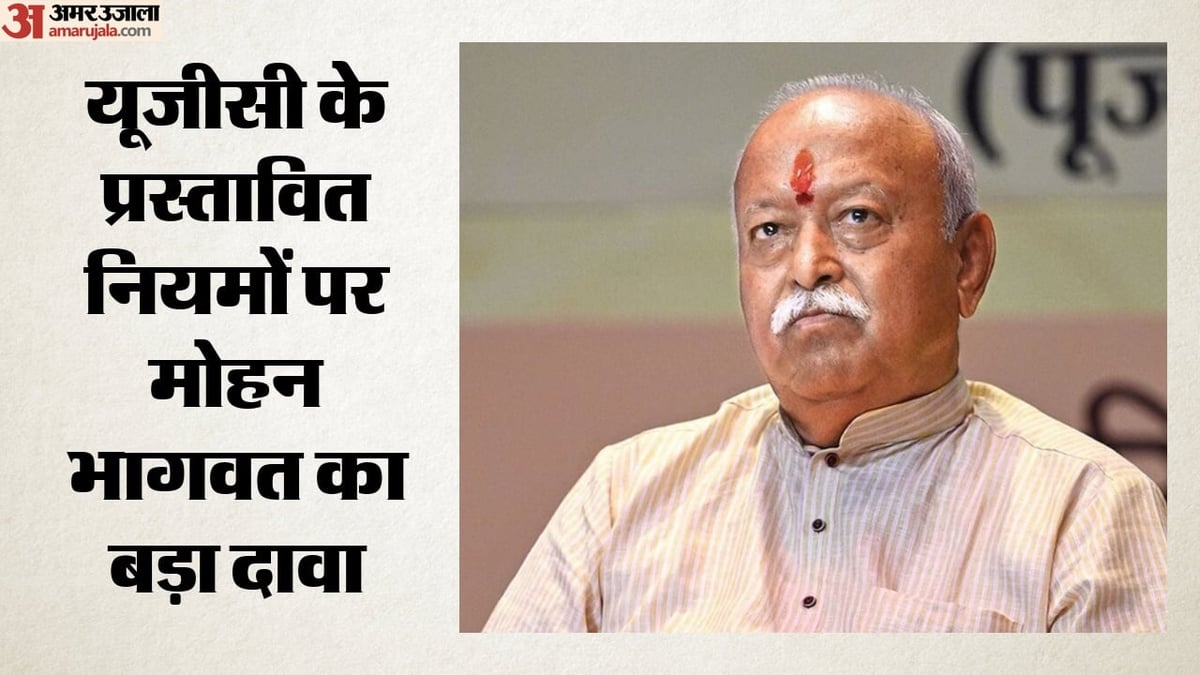
In a significant development concerning higher education policy and regulatory frameworks, Rashtriya Swayamsevak Sangh (RSS) Sarsanghchalak Mohan Bhagwat has addressed the ongoing public and academic discourse surrounding the University Grants Commission (UGC) proposed rules. During a notable meeting with prominent Jain ascetic Acharya Pulaksagar Maharaj, the RSS chief offered crucial clarifications regarding the procedural status of these regulatory frameworks, aiming to alleviate widespread apprehensions among stakeholders, students, and academic communities nationwide.
The dialogue between Mohan Bhagwat and Acharya Pulaksagar Maharaj took place against the backdrop of intense nationwide debates regarding proposed reforms and guidelines issued by the UGC. Over recent weeks, various academic bodies, student organizations, and educational administrators have expressed diverse viewpoints concerning the potential implementation of these comprehensive regulatory drafts. The engagement provided a platform for a profound exchange of ideas regarding the trajectory of India's educational landscape and its alignment with broader constitutional and societal principles.
During their detailed deliberations, Mohan Bhagwat explicitly underlined the fundamental difference between preliminary policy documentation and finalized legislation. Addressing the specific concerns related to the UGC initiatives, the RSS chief categorically stated, "These are merely drafts and will not become law in their current preliminary form." This authoritative assertion served to clarify that the regulatory formulations remain open to extensive review, stakeholder consultations, and institutional scrutiny before attaining any binding legal validity.
Beyond the specific administrative discourse concerning higher education regulations, the high-profile meeting between the RSS chief and Acharya Pulaksagar Maharaj encompassed a broad spectrum of critical contemporary issues. The discussion extensively covered pressing national concerns, placing special emphasis on the strengthening of social harmony, the systematic eradication of caste disparities, and an objective evaluation of the country's prevailing socioeconomic and cultural conditions.
The ramifications of such high-level ideological and social discourse resonate deeply across regional administrative units, including developing educational hubs and administrative districts. Local communities, educational institutions, and civil society organizations closely monitor national policy pronouncements to understand how upcoming regulatory shifts might influence regional governance, institutional autonomy, and grassroots social integration within states and districts.
Administrative stakeholders and academic authorities continue to navigate the complex landscape of policy formulation and statutory oversight. As educational institutions await formal directives and finalized parliamentary or commission procedures, the emphasis remains on fostering inclusive dialogue, ensuring rigorous stakeholder engagement, and maintaining institutional transparency across all levels of the nation's educational framework.
Looking forward, the discourse surrounding the UGC proposals is anticipated to progress through established bureaucratic and legislative channels. Observers, policy analysts, and educational experts emphasize that public feedback, expert consultations, and comprehensive administrative reviews will play a pivotal role in shaping the final trajectory of these guidelines, ensuring that any eventual statutory framework harmonizes with national developmental objectives and societal welfare.