
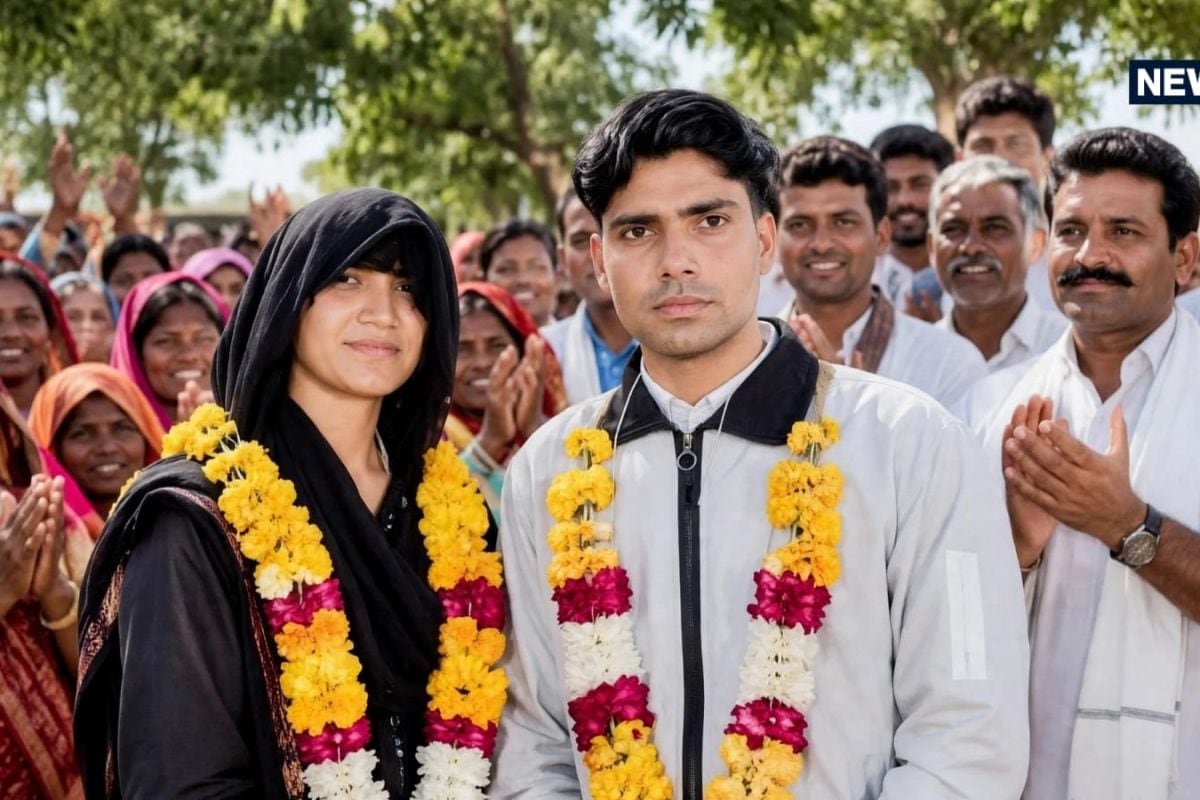
Local government elections frequently witness calculated strategies that alter traditional political equations and redefine community dynamics. A remarkable development recently unfolded during the rural polls in Gudla village, located within the Karauli region of Rajasthan. When the local Sarpanch seat was officially designated for the Scheduled Tribe category, observers anticipated intense electoral competition and conventional campaigning patterns. However, the local populace demonstrated profound political acumen by orchestrating a masterstroke that transcended standard electoral boundaries and captured the attention of political analysts across the state.
The administrative reservation of local governance positions often creates complex challenges for communities seeking inclusive representation. In Gudla village, the Gurjar community faced a distinct scenario when the seat was reserved for the Scheduled Tribe demographic. Rather than viewing this restriction as an insurmountable hurdle, community leaders and village elders engaged in extensive deliberations to formulate a path forward that ensured solidarity and broad-based support. This historical context of cooperation laid the groundwork for a unique alliance that would soon reshape the electoral landscape of the region.
Demonstrating exceptional strategic foresight, the community decided to field Naina Dhanka, the wife of Rahul Gurjar, as a candidate for the Sarpanch position. Because Naina Dhanka belongs to the Scheduled Tribe community, her nomination fully complied with the statutory reservation criteria while simultaneously bridging two distinct social groups. Throughout the campaign, residents of Gudla village actively worked to unite both the Gurjar and Dhanka communities, organizing coordinated outreach efforts and community meetings to build an unshakeable consensus around her candidature.
As election day arrived, the meticulous groundwork translated into an overwhelming mandate at the ballot box. When the votes were officially tallied, Naina Dhanka emerged victorious with an impressive total of 2,107 votes, reflecting the profound trust and collective backing of the electorate. This decisive margin not only underscored the effectiveness of the community mobilization but also highlighted the capacity of rural voters to forge pragmatic alliances that prioritize collective progress over conventional divisions.
The resonance of this electoral outcome extends far beyond the immediate boundaries of Gudla village, impacting the broader sociopolitical fabric of the region. Observers throughout Rajasthan have noted how the successful coalition in Karauli serves as a compelling case study in grassroots diplomacy and strategic inclusivity. By harmonizing community interests within the framework of statutory reservations, the residents have established a noteworthy precedent for future civic elections throughout the district and neighboring areas.
Following the declaration of the election results, the administrative machinery and local authorities ensured a smooth conclusion to the electoral process while monitoring the celebratory proceedings. The village witnessed vibrant public jubilation, with enthusiastic victory processions celebrating not merely an individual electoral triumph, but a symbol of unity and cooperative community leadership. Local officials maintained standard oversight to guarantee public order, ensuring that the festivities proceeded peacefully and in accordance with established protocols.
Looking ahead, this remarkable electoral chapter in Gudla village sets a promising tone for the tenure of the newly elected leadership. Public expectations remain high as Naina Dhanka prepares to assume office and address the developmental needs of the village. The cooperative spirit that enabled this electoral milestone is expected to translate into participatory governance, fostering enduring harmony, local development, and collaborative progress for all residents in the years to come.
