
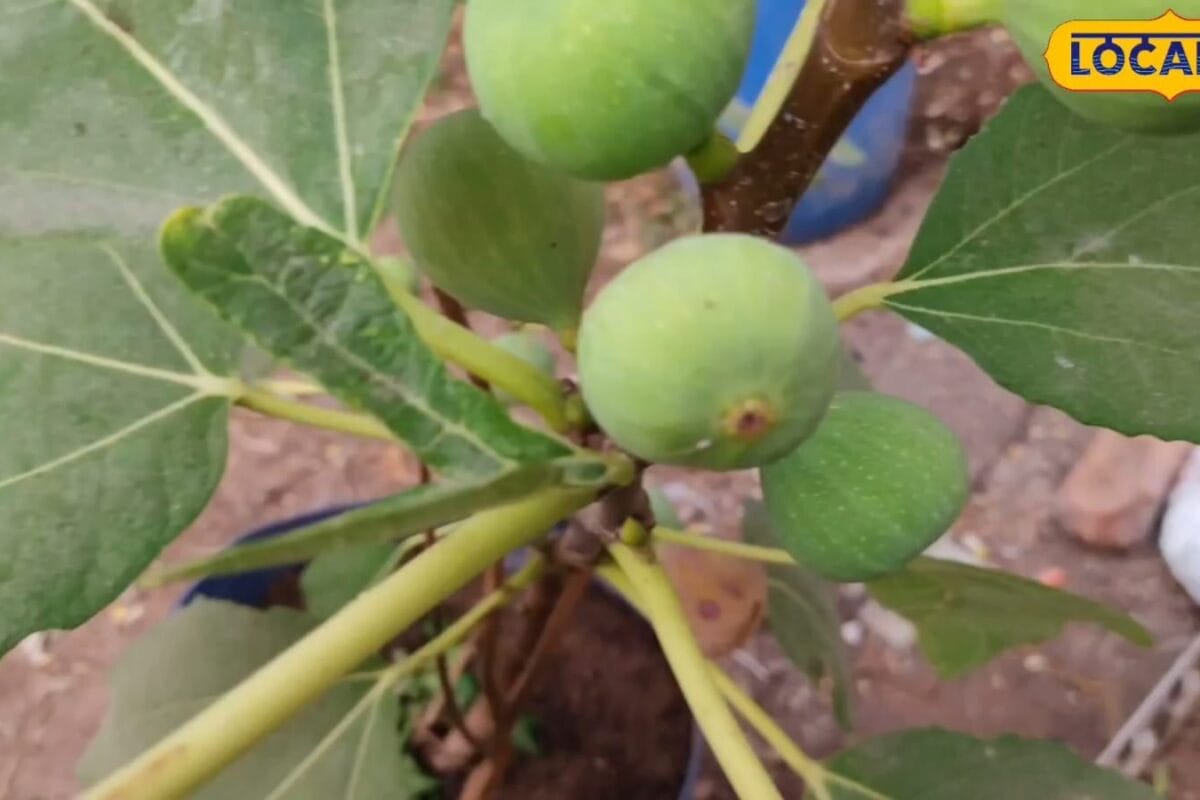
In a remarkable tale of post-retirement enterprise and agricultural innovation, the Shekhawati region is witnessing a major agricultural shift. Retired Havildar Ramkumar Bugalia has successfully transformed traditional farming paradigms by establishing an extensive fig orchard on eight bighas of land in Bugala village. This pioneering venture breaks away from conventional crop patterns prevalent in the region, introducing a high-value horticultural crop that thrives in arid climates.
The conceptual foundation of this agricultural transformation dates back to when Bugalia undertook exploratory visits to observe specialized farming methods. Specifically, a visit to Phalodi served as a primary catalyst, where he observed successful non-traditional farming practices. Realizing the immense potential of commercial horticulture, he supplemented his observations by acquiring technical knowledge through digital platforms, meticulously studying soil preparation, plant spacing, and micro-irrigation protocols.
At the operational level, the orchard currently hosts 750 robust saplings of a specialized red variety explicitly procured from Pune. These plants have successfully reached the fruiting stage under a meticulously installed drip irrigation network, which ensures optimal water conservation and precise nutrient delivery. Agricultural experts and local observers are closely monitoring the orchard, with the fruit harvest anticipated to ripen fully by November.
Financially, this transition represents a monumental leap in agricultural economics for the farming household. Under traditional farming methods, the annual savings restricted the household net income to approximately one lakh rupees. However, with the successful commercial cultivation of high-demand figs, the projected annual income is anticipated to skyrocket up to twenty lakh rupees, demonstrating the commercial viability of modern horticulture in arid zones.
The broader regional implications for the Kotputli-Behror district and surrounding areas are profound. As traditional farming faces challenges related to water scarcity and fluctuating market returns, this successful venture by a retired defense personnel serves as a beacon of inspiration for local farmers. The community is increasingly recognizing that diversification into high-value fruit crops can fundamentally alter rural economic landscapes and enhance livelihood security.
Agricultural extension officers and administrative observers have noted the meticulous planning involved in setting up the drip irrigation system and sourcing high-grade planting material. While formal institutional oversight continues to support rural development initiatives, individual enterprise such as this highlights the critical intersection of modern technology, digital self-learning, and disciplined execution in modern farming.
Looking ahead toward the upcoming November harvest season, anticipation is high among local agricultural circles. The successful ripening and subsequent market introduction of these Pune-sourced red figs will likely establish a commercial benchmark for horticulture in Shekhawati. This initiative not only secures a prosperous future for the Bugalia family but also charts a viable roadmap for regional agricultural modernization.
