
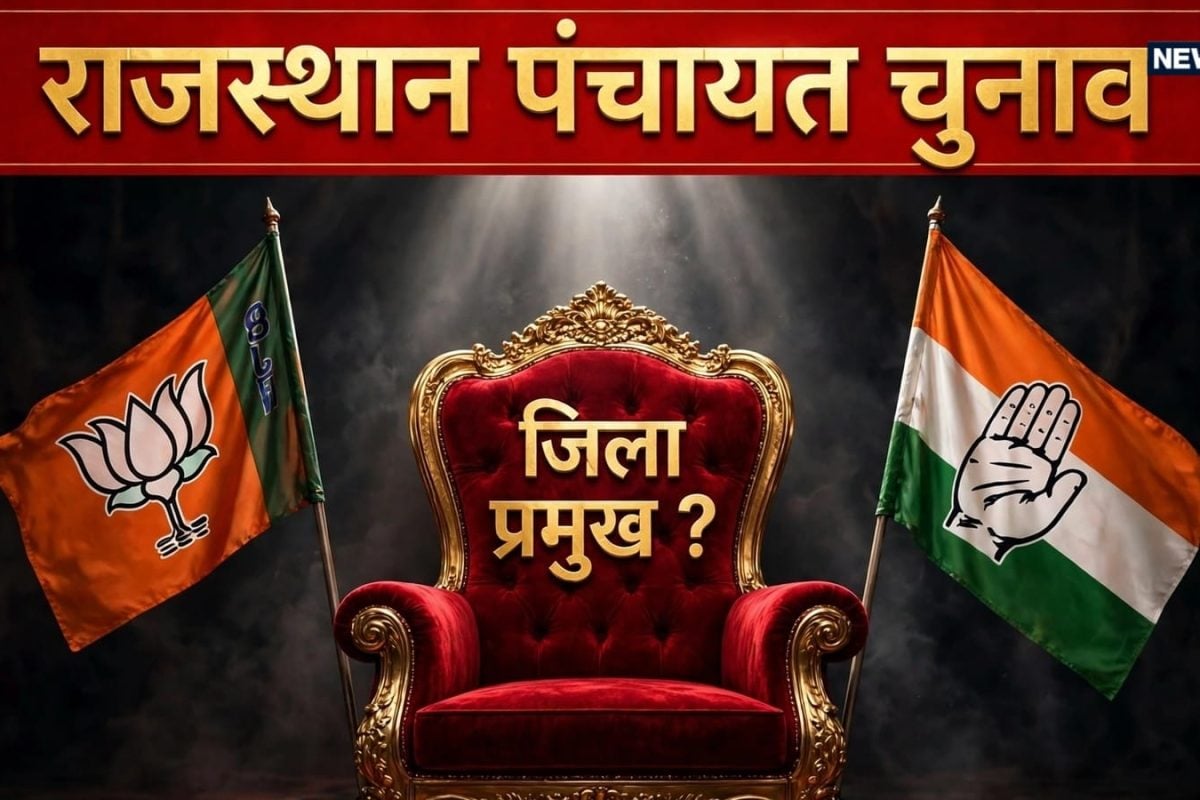
The political landscape of Rajasthan is witnessing heightened tensions as the counting of votes for the Zila Parishad elections 2026 officially commenced today across multiple districts. This crucial electoral exercise covers 1,275 wards spanning 37 districts, where candidates and representatives from major political parties, notably the Bharatiya Janata Party (BJP) and the Indian National Congress (Congress), are closely monitoring early trends at designated counting centers.
These comprehensive rural elections trace their administrative significance to the foundational framework of Panchayati Raj institutions in the state, designed to decentralize governance and empower local leadership at the grassroots level. Over the past weeks, aggressive campaigning by rival political factions transformed these local body elections into high-stakes battles, reflecting broader political currents across Rajasthan and testing the organizational strength of regional party units.
A rigorous administrative logistical operation underpins this election cycle, involving a total of 1,403 wards distributed across 41 district councils statewide. However, the current phase of counting excludes four specific districts—Kota, Baran, Karauli, and Sriganganagar—where the counting of votes has been officially deferred to December 17, 2026, due to distinct administrative schedules.
Political analysts and party insiders maintain that the numerical distribution of winning candidates today will critically influence the political arithmetic required to capture the coveted positions of district heads. Jaipur district has emerged as a major focal point with the highest number of 57 wards going under the scanner, whereas Jaisalmer and Salumbar recorded the lowest number with 21 wards each under active counting.
The regional impact of these election results extends deeply into rural development trajectories, governance efficiency, and local resource allocation across communities throughout Rajasthan. Observers note that local bodies hold substantial discretionary authority over district-level developmental programs, making the control of district councils a vital milestone for political parties aiming to consolidate their rural vote banks.
District administrations and election authorities have implemented strict security measures and protocols across all counting venues to maintain public order, transparency, and the integrity of the electoral process. Senior police and administrative officials remain stationed at vantage points to oversee the smooth execution of the vote-tallying procedures without untoward incidents.
Looking ahead, as the definitive results for the 1,275 wards emerge throughout the day, political parties are expected to initiate intense strategic maneuvers and coalition-building efforts to secure clear majorities. The ultimate formation of party boards and the subsequent election of district heads will shape the political dynamics of rural Rajasthan for the foreseeable term, culminating with the remaining district counts on December 17.
