
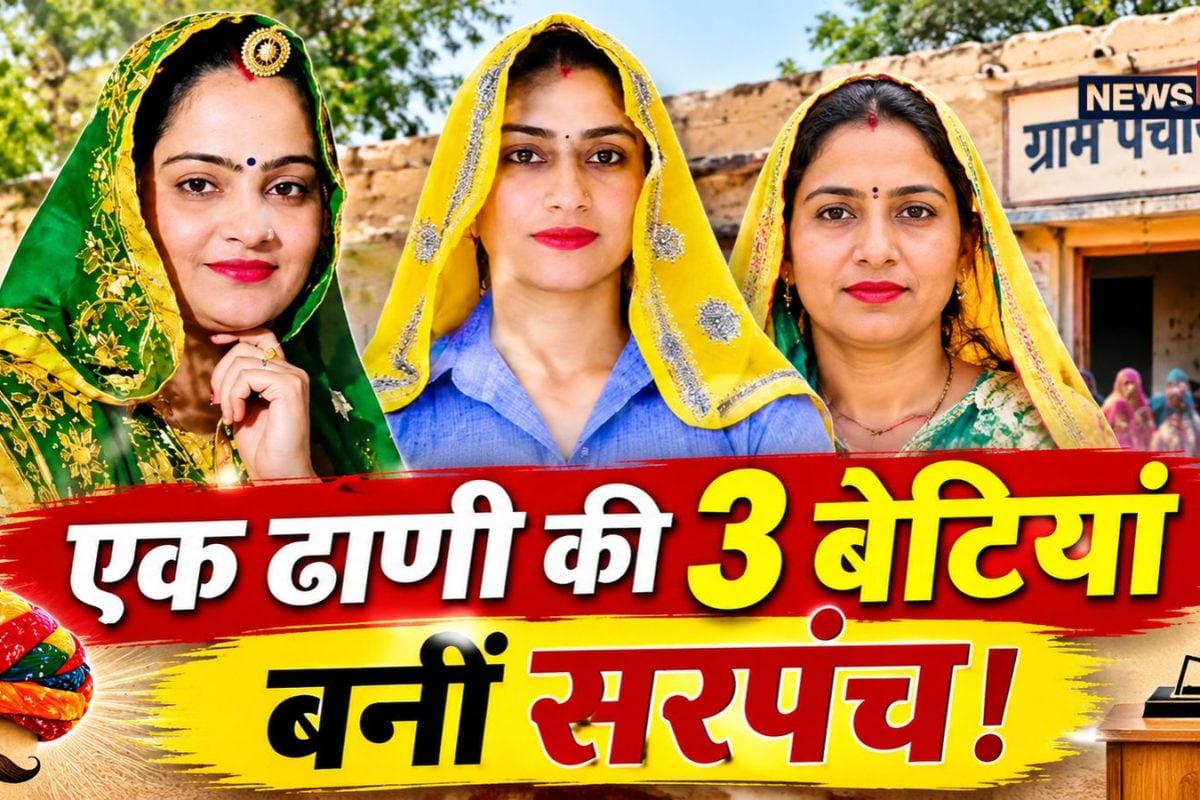
In an extraordinary display of democratic participation and grassroots leadership, three daughters hailing from the very same household in Soran Dhani, located within the Punderpada panchayat of Dausa district, have achieved remarkable electoral victories. Following their respective marriages into different villages, these women chose to step forward and contest local government elections. Their subsequent triumphs as village heads have captured widespread public attention and established a shining example of community dedication and public service across the entire region.
The narrative of their rise to local leadership is rooted in the shared values of education, perseverance, and social upliftment instilled within their native household in Soran Dhani. Growing up in the same environment, these women developed a profound understanding of rural administration and the pressing developmental needs of local communities. After being married into different households and settling in separate villages, each of them independently identified the aspirations of their local residents and decided to take the plunge into active public life by contesting the panchayat elections.
The electoral contests themselves unfolded across multiple phases of the rural polls, testing the organizational strength and grassroots appeal of each candidate. In the first phase of the elections, Saraswati Sisodia contested from the Bhanokar village and secured a decisive victory with a margin of 278 votes. Demonstrating similar grit and leadership appeal, Manisha Sisodia contested in the third phase from the newly formed Jhodhya panchayat and emerged victorious by a margin of 130 votes. Continuing this triumphant march, Sunita Sisodia entered the fray in the fourth phase from Mannoj village and clinched her victory by 84 votes.
Reactions from local residents, community elders, and regional observers have been overwhelmingly positive, highlighting the sociological significance of these victories. Particularly noteworthy is the historic milestone achieved by Manisha Sisodia, who has officially become the very first female sarpanch of the newly formed Jhodhya panchayat. Citizens and community members have expressed immense pride in how these relatives, spanning the roles of paternal aunts and nieces, have collectively altered the political landscape of their adopted villages through sheer dedication and grassroots connection.
The regional impact of these consecutive electoral victories extends far beyond the immediate boundaries of the individual villages involved. Within the broader geographical expanse of the region, the success stories of Saraswati, Manisha, and Sunita serve as a powerful testament to the changing dynamics of rural governance. Observers note that such leadership transitions inspire more women to step into administrative roles, thereby fostering a more inclusive environment for policy implementation, social welfare distribution, and grassroots developmental planning.
From an administrative perspective, the successful conclusion of these multi-phase elections and the peaceful assumption of office by the newly elected sarpanches reflect the robust operational framework of local election authorities. District and block-level administrative bodies provided the necessary logistical oversight, ensuring that polling across Bhanokar, Jhodhya, and Mannoj proceeded without disruption. Official measures focused on maintaining transparency and upholding democratic norms have laid a solid foundation for the incoming leadership teams to begin their developmental mandates.
Looking toward the future, the expectations from the newly established leadership in these villages remain exceptionally high. As Saraswati, Manisha, and Sunita assume their official duties as sarpanches, community members anticipate renewed focus on infrastructure development, public sanitation, women's welfare, and transparent local governance. The coming months will be critical as these leaders begin translating their electoral promises into concrete administrative actions, potentially setting a benchmark for participatory democracy throughout the region.
