
Rajasthan is witnessing a momentous political juncture as the state prepares for the official declaration of rural local body election results on November 20. The extensive electoral exercise encompasses a total of 37 Zila Parishads and 419 Panchayat Samitis spread across the entire state. As the culmination of a rigorous multi-phase democratic process, political observers, candidates, and citizens alike are eagerly awaiting the electoral verdicts that will shape grassroots governance for the upcoming tenure. The stakes are exceptionally high for all political parties as these local bodies form the fundamental bedrock of rural development, resource allocation, and grassroots administration.
Delving into the background of these high-stakes rural polls, the administrative machinery has navigated a complex, multi-phase electoral schedule spanning across the state. Throughout the polling phases, intense political mobilization was observed in rural pockets, reflecting the deep democratic engagement of the populace. Historically, local body elections in Rajasthan dictate the political pulse at the grassroot level, serving as a precursor to broader political trends. The State Election Commission has overseen the entire electoral roadmap, ensuring adherence to statutory guidelines and maintaining the sanctity of the democratic process despite logistical challenges across diverse geographical terrains.
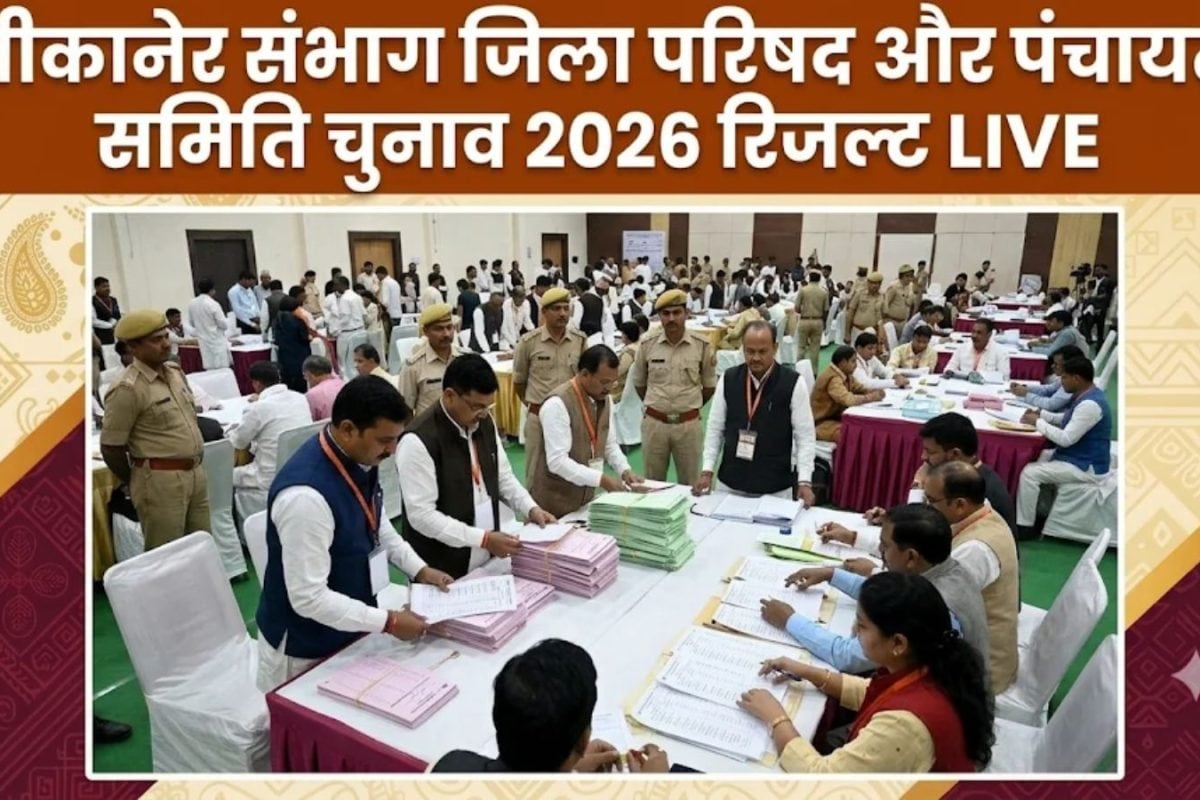
Focusing specifically on the Bikaner division, the administrative preparations have reached their zenith ahead of the counting day on November 20. The counting process is scheduled to commence at 8:00 AM sharp across designated centers in the division. The geographical jurisdiction of the Bikaner division encompasses four prominent districts, namely Bikaner, Churu, Sriganganagar, and Hanumangarh. Within these four districts, the electoral battleground features 156 Zila Parishad seats and 923 Panchayat Samiti wards, culminating in a combined total of 1,079 contested wards. Additionally, the region comprises 49 distinct Panchayat Samitis, whose political leadership will be definitively determined once the tabulation concludes.
Examining the broader participation metrics, the State Election Commission has noted significant engagement from the rural electorate during the polling window. While a unified, region-specific turnout percentage for the Bikaner division has not been formally compiled and released by the State Election Commission, statewide data reflects robust civic participation. Across the four phases of voting conducted throughout Rajasthan, an impressive average voter turnout ranging between 70 to 72 percent was officially recorded. This high turnout underscores the unwavering commitment of rural citizens to exercise their franchise and influence local governance directly.
The socioeconomic impact of these panchayat election results extends deeply into the rural economy and community infrastructure of the region. Local bodies hold substantial authority over developmental funds, infrastructural projects, and welfare scheme execution at the village level. Consequently, the incoming representatives will shoulder the immense responsibility of directing financial resources toward agricultural support, sanitation, drinking water availability, and rural road construction. Local business owners, farmers, and community leaders view these results as a vital determinant of regional development speed and economic vitality for the foreseeable future.
In response to the magnitude of the counting day, the local administration and law enforcement agencies have instituted exceptionally strict security measures across all designated counting centers in Bikaner, Churu, Sriganganagar, and Hanumangarh. Senior administrative officials have held multiple coordination meetings to deploy adequate police personnel, install CCTV surveillance, and establish barricading to prevent any untoward incidents. Strict protocols regarding entry into counting halls have been enforced to maintain absolute transparency, order, and adherence to guidelines stipulated by the State Election Commission.
Looking forward, the immediate outlook centers on the seamless execution of the counting process on November 20 and the subsequent formal notification of winning candidates. As soon as the final tallies for all 1,079 wards across the 49 Panchayat Samitis and district councils are locked, political alignments for electing Pramukhs and Pradhans will commence. Kotputli News will continue to provide real-time, accurate updates and comprehensive analytical coverage of the Bikaner division results as the unfolding numbers chart the new political landscape of rural Rajasthan.
