
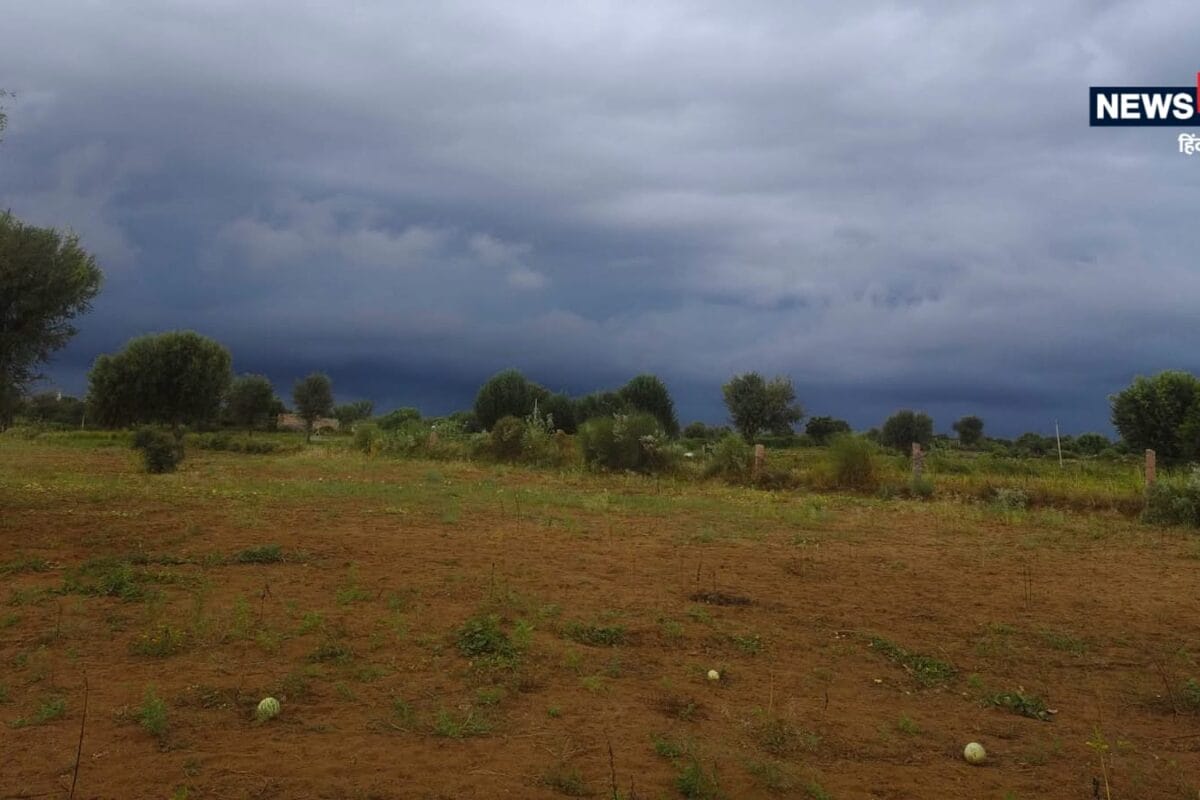
The weather across Rajasthan presents a diverse pattern on October 12, as reported by the meteorological authorities, with dry conditions prevailing across most regions while specific northern pockets experience atmospheric shifts. The state's meteorological landscape has become a focal point for agricultural and administrative monitoring as atmospheric systems interact to alter daily temperature curves and local humidity levels.
The current meteorological phenomena are primarily governed by an active circulation system situated over the central parts of Pakistan, accompanied by a dynamic trough and a steady influx of moisture streaming directly from the Arabian Sea. These combined atmospheric factors have created favorable conditions for localized precipitation activities, particularly influencing the north-western districts of the state where cloud cover has notably thickened over the past twenty-four hours.
Ground-level meteorological recordings over the preceding twenty-four hours highlight the localized nature of these weather events, with Sri Ganganagar district's Karanpur recording the highest rainfall at 20 millimeters. Meanwhile, Phalodi registered the state's highest maximum temperature at 37.2 degrees Celsius, illustrating the stark contrast in climatic conditions operating simultaneously across different geographic sectors of Rajasthan.
Agricultural communities and local traders have expressed cautious optimism coupled with anxiety regarding their standing yields, prompting agricultural extension services to issue timely alerts. The variable weather directly threatens open-air grain storage and unharvested produce, making timely logistical interventions crucial for mitigating potential financial losses among farming households throughout the affected zones.
While Kotputli-Behror and surrounding districts currently maintain stable atmospheric conditions, regional agricultural markets and local supply chains remain closely attuned to the shifting meteorological trends. The interconnected nature of grain distribution across the state means that weather disruptions in northern production hubs inevitably ripple through regional commercial centers, influencing local pricing and supply stability.
In response to the evolving weather advisory, administrative bodies and district agricultural departments have stepped up monitoring mechanisms to assist local populations. Official channels are actively disseminating weather bulletins to ensure that rural communities remain adequately prepared for sudden climatic shifts, thereby minimizing vulnerability to unexpected precipitation events.
Looking ahead, the India Meteorological Department has indicated that similar weather patterns, characterized by isolated rains and surface wind speeds reaching 30 to 40 kilometers per hour, are very likely to persist on October 13 and October 14 across Bikaner, Sri Ganganagar, Hanumangarh, Churu, Sikar, and Jhunjhunu. Farmers and local residents in these targeted zones have been strongly advised to secure their harvested crops and agricultural assets in covered spaces until the atmospheric system completely dissipates.
