
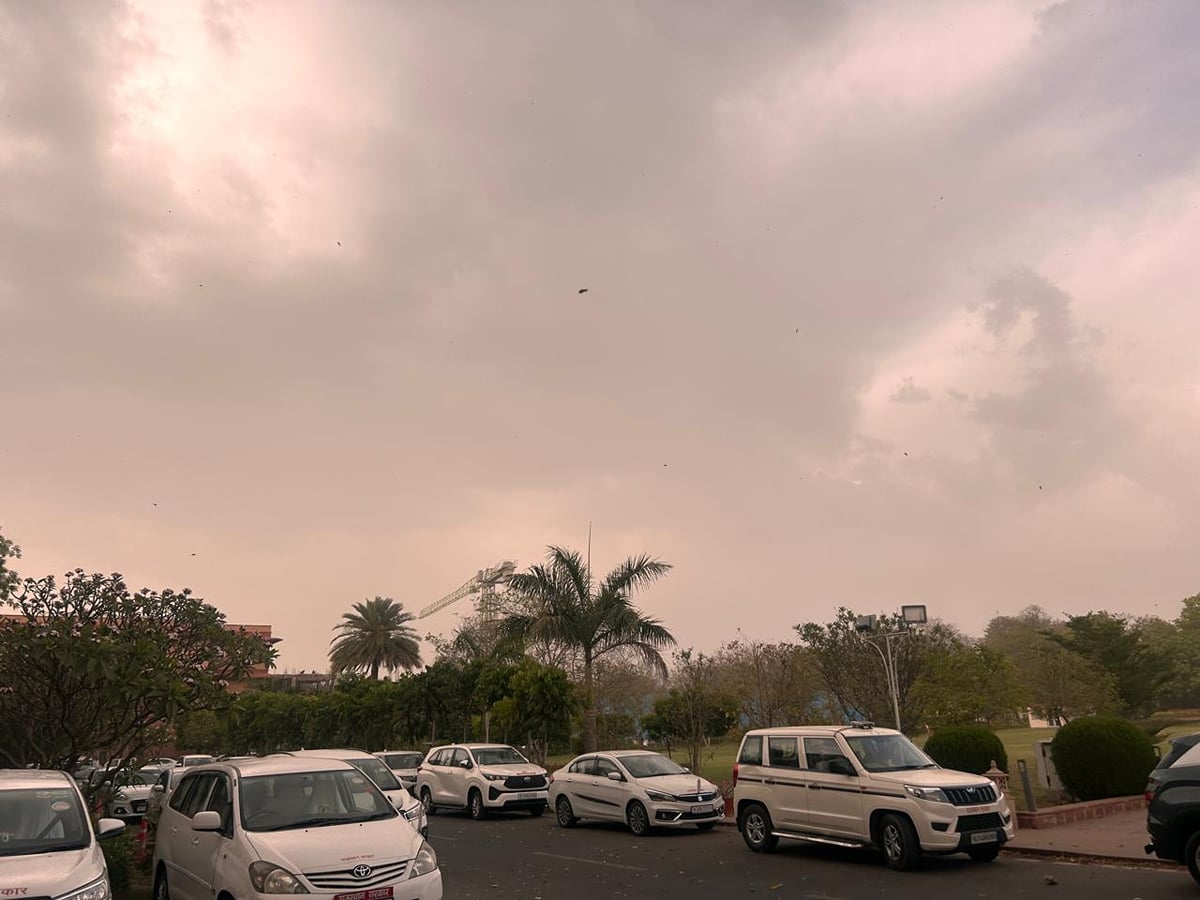
The Meteorological Department has issued a high-priority weather alert for the state of Rajasthan, indicating that severe meteorological conditions will prevail across multiple districts from October 14 to October 16. This impending weather disturbance is expected to bring sudden thunderstorms, intense spells of rainfall, and localized hailstorms, posing a notable challenge to regional stability and normal daily life.
Atmospheric evaluations reveal that this spell of inclement weather originates from active western disturbances interacting with local wind patterns, a phenomenon historically known to disrupt agricultural cycles during seasonal transitions. The sudden atmospheric shift underscores the unpredictability of regional climate dynamics, catching both local administrations and agricultural communities in a state of heightened preparedness.
The geographical scope of this weather warning highlights specific vulnerabilities, with the Bikaner and Jaipur divisions designated as the areas most likely to experience the highest intensity of meteorological impacts. Local monitoring networks are tracking precipitation levels and wind speeds closely to ensure timely dissemination of data to vulnerable rural sectors where farming assets remain exposed.
Agricultural economists and community representatives have expressed profound concern over the timing of these predicted storms, noting that unharvested crops and freshly threshed grains left in open agricultural fields face severe risks of damage. Stakeholders emphasize that immediate precautionary measures are vital to mitigate potential economic losses for farming families who depend heavily on seasonal yields.
Within the broader regional context, communities across the Kotputli-Behror district are closely monitoring the developments, as fluctuating weather patterns frequently disrupt local rural trade, transport logistics, and community gatherings. Local agricultural extension offices are working proactively to ensure that farmers within these rural belts receive urgent advisories regarding the protection of agricultural produce.
In response to the official meteorological forecasts, district administrations and disaster management authorities have initiated coordination meetings to review preparedness protocols, ensuring that response teams remain on standby for any emergency relief operations. Officials reiterate the necessity of strict compliance with safety guidelines issued by disaster management cells during periods of severe weather.
As the three-day warning window approaches, public anticipation remains focused on minimizing potential damages to property and agriculture through coordinated civic vigilance. Authorities will continue to issue regular updates based on real-time radar tracking to guide residents and farmers safely through the duration of this weather event.
