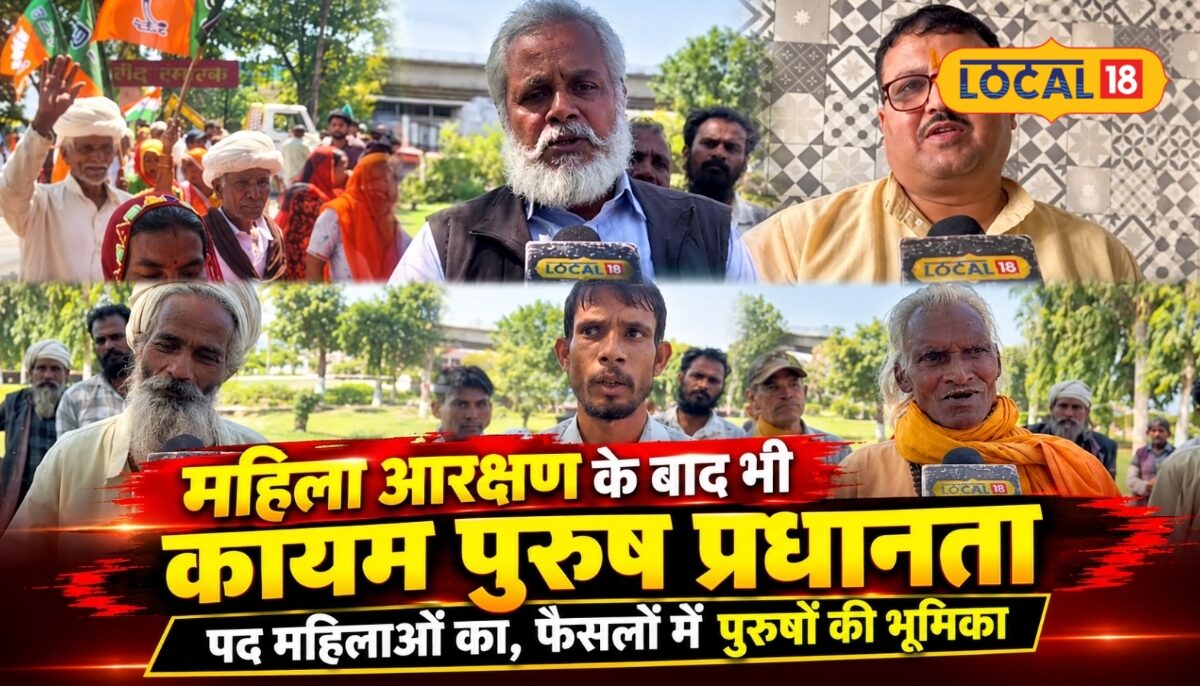
In the lead-up to the Rajasthan Sarpanch Elections 2026, a critical issue concerning grassroots democracy and gender empowerment has resurfaced across the state. Despite constitutional and legal provisions ensuring significant reservation for women in local self-government institutions, administrative realities often present a contrasting picture. A comprehensive ground assessment conducted by the Local18 team in Udaipur has brought to light the ongoing practice where male relatives, particularly husbands, take over the official responsibilities designated for elected female representatives.
The historical context of rural governance in Rajasthan reveals persistent patriarchal structures that have traditionally restricted active female participation in public affairs. Even though reservation policies were implemented to bridge this gender gap and bring women to the forefront of decision-making bodies, societal inertia has frequently sidelined elected women. This systemic challenge undermines the very objective of local governance reforms, which aim to foster independent female leadership at the village level.
During the recent ground investigation in Udaipur, the Local18 team interacted with various residents and community members to understand the depth of this phenomenon. The inquiry highlighted that in numerous panchayats, the official authority and administrative control effectively shift to the husbands immediately after the election results are declared. This practice has prompted widespread public debate, with many citizens openly questioning the legitimacy of proxy governance where the mandate belongs to the woman, but the authority is exercised by the male relative.
Voicing public sentiment on this critical issue, local resident Kaushal Mundra remarked during the interaction that such proxy arrangements have been visible in villages for a long time. Highlighting the gravity of the situation, he firmly stated, 'Chair with the wife and command in the hands of the husband, this is completely wrong, sir.' His observation encapsulates the collective frustration of citizens who expect transparent, autonomous, and direct administration from their democratically elected representatives.
The implications of this proxy culture extend deeply into the socio-economic development of rural communities and districts like Kotputli-Behror. When elected female representatives are reduced to mere titular heads while their male relatives manage panchayat funds, meetings, and developmental schemes, the intended empowerment remains unfulfilled. This dynamic prevents rural women from gaining actual administrative experience, thereby hindering long-term leadership development and community progress.
Addressing this entrenched practice requires concerted administrative oversight, strict statutory enforcement, and rigorous monitoring by state election authorities. Panchayat regulations explicitly mandate that only elected representatives hold the legal authority to execute official duties and sign administrative documents. Ensuring compliance with these legal frameworks is essential to curb the unwarranted interference of husbands and male relatives in daily local governance.
Looking ahead toward the 2026 electoral cycle, civil society organizations, administrative bodies, and community leaders must collaborate to foster genuine political participation among women. Public awareness campaigns and strict penal actions against proxy office-bearers can serve as deterrents. Only through unwavering commitment to democratic principles can the true spirit of women reservation be realized across every village panchayat in Rajasthan.