
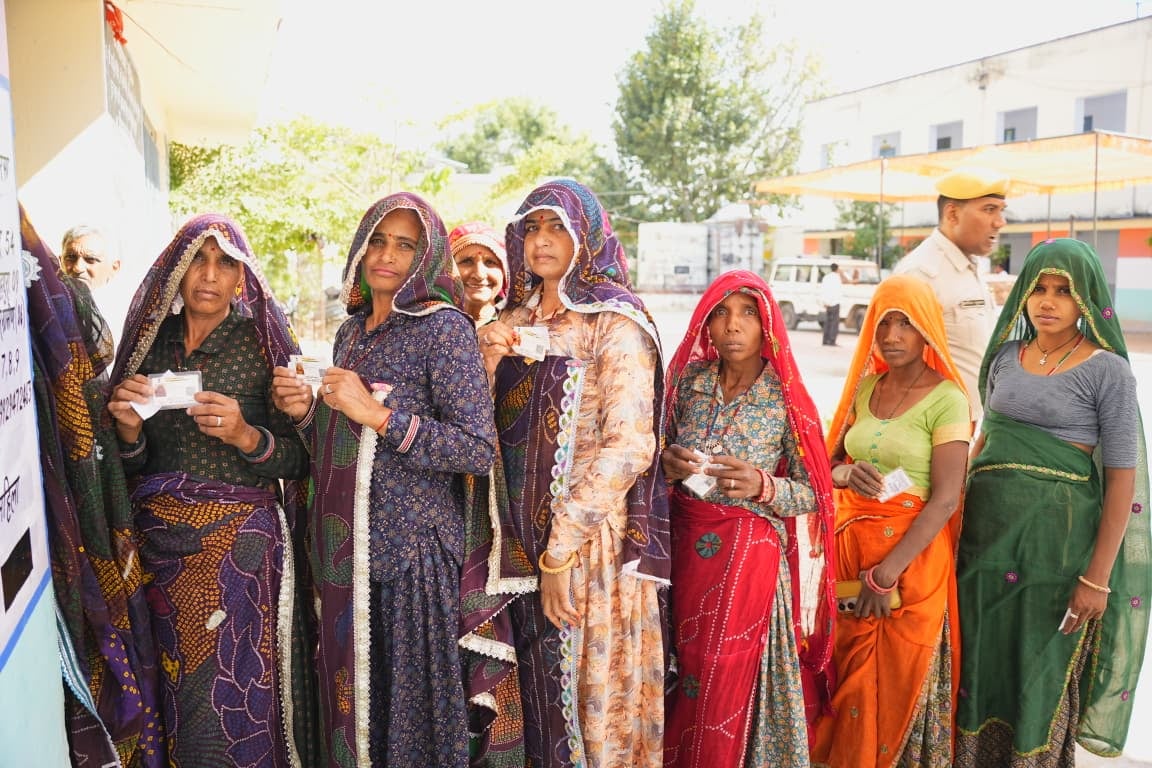
The democratic landscape of Rajasthan witnessed significant electoral mobilization as the second phase of the crucial Panchayat elections concluded with a substantial voter turnout of 64.32 percent by six in the evening. Across various polling booths, citizens queued up to exercise their franchise, demonstrating a profound commitment to local self-governance and grassroots democracy. Electoral officials maintained rigorous oversight to ensure that the polling process remained orderly and accessible to all eligible voters throughout the day.
Panchayat elections hold a foundational place in the administrative and political fabric of Rajasthan, serving as the primary instrument for rural development and resource allocation at the village level. Historically, these local polls attract high enthusiasm because residents directly elect the representatives who manage local infrastructure, sanitation, and welfare schemes. The current electoral cycle is being closely watched by political analysts and regional administrators alike, given its direct bearing on rural policy implementation and community empowerment.
A granular analysis of the voting statistics reveals notable regional disparities in civic participation across the state. Banswara recorded the highest enthusiasm, surging ahead with an impressive 76.24 percent average voter turnout. Conversely, voter engagement was comparatively subdued in the Jalore and Pali regions, with Jalore registering the lowest polling percentage of the state at 52.36 percent. Meanwhile, the capital region of Jaipur witnessed robust participation, clocking a high voter turnout of 68.63 percent.
Local stakeholders, community leaders, and civic activists have expressed diverse views regarding these contrasting turnout figures. Rural communities in leading districts praised the awareness campaigns conducted by local bodies, which successfully motivated voters to leave their agricultural and daily chores to cast ballots. In areas with lower participation, civil society representatives pointed toward logistical challenges, seasonal migration, and inadequate outreach as potential deterrents that require urgent administrative review.
The ripples of these panchayat elections extend significantly into surrounding regions, including the Kotputli-Behror district, where local commerce, community interactions, and administrative priorities are deeply intertwined with rural governance outcomes. Local businesses and agricultural communities closely monitor these electoral trends, as the newly elected panches and sarpanches will soon take charge of local development funds, affecting regional supply chains, infrastructure projects, and grassroots economic activity.
In response to the operational challenges and varying turnout trends observed during this phase, administrative machinery and election observers have initiated comprehensive reviews of polling station management. Security personnel and election staff worked diligently to maintain peace, managing logistical hurdles effectively. Officials emphasized that continuous voter education and transparent reporting remain central to strengthening institutional credibility and ensuring seamless execution of subsequent electoral phases.
Looking forward, the State Election Commission and district administrations are gearing up for the tabulation of votes and the subsequent announcement of results, which will set the stage for the formation of local governing councils. Authorities are preparing for the administrative transition that follows, ensuring that elected representatives receive necessary orientation regarding rural development protocols. Public expectations remain high as communities await the implementation of promised local welfare and infrastructure initiatives.
