
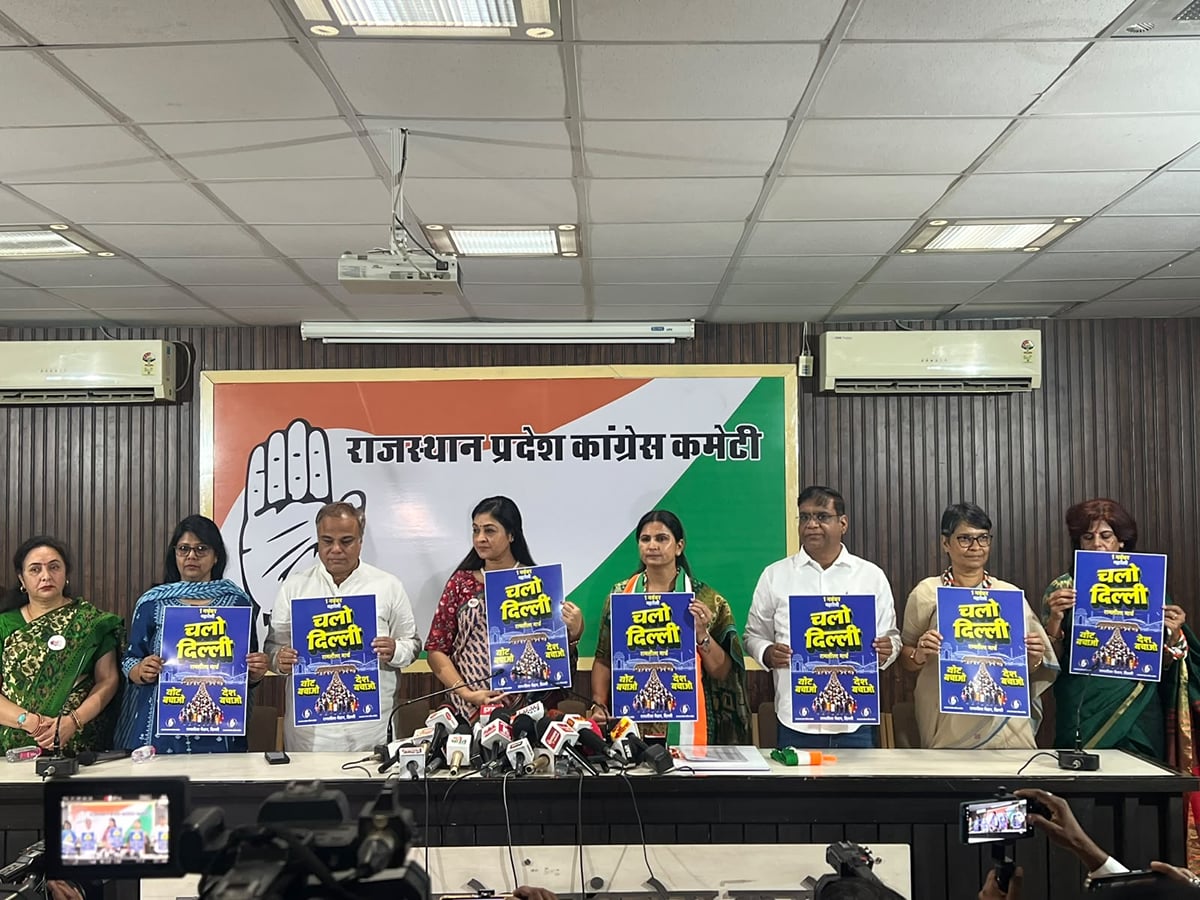
In a significant political development originating from Jaipur, Mahila Congress National President Alka Lamba has launched a scathing attack on Union Home Minister Amit Shah. Lamba alleged that a calculated conspiracy is currently underway to obstruct and dismantle the high-profile mega rally of the INDIA alliance, which is formally scheduled to be held in the national capital, Delhi, on the first of November.
The background of this escalating confrontation traces back to the ongoing political realignment and aggressive mobilization strategies adopted by the opposition parties under the banner of the INDIA alliance. As national political dynamics shift toward intense electoral preparations and ideological showdowns, mega public gatherings have transformed into crucial barometers of public support and organizational strength.
Elaborating on the logistical scale and ambitions of the upcoming demonstration, Alka Lamba revealed specific quantitative targets set by the coalition leadership. According to her official statements, the INDIA alliance has formulated a concrete strategy to mobilize a massive crowd of ten lakh participants for the November 1 demonstration in Delhi, reflecting unprecedented logistical mobilization.
Political analysts, organizational stakeholders, and regional observers have expressed diverse perspectives regarding the potential repercussions of this grand assembly. While opposition leaders emphasize their democratic right to peaceful assembly and public dissent, administrative authorities and ruling party representatives maintain that security protocols and public order management remain paramount during events of such immense magnitude.
The ramifications of these high-stakes political maneuvers extend far beyond national politics, directly influencing regional dynamics in areas such as the Kotputli-Behror district. Local party workers, allied trade representatives, and community members in Kotputli are closely monitoring these developments, recognizing that nationwide political shifts invariably impact local grassroots mobilization and economic sentiments.
As preparations intensify, administrative bodies and law enforcement agencies in Delhi and surrounding regions face mounting scrutiny regarding permission protocols, traffic management, and crowd control measures. Statutory oversight and administrative permissions remain a central focal point for organizers who are determined to execute the massive gathering smoothly despite alleged political interference.
Looking ahead, the timeline leading up to November 1 is marked by heightened vigilance, strategic planning, and continuous public statements from prominent leaders across the political spectrum. The ultimate execution of the rally and the fulfillment of the targeted ten lakh attendance will serve as a critical political milestone for the opposition coalition moving forward.
