
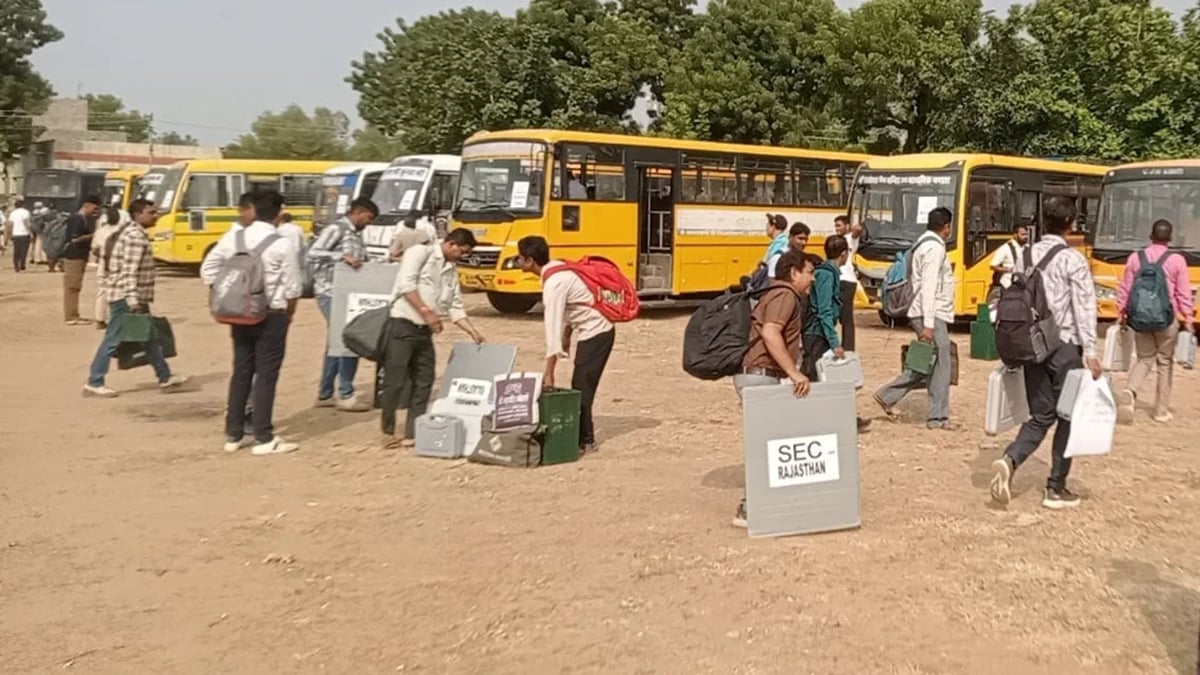
Administrative machinery across the designated regions of Rajasthan has completed all mandatory preparations for the upcoming second phase of the Panchayati Raj elections. This crucial electoral exercise encompasses crucial grassroots governance bodies, focusing specifically on electing representatives for district councils and panchayat committees. The district administration has worked round the clock to finalize logistical roadmaps, ensuring that every voting booth is adequately equipped for the electoral process.
Democratic decentralization in rural regions heavily relies on these foundational panchayati raj polls, which historically serve as the bedrock of local self-governance in India. Over successive electoral cycles, these elections have empowered rural communities by devolving decision-making authority down to village and regional levels. The administrative apparatus treats this second phase with utmost seriousness, drawing upon extensive institutional experience from previous electoral undertakings across the state.
Ground realities dictate meticulous planning, and logistical coordination for this phase involves the careful deployment of polling personnel and security apparatus. Officials have meticulously verified polling materials, electronic voting or ballot mechanisms, and infrastructural facilities at every designated polling station. The sheer scale of deployment underscores the complexity involved in managing rural elections where administrative reach must extend seamlessly to remote geographical pockets.
Local administrators, election observers, and community stakeholders have engaged in extensive consultations to guarantee absolute fairness and transparency. Observers note that grassroots enthusiasm remains palpable among citizens who view these elections as a direct channel for local development and accountability. Community leaders have actively urged eligible voters to participate in large numbers, emphasizing the profound significance of local representation in shaping rural welfare programs.
While the immediate electoral action remains localized to the designated administrative zones, the overarching regional implications resonate deeply across the broader socio-political landscape of the state. Strengthened local governance directly influences the implementation of developmental schemes, infrastructural projects, and welfare initiatives at the grassroots level. The administrative diligence observed during these preparations sets a robust benchmark for future civic exercises throughout neighboring districts and rural sectors.
District election authorities and law enforcement agencies have instituted comprehensive security frameworks to preempt any potential irregularities or law-and-order disruptions. Special flying squads, sectoral magistrates, and police reinforcements have been strategically positioned to monitor sensitive polling booths continuously. Officials have reiterated their commitment to enforcing the model code of conduct rigorously, ensuring that all political entities adhere strictly to established guidelines.
As the polling parties officially depart for their respective destinations, public anticipation reaches a crescendo ahead of the scheduled polling day. The successful execution of this electoral phase will pave the way for the subsequent tabulation of votes and the formal constitution of local governing bodies. Citizens and administrators alike look forward to a peaceful, participative, and definitive conclusion to this important democratic chapter.
