
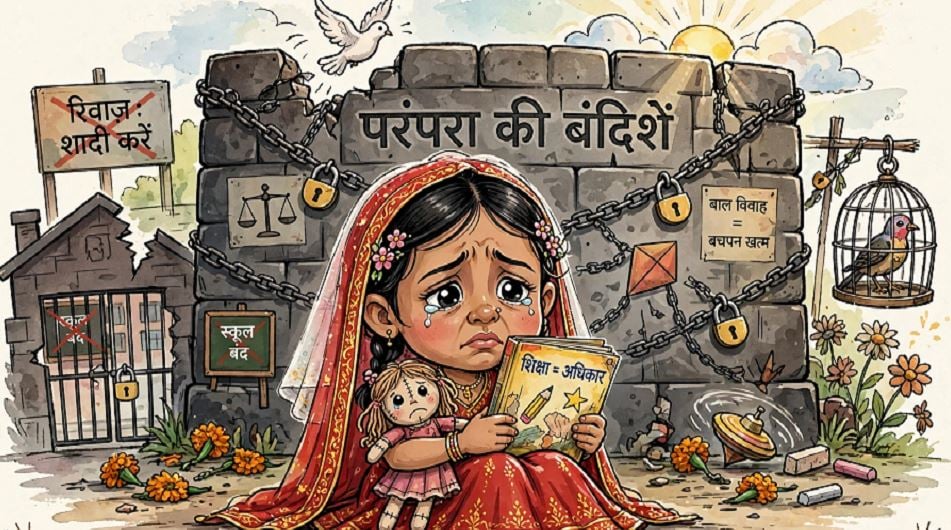
In a decisive administrative maneuver aimed at eradicating the deeply entrenched social menace of child marriage, the Department of Education in Rajasthan has officially issued comprehensive directives to establish a robust new monitoring framework across the region. This crucial policy shift mandates the direct deployment of localized administrative machinery, specifically assigning oversight duties to key functionaries at the community level. By bringing established institutional pillars into the active prevention grid, the state government seeks to eliminate systemic loopholes that have historically permitted illegal underage marriages to proceed undetected during peak seasonal ceremonies.
The historical context surrounding child marriage in various rural and semi-urban pockets of Rajasthan necessitates continuous structural vigilance. Despite progressive legislative frameworks and longstanding social reform campaigns, underage unions continue to surface covertly during traditional festive periods, Akshaya Tritiya, and mass community gatherings. Previous enforcement mechanisms often suffered from fragmented communication and delayed reporting between localized revenue officials and educational administrators. Recognizing these historical vulnerabilities, the current administrative strategy integrates dual-level reporting to ensure absolute accountability from the initial planning stages of any suspicious wedding.
Analyzing the ground reality within the districts of Rajasthan reveals that grassroots tracking requires meticulous coordination among trusted local authorities. The newly instituted framework addresses this logistical challenge by formally designating school principals and patwaris as frontline monitors within their respective jurisdictions. These officials possess intimate knowledge of community demographics, familial networks, and calendar events within villages and towns. By leveraging their localized presence, the administration aims to intercept social pressures and cultural justifications that often perpetuate illegal child marriages before the actual ceremonies can be organized.
Stakeholder perspectives across the administrative spectrum indicate strong institutional backing for this coordinated approach. Local intellectuals, social welfare advocates, and community leaders have consistently emphasized that combating child marriage requires active engagement from trusted local figures rather than relying solely on distant police intervention. School principals hold immense respect and influence within families through their educational interactions with children, while patwaris maintain comprehensive land and demographic records. Combining the educational outreach of principals with the administrative tracking capabilities of patwaris establishes a formidable deterrent against underage marriage organizers.
The regional implications of this enhanced monitoring mechanism are particularly profound for developing districts, where socio-economic factors and traditional customs frequently intersect. In communities undergoing rapid transition, ensuring that children remain in academic institutions rather than being forced into early matrimonial alliances is vital for regional development. The active participation of educational heads guarantees immediate reporting if a student suddenly drops out or exhibits signs of impending nuptial preparations, thereby safeguarding the educational future and fundamental rights of minors across the state.
On the administrative front, the Department of Education has outlined explicit procedural guidelines for the newly appointed monitors to streamline communication channels with district authorities. Principals and patwaris are required to maintain vigilant observation within their operational areas, coordinate seamlessly upon receiving credible intelligence regarding proposed underage ceremonies, and immediately apprise higher district officials. This structured reporting protocol ensures that preventive interventions can be deployed swiftly and decisively, neutralizing potential legal violations before families incur irreversible social and legal consequences.
Looking toward the forward outlook and upcoming administrative procedures, the success of this initiative will rely heavily on continuous monitoring, district-level reviews, and strict accountability measures for local functionaries. Public awareness campaigns are expected to run parallel to these administrative directives, educating communities about the stringent legal penalties associated with child marriage under national law. As Rajasthan moves forward with this unified approach involving principals and patwaris, the state administration reinforces its unwavering commitment to protecting child rights and fostering a progressive, law-abiding society.
