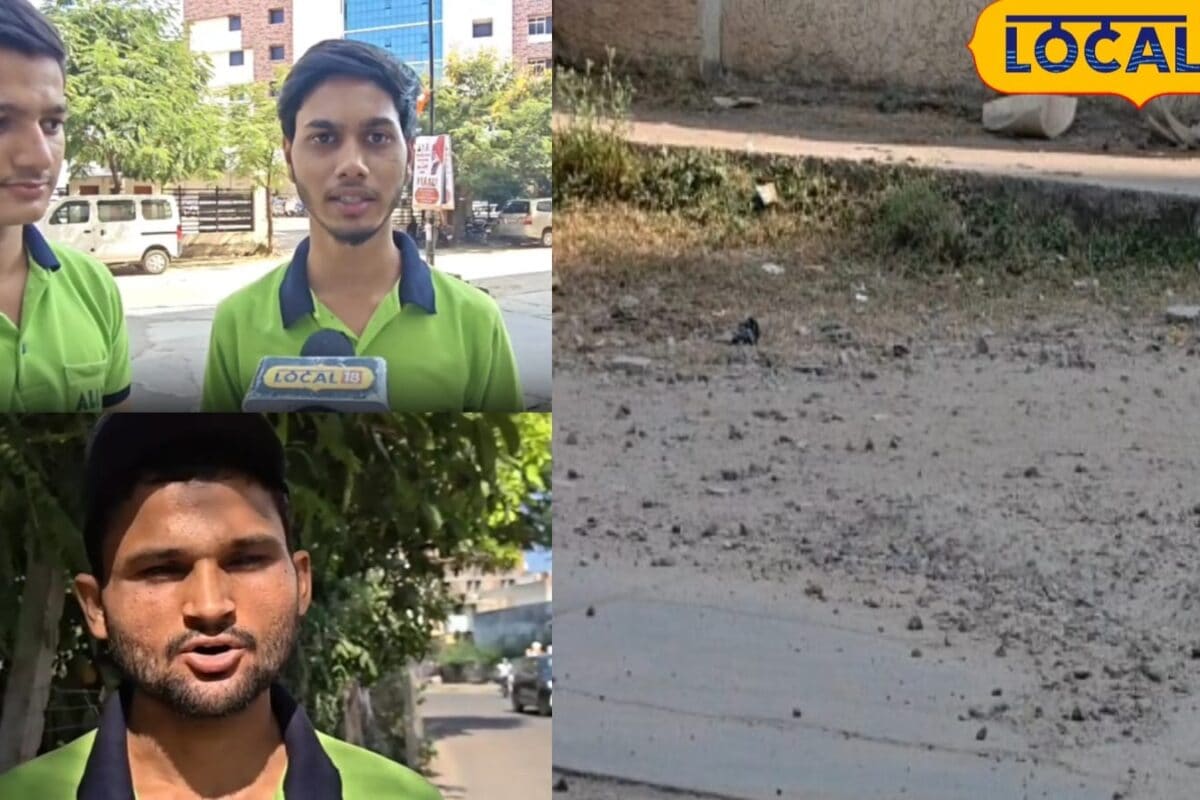
Medical and engineering entrance examination aspirants arriving from across the country to Kota are currently confronting an alarming array of infrastructural and civic hurdles alongside their rigorous academic schedules. Specifically within the Landmark City area, students find themselves compelled to navigate through severely deteriorated road conditions, widespread garbage accumulation, massive potholes, airborne dust, and paralyzing daily traffic gridlocks. This multi-layered administrative neglect has increasingly turned a residential and educational hub into a zone of daily hardship for thousands of young scholars striving to secure admissions into premier national institutions.
The historical context of Kota as the premier coaching capital of India has continuously drawn massive student populations annually, necessitating robust urban planning and maintenance. However, rapid commercial and residential expansion without proportional infrastructural upgrades has left regions like Landmark City structurally fragile and overwhelmed. The local authorities have historically struggled to keep pace with the sheer volume of migrating scholars, leading to structural decay in roads, sanitation networks, and municipal waste management systems across student-dense neighborhoods.
Examining the ground reality reveals that the daily routine of these aspirants is deeply fractured by infrastructural paralysis, directly threatening both their physical well-being and academic concentration. As students transit between their coaching institutes and respective hostels or paying guest accommodations, considerable hours are lost daily trapped in severe traffic bottlenecks. Furthermore, the persistent clouds of dust generated by damaged roads raise serious health concerns regarding respiratory illnesses among the student community, compounding the psychological stress inherent in high-stakes competitive examination preparation.
Voicing their collective frustration, students on the ground have highlighted how the critical evening hours, coinciding with the mass dismissal of coaching classes, transform local corridors into impenetrable human and vehicular barriers where even walking safely becomes a strenuous task. Stakeholders emphasize that the lack of systemic regulation transforms routine commutes into exhausting ordeals. The young scholars are demanding urgent, targeted interventions from all concerned municipal and district departments to restore basic urban livability, enforce regular cleanliness drives, and completely overhaul the existing traffic management framework.
The ramifications of such civic deterioration extend far beyond immediate academic disruptions, casting a shadow over the broader educational ecosystem and regional reputation that underpins the local economy. The sustained welfare of visiting students is paramount to maintaining Kota's status as a trusted national educational destination, making the current infrastructural neglect a matter of profound socio-economic concern for the entire district and its dependent commercial networks.
In response to these compounding grievances, student representatives have forwarded constructive, practical recommendations to local governance bodies to mitigate the daily crisis. Their actionable proposals include executing comprehensive road repairs, establishing dedicated alternative routes exclusively for four-wheeler traffic, planting protective green barriers along roadsides, and deploying modern water sprinkler systems to permanently suppress hazardous dust pollution.
As public pressure mounts on municipal authorities, the collective expectation across the student community is a swift, transparent, and accountable administrative response with fixed timelines for infrastructure restoration. The future outlook hinges entirely on whether district officials will proactively adopt these student-driven suggestions or allow the systemic decay within Landmark City to further jeopardize the well-being and academic futures of thousands of hopeful aspirants.