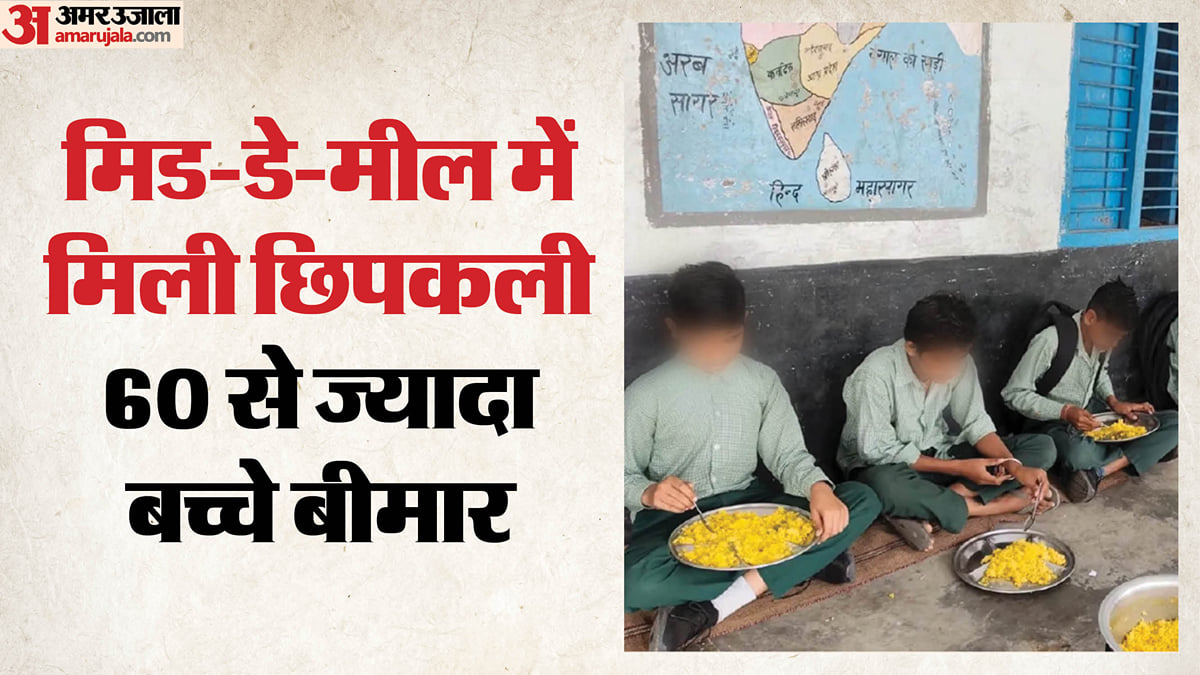
A grave and alarming incident of food contamination has surfaced at a government school located within the Churu district of Rajasthan, causing widespread concern among parents, educators, and public health officials. During the routine serving of the mid-day meal, a lizard was discovered directly inside the prepared food. This shocking oversight in institutional food safety triggered immediate panic across the school premises as students began displaying symptoms of distress shortly after consuming the meal.
The mid-day meal scheme, which is federally and state-supported to provide nutritional sustenance and encourage attendance among underprivileged students across government institutions, has historically faced periodic scrutiny regarding quality control, hygiene standards, and localized preparation monitoring. Incidents of compromised food safety not only undermine the fundamental objective of the nutritional program but also severely erode public trust in the institutional frameworks tasked with safeguarding the health and welfare of young children in rural and semi-urban learning environments.
According to preliminary field reports and administrative disclosures from the region, more than sixty students partook in the contaminated meal before the presence of the foreign contaminant was detected by vigilant students or supervisors. The sheer scale of potential exposure escalated rapidly, as over sixty children subsequently reported feeling unwell, experiencing symptoms consistent with acute food poisoning, nausea, and gastrointestinal distress, prompting urgent calls for medical intervention and emergency response protocols.
As news of the mass illness rippled through the local community, anxious parents rushed to the school premises, demanding immediate accountability, transparent investigations, and stringent penal actions against the individuals or agencies responsible for the glaring lapse in kitchen hygiene. Community leaders and local stakeholders emphasized that the preparation and distribution of mid-day meals must be subjected to rigorous multi-tiered inspection protocols to ensure that basic sanitary conditions are never compromised in institutions where children gather in large numbers.
The broader regional impact of such food safety failures extends far beyond the immediate geographical boundaries of the Churu district, resonating across neighboring administrative zones including Kotputli-Behror and surrounding areas. Educational administrators and parent-teacher associations throughout the wider region are re-evaluating their own local vendor contracts, self-help group supply chains, and on-site cooking practices to prevent similar catastrophic occurrences from replicating in their respective jurisdictions.
In response to the unfolding crisis, district administrative officials, medical teams, and educational authorities swiftly mobilized to establish emergency triage facilities, transporting affected children to nearby hospitals and healthcare centers for immediate observation, detoxification, and necessary medical treatment. Health department officials confirmed that the affected students are currently receiving continuous medical supervision, with medical practitioners working diligently to stabilize those exhibiting severe symptoms of food-borne illness.
Looking ahead, district authorities have announced plans to conduct a thorough, impartial administrative inquiry into the procurement, preparation, and distribution phases of the school's mid-day meal operations. The findings of this comprehensive investigation are expected to guide future punitive measures, policy tightening, and systemic reforms, ensuring that institutional accountability is strictly enforced and that the nutritional safety of students remains an uncompromising top priority.