
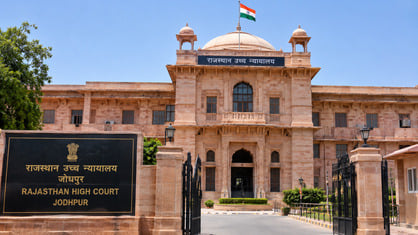
In a significant legal intervention that reinforces administrative empathy and institutional accountability, the Rajasthan High Court has formally quashed the controversial transfer order of a UCO Bank manager. The judicial scrutiny was triggered after the bank arbitrarily relocated the petitioner nearly 1,000 kilometers away from his home base, completely disregarding his critical domestic responsibilities. The high court bench expressed deep displeasure over the manner in which institutional transfer policies were implemented without due consideration for exceptionally vulnerable dependents within the employee's immediate family.
The genesis of this legal battle lies in the rigorous and inflexible transfer mechanisms frequently deployed by major public sector financial institutions. UCO Bank authorities had issued the routine administrative posting order, transferring the branch manager to a distant station approximately 1,000 kilometers away from his native residence. Such long-distance displacements typically disrupt the domestic equilibrium of banking personnel, but in this specific instance, the dislocation carried catastrophic implications for the health and survival of a dependent family member residing under the petitioner's direct care and daily supervision.
At the center of the legal deliberations was the compelling ground reality of the petitioner's domestic obligations. The manager is the sole caregiver for his brother, who suffers from Thalassemia, a severe genetic blood disorder requiring constant medical intervention, blood transfusions, and specialized oversight. Compounding this grave medical condition, the brother is also officially categorized as 75 percent disabled. Transporting the primary caregiver nearly 1,000 kilometers away would have created an insurmountable vacuum in the daily medical management and physical support required for a severely disabled individual with chronic health complications.
Legal counsels representing the petitioner argued before the Rajasthan High Court that institutional transfer guidelines explicitly mandate exemptions or compassionate considerations for employees burdened with extraordinary family care responsibilities. The arbitrary refusal by UCO Bank authorities to accommodate these documented medical exigencies highlighted a systemic failure within the administrative machinery to balance organizational mobility with fundamental humanitarian principles. Human rights advocates and local civil society observers have repeatedly emphasized that public sector undertakings must act as model employers by respecting statutory protections designed for disabled citizens and their caregivers.
The regional reverberations of this judicial ruling extend far beyond the immediate parties involved, particularly impacting financial institutions operating across the region including the Kotputli-Behror district. Banking employees and administrative officials within local branches have closely monitored the proceedings, recognizing that the verdict sets a crucial precedent regarding the enforceability of internal transfer policies. The local banking community and trade associations have welcomed the judicial stance, noting that branch managers and operational staff frequently face immense psychological pressure due to abrupt geographical relocations ordered by central or zonal administrative offices.
During the course of the hearings, the Rajasthan High Court systematically evaluated the statutory obligations incumbent upon banking corporations when handling personnel matters involving specially-abled dependents. The judiciary reminded the management of UCO Bank that administrative discretion cannot be exercised in an arbitrary, capricious, or vacuum-like manner that violates established welfare guidelines. The court explicitly noted that institutional policy directives must be implemented with sensitivity, keeping the welfare of dependent family members at the forefront rather than treating human resources purely as mechanical digits on a deployment chart.
Looking forward, this definitive ruling is expected to compel UCO Bank and comparable financial institutions to overhaul their internal grievance redressal and transfer-review mechanisms. Legal experts anticipate that human resources departments will now institute mandatory pre-transfer screening protocols to identify employees burdened with caregiving responsibilities for Thalassemia patients and severely disabled relatives. As the petitioner prepares to resume duties near his ailing brother, the judgment stands as a robust judicial reaffirmation that constitutional protections and humanitarian empathy must supersede rigid bureaucratic expediency in employment matters across Rajasthan.
