
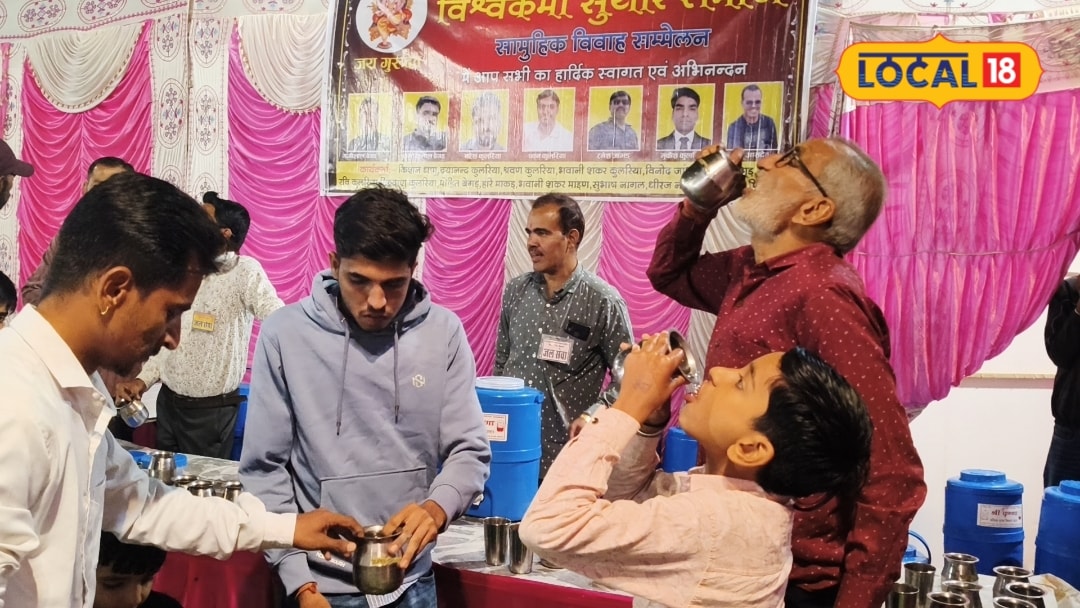
In an extraordinary display of ecological responsibility and social consciousness, the Suthar community recently hosted a landmark mass wedding ceremony at the historic Dharanidhar Ground in Bikaner. Amidst traditional celebrations and community fervor, the event transcended conventional matrimonial gatherings by championing a rigorous anti-plastic campaign. The primary objective of the initiative was to combat the escalating environmental degradation caused by single-use plastics during large-scale public congregations.
Mass weddings have historically been associated with massive resource consumption and considerable waste generation, particularly concerning disposable cutlery, plastic water bottles, and thermocol plates. Recognizing this systemic ecological challenge, community leaders and organizers initiated deliberate discussions to redesign the operational framework of such large gatherings. This background paved the way for a complete paradigm shift, transforming a traditional wedding into an eco-friendly milestone for the region.
Executing this vision on the ground required meticulous logistical planning and commitment from the organizers. At the sprawling Dharanidhar Ground, the event committee completely eliminated disposable plates, plastic glasses, and thermocol containers. Instead, an entirely reusable infrastructure built around steel plates, steel glasses, and traditional steel jugs was deployed. This conscious operational switch significantly neutralized the carbon footprint and plastic waste output typically generated by large public feasts.
Community elders, youth volunteers, and participating families expressed overwhelming support for this progressive step. Stakeholders emphasized that social ceremonies must evolve to reflect contemporary environmental imperatives. Rather than relying on convenient yet hazardous disposables, the community demonstrated that traditional alternatives such as steel utensils remain exceptionally practical, hygienic, and economically viable for large-scale events.
While the immediate celebrations were centered in Bikaner, the resonance of this initiative extends across regional boundaries, influencing neighboring districts including Kotputli-Behror. Local communities and administrative bodies in surrounding regions are closely observing this model to replicate similar sustainable practices in local social gatherings, marriages, and cultural functions, thereby strengthening the broader regional movement against single-use plastics.
Complementing the utensil replacement strategy, the organizing committee integrated a structured environmental drive into the wedding itinerary. Families and newly wedded couples actively participated in planting saplings across designated areas within Bikaner. This proactive inclusion transformed the matrimonial event into a life-affirming environmental campaign, symbolizing growth, sustainability, and collective responsibility towards future generations.
Looking forward, local environmental groups and civil society organizations expect this Bikaner initiative to serve as a benchmark for future mass weddings across Rajasthan. As administrative authorities continue to advocate for stringent ecological compliance, community-led models like the one demonstrated by the Suthar community prove that grassroots transformation is both achievable and deeply impactful.
