
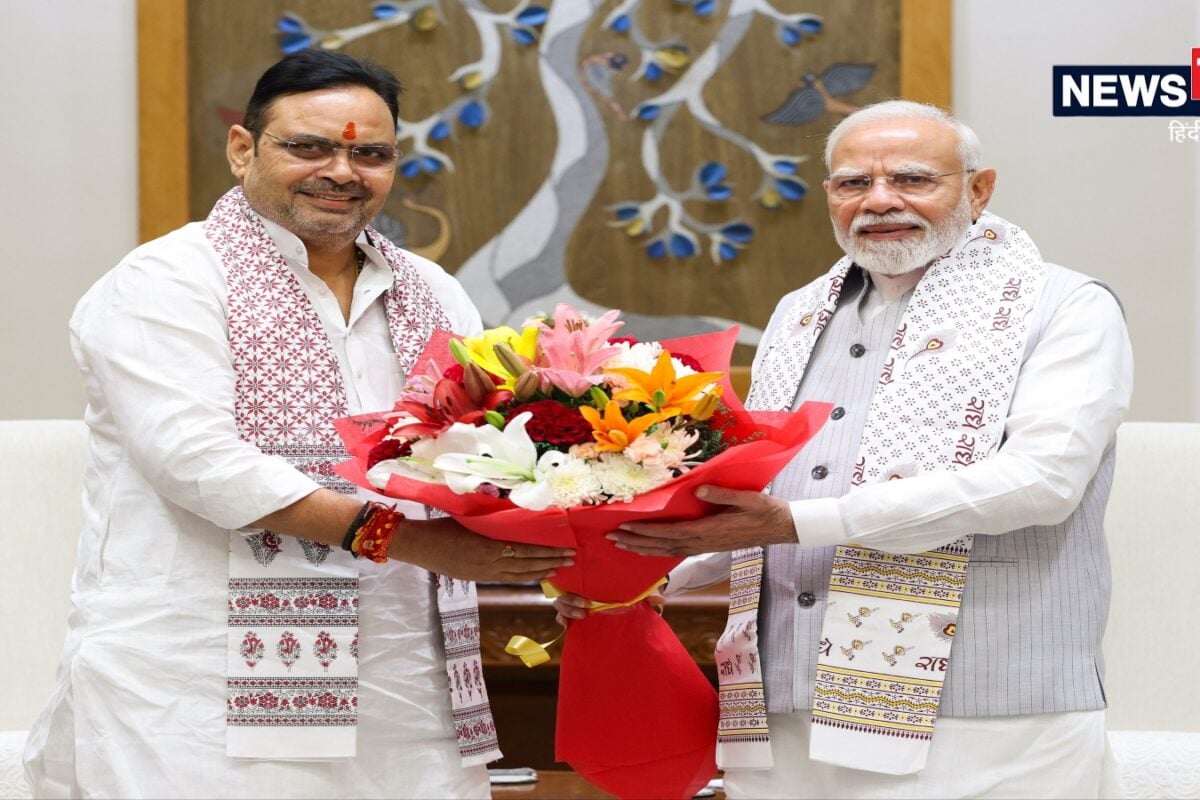
In a significant political and administrative development amidst the ongoing panchayat elections across Rajasthan, Chief Minister Bhajan Lal Sharma undertook a crucial visit to the national capital, Delhi. The primary objective of this high-profile tour was to engage in strategic consultations with the central leadership regarding the socio-economic advancement of the state. Such visits underscore the continuous administrative alignment between the state apparatus and the central government to ensure uninterrupted developmental progress.
The political backdrop of this visit is marked by the active electoral mobilization surrounding the panchayat elections in Rajasthan. Local governance structures form the foundational bedrock of grassroots democracy in the state, making infrastructural and developmental continuity a paramount priority for the administration. Consequently, state leadership frequently coordinates with central authorities to secure necessary policy clearances and financial backing for ongoing public welfare initiatives.
A central pillar of the discussions held in Delhi involved comprehensive deliberations on critical water projects currently slated for implementation across various arid and semi-arid regions of Rajasthan. Water security remains an existential challenge for the state, necessitating large-scale hydraulic engineering interventions and inter-state resource management. The administrative leadership focused on expediting approvals and resource allocation to ensure sustainable access to drinking and irrigation water.
During his stay in Delhi, Chief Minister Bhajan Lal Sharma also held deliberations with Union Minister CR Patil, further strengthening the institutional synergy required for infrastructural execution. These ministerial consultations are designed to streamline bureaucratic procedures, resolve inter-departmental bottlenecks, and fast-track the execution of central schemes operating within the territorial jurisdiction of Rajasthan.
For regional districts such as Kotputli-Behror, the outcomes of these high-level discussions carry profound implications for local agrarian productivity, industrial growth, and civic amenities. Access to reliable water supply networks directly influences the daily livelihood of local farming communities and the commercial viability of emerging regional enterprises. Local stakeholders closely monitor such central-state engagements, anticipating tangible improvements in civic infrastructure and service delivery.
Administrative oversight and policy implementation frameworks were thoroughly reviewed during the meetings to guarantee transparency, fiscal prudence, and timely project completion. The state machinery has been tasked with maintaining strict adherence to execution timelines, ensuring that public funds are utilized with utmost efficiency. Inter-governmental cooperation acts as the primary catalyst for overcoming structural impediments that typically delay public works.
Looking forward, the state administration anticipates accelerated momentum in the execution of key developmental schemes under the strategic guidance of the central government. The continuous dialogue between state leaders and central ministers establishes a robust pathway for addressing long-standing infrastructural deficits. As Rajasthan navigates its current electoral cycle, the administrative focus remains steadfastly anchored in delivering sustainable growth and fulfilling public aspirations.
